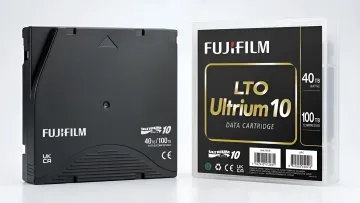
Japanese corporation Fujifilm intends to quintuple its magnetic tape production capacity to meet growing demand driven by the development of artificial intelligence technologies, Nikkei Asian Review reports. According to the company, this will be the largest investment in the magnetic data storage segment in the last 20 years. During the 2028 fiscal year, Fujifilm will allocate 10 billion yen (about $63.3 million) to modernize its own plant in Odawara near Tokyo. The bulk of the funds will go toward expanding the production of advanced magnetic tapes capable of holding up to 100 TB of data per medium.
From Broadcasting to AI 'Cold' Storage
Fujifilm's history with magnetic tape dates back to 1954, when the company began research in this area initially for broadcasting equipment needs, and later for audio and video recording. Today, tape media are experiencing a new wave of relevance: the AI boom has led to an explosive growth in data volumes requiring long-term storage. According to forecasts, by 2030 the global volume of generated data will reach 718 zettabytes (1 zettabyte equals 1 billion TB), which is four times the 2024 figure. Fujifilm is betting precisely on this growing 'cold' segment.
Why Tapes Win in Long-Term Storage
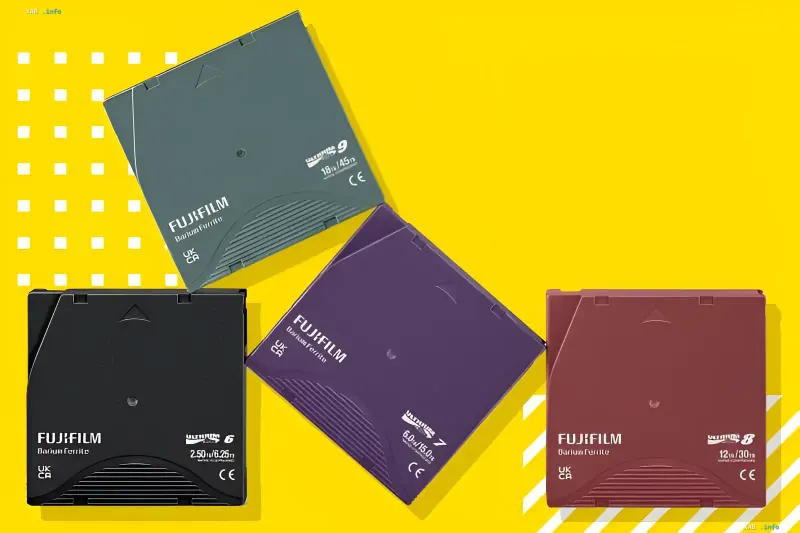
Magnetic tapes are widely used by data center operators, financial institutions, and research organizations for backup and archiving. Their key advantage is the ability to store information long-term without connecting to global network resources, protecting data from cyberattacks, accidental loss, or unauthorized modification. While fast SSDs and high-capacity HDDs remain the dominant media overall, in terms of durability and total cost of ownership, magnetic tapes outperform hard drives, proving cheaper and more environmentally friendly for 'cold' storage. Ultrium tape generations are already on the market: from 45 TB models produced jointly with HPE to higher-capacity formats, and tape storage is also offered by cloud services.
Japanese Supply Chain and Industry Effect
Japanese companies hold strong positions at all stages of the magnetic tape supply chain: Toray Industries and Teijin produce the base film, while materials for the magnetic coating are produced, in particular, by Dowa Holdings. The AI boom is prompting a wide range of Japanese data storage manufacturers to increase investments in the industry, turning Fujifilm's modernization into part of a broader national trend to strengthen positions in the long-term data storage segment.