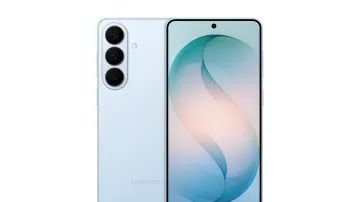
A device with model number SM-S9520 has appeared in the database of China's 3C regulatory body, which, according to data published by tech reviewer Abhishek Yadav on the social network X, corresponds to the base Samsung Galaxy S27. The certification documentation, dated September 1, 2026, records support for wired charging at 10 W, 15 W, and a maximum of 25 W. For a flagship smartphone expected to launch in the first quarter of 2027, this means a complete lack of progress in one of the key consumer parameters for seven consecutive generations — precisely since the release of the Galaxy S20 in 2020.
The Full Lineup: From 25 W to 45 W, No Surprises
In addition to the base model, the 3C database lists the Galaxy S27+ under the number SM-S9560, with a peak charging power of 45 W. Thus, the higher-end versions of the lineup (the S27+ and, as expected, the S27 Ultra) will retain the same speed as their predecessors. Rumors about a possible increase in power to 60 W for the top models, which actively circulated online over the past year, found no confirmation in the official certification documents. According to available data, Samsung will present four models in the first quarter of 2027: the Galaxy S27, S27 Plus, S27 Pro, and the flagship S27 Ultra, although certification data at the time of publication is available only for the first two.
Context: What Competitors Are Doing
Against the backdrop of Chinese manufacturers, who have for several years offered wired charging of 80 to 200 W in the premium segment and allow a battery to be fully recharged in 20–30 minutes, Samsung's decision to keep the base flagship at 25 W looks like a systemic strategy rather than a temporary limitation. At 25 W, a full charge of a battery with a capacity of around 5000 mAh takes about an hour and a half to two hours. For a buyer choosing between a Samsung flagship and, say, a top-tier Xiaomi, Oppo, or vivo device, the difference in charging speed could become a decisive argument, especially given that Samsung's wireless and reverse wireless charging have also not undergone significant changes.
Contradictory Data
There is a discrepancy in the composition of the lineup across open sources. A number of leaks throughout 2025–2026 mentioned only three models (S27, S27+, S27 Ultra), while more recent summaries, including data cited by RBC-Ukraine, point to a four-model configuration with the addition of an intermediate S27 Pro. Moreover, some sources characterize the situation as "seven generations without changes," others as "six," depending on whether the Galaxy S20 itself is included in the count. The 3C certification data currently confirms the power ratings only for SM-S9520 and SM-S9560; the specifications of the S27 Pro and S27 Ultra have not yet been recorded in the registry, leaving a gap between the leaks and the documented facts. Samsung has not officially commented on the charging parameters of the upcoming generation.
Samsung's Strategy: Why 25 W Is No Accident
Analysts, citing the company's long-standing practice, point out that Samsung deliberately sacrifices charging speed for the sake of battery longevity and reduced heat generation. Higher power requires reworking the cooling system, changing the chemical composition of the cells, and, as a result, increasing the BOM cost. In a situation where premium-segment margins are under pressure, the company apparently considers 25 W a compromise that does not critically affect the product's perception among its core audience. Nevertheless, in 2026, when the average user expects "fast charging" as a basic feature rather than a premium option, this stance is increasingly interpreted by the market as a competitive lag.
What This Means for the Buyer
If the 3C certification data is confirmed at the official presentation in the first quarter of 2027, owners of the Galaxy S27 will get a smartphone with the same charging speed as a device that will be seven years old by that time. For those who switched to the Samsung ecosystem for the camera, software, or ecosystem, this will probably not be critical. However, for buyers making a choice "from scratch" and comparing flagships by the totality of their specifications, 25 W in 2027 is an argument that competitors will use in advertising campaigns at least as actively as Samsung uses its 200-megapixel cameras.