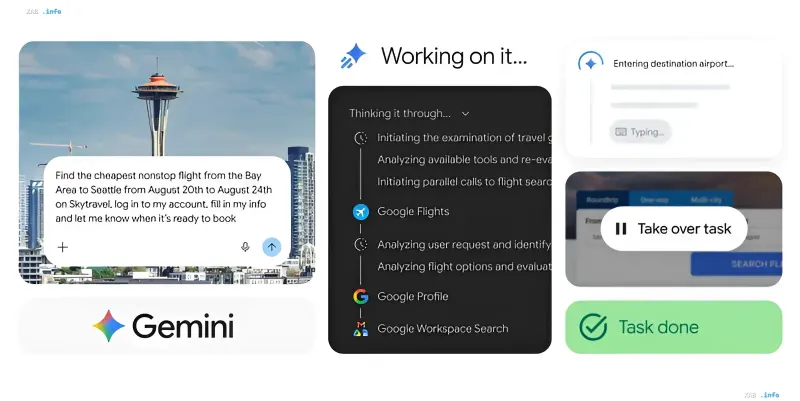
Google has made a breakthrough in personal automation by unveiling a major update for its AI agent, Gemini Spark. The virtual assistant can now not only search for information but also interact with the Chrome browser on the user's device to perform complex, multi-step tasks.
Direct Integration with Chrome Browser
The key innovation is the integration of an automatic web browsing feature. Previously, Gemini Spark relied on a remote web browser, which limited its capabilities in handling personal data. Now, the agent can utilize the Chrome browser installed on the computer, gaining access to authorized accounts and saved passwords.
This allows the AI to perform actions requiring system login: from searching for tickets to booking hotels. This function complements the agent's existing toolset, which includes access to Workspace and Search, "Personal Intelligence," remote code execution, and Canvas.
Security and User Control
Despite expanded access rights, Google maintains security as a priority. After granting browser access, a Gemini activity indicator will appear in the top panel of Chrome. Critical actions, such as payment confirmations or operations involving sensitive data, will require mandatory manual confirmation from the user. Additionally, the browser is equipped with protection against malicious request injection.
Real-World Use Cases
Google provides specific examples of tasks that can now be delegated to the AI. These include:
- Scheduling regular checks for saved real estate listings.
- Searching for flight options based on specific criteria and initiating the booking process.
- Filling out complex forms and interacting with web services that require authorization.
Initially, the integration will be available to users in the US, with subsequent expansion to other regions.
Global Launch and New Features
Beyond technical integration, the service has become more accessible geographically. As of today, Gemini Spark is available to Google AI Pro subscribers in over 160 countries worldwide. Previously, earlier this month, the service was launched only in the US.
Since its launch in May, the agent has received numerous updates. Recent additions include support for the MCP protocol and the release of a Mac app, allowing for local control of desktop computers. These steps demonstrate Google's ambition to transform AI into a full-fledged digital assistant capable of autonomously solving household and work tasks.