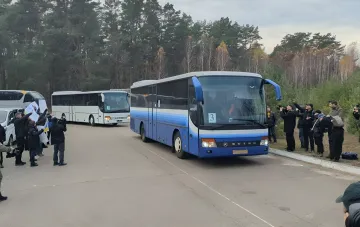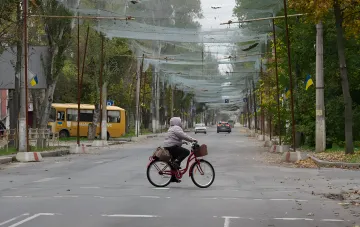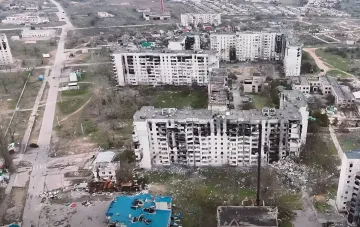
Amid ongoing hostilities in the Kherson region, Ukraine's Defense Forces introduced a local ceasefire to conduct a humanitarian operation in Oleshky. Following the pause, the General Staff of the Armed Forces of Ukraine reported on the results: humanitarian cargo was delivered, and some civilians were evacuated to territory controlled by Kyiv. However, according to the agency, the Russian side used the lull for military preparations. A corresponding statement by the General Staff, published on Telegram, was reported by RBC-Ukraine.
Humanitarian mission and its results
The General Staff's statement emphasizes that "within the framework of the introduced ceasefire for the humanitarian operation in Oleshky, units of the Defense Forces of Ukraine ensured compliance with the silence regime and acted exclusively within the limits of the reached agreements." As a result, humanitarian cargo was delivered to the city, and Ukrainians who expressed a desire to leave Oleshky were able to return to territory controlled by Ukraine.
What was recorded on the enemy's side
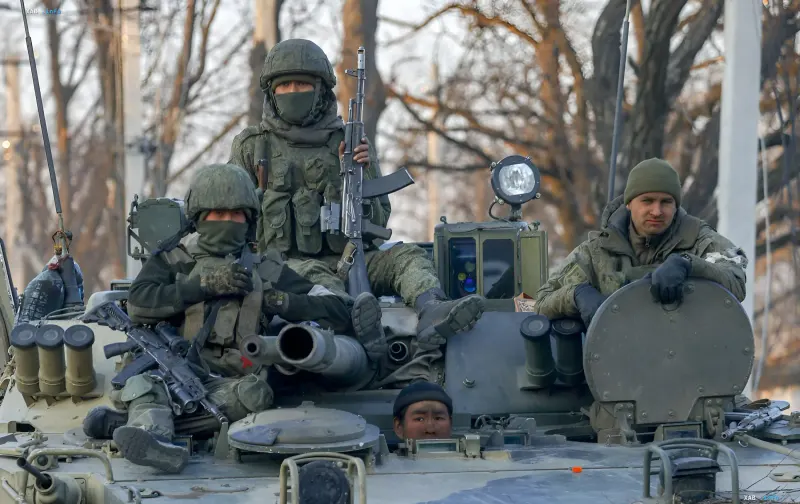
At the same time, the agency noted that the Russian army took advantage of the humanitarian pause "to set up its positions." Specifically, during the ceasefire, according to the General Staff, the rotation of Russian units, the strengthening of positions, the expansion of anti-drone measures on roads, and the buildup of logistics, including the delivery of ammunition, were recorded.
Context: Oleshky on the front line
To understand the scale of the operation, it is important that Oleshky is located directly on the contact line along the Dnipro River and, according to OSINT researcher Clément Molin, was captured on February 24, 2022. Since then, the expert claims, the city has been used to shell Kherson, and the Russian military has blocked routes for civilians to leave, creating conditions close to starvation in the settlement for several months, according to him.
Significance of the operation
The evacuation of several hundred civilians who had been under occupation for about four and a half years became, according to Molin's assessment, a demonstration that Ukraine is the one ensuring the safety of citizens on the front line. At the same time, the Ukrainian side emphasizes the dual nature of the pause: on the one hand, it allowed humanitarian tasks to be accomplished, and on the other, it gave the enemy time to strengthen positions and logistics.
Thus, the local ceasefire in Oleshky confirmed both the possibility of conducting targeted humanitarian operations amid hostilities and the difficulty of controlling compliance with the truce when one of the sides uses the lull for military purposes. Future dynamics in the Kherson region will depend on whether the practice of local pauses continues and how the parties respond to recorded violations.