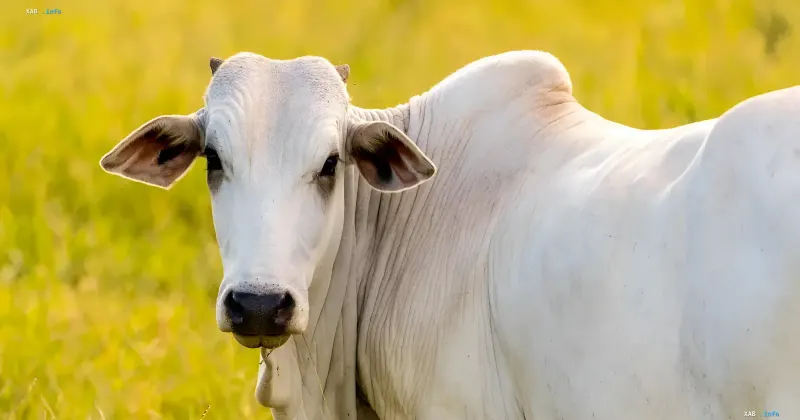
In the world of modern livestock farming, where Brazil holds a leading position in beef production, a sensation has occurred that has overturned the perception of cattle value. At an auction, a Nelore bull named Carina (Carina FIV do Kado) was sold for a record sum of $4.74 million. This deal not only set a new financial record but also vividly demonstrated how priorities are shifting in the agricultural sector: from evaluating an animal based on carcass weight to assessing its genetic potential.
Record Deal and History of Success
Bull Carina was not just another participant in the auction but a recognized champion. Before being put up for auction, the animal won national championships three times in a row at prestigious cattle breeding competitions in Brazil. These victories solidified his status as one of the most outstanding representatives of the Nelore breed in the country's history. The sum of $4.74 million, paid by a group of investors, surpassed the previous record set in 2023 by another cow of the same breed named Mara, who was sold for $4.38 million.
Economics of Genes: Why the Bull is Worth Millions
The key paradox of this deal is that Carina's meat is not worth millions of dollars. The bull's weight exceeds 2,400 pounds (about 1,090 kg), which is an excellent figure but does not explain such an astronomical price. Carina's true value lies in his genetic makeup. Investors are not buying an animal for slaughter but a "living factory" for producing elite offspring. Technology allows for the collection of the bull's ova and their implantation into surrogate cows. Each such ovum is valued at a minimum of $110,000. It is the potential profit from creating several generations of cattle with ideal characteristics that justifies the multi-million dollar investment.
Nelore Breed: The Foundation of Brazilian Livestock
The Nelore breed, descended from the Indian Ongole breed brought to Brazil in the 19th century, became the foundation of the country's agriculture. Thanks to years of selective breeding, it has adapted perfectly to the harsh conditions of the South American climate. Nelore cattle are distinguished by high resistance to heat, drought, and diseases, as well as the ability to grow rapidly even on low-quality feed. Today, purebred cows of this breed make up about 80% of the total cattle population in Brazil, making their genetic material a strategic resource of national scale.
Security and Elite Care
The status of the world's most expensive animal places special obligations on the owners. Bulls of Carina's and Mara's caliber are under strict protection to eliminate the risk of theft, which at such prices could become a serious threat. They are provided with the highest level of veterinary care and maintenance. Notably, both record-breaking cows are linked to the Casa Branca Agropastoril enterprise, which specializes in breeding high-quality cattle, confirming a systematic approach to creating genetic masterpieces.