August 2026 is traditionally considered the peak of the potato harvest season. For many gardeners and farmers, the question of exactly when to start digging up the tubers is particularly pressing. On the one hand, the calendar suggests specific dates, while on the other, agronomists insist on visual signs of ripeness. This year, on August 16, we are in the midst of a debate about what matters more: the phase of the Moon or the condition of the foliage.
Lunar Calendar for August 2026: Favorable Phases
Proponents of traditional farming methods recommend relying on the phases of the Moon. According to folk beliefs, root crops harvested during the waning Moon are stored better and are less prone to rotting. In August 2026, the waning phase falls into two periods: from August 1 to 11 and from August 29 to 31. The new moon occurred on August 12, the first quarter on August 20, and the full moon is expected on August 28.
For those who strictly follow the lunar calendar, the most favorable days for harvesting potatoes in the current month are the last days of August — the 29th, 30th, and 31st. It is believed that precisely on these days, sap flow in plants slows down, and the tubers become denser and drier, which is critical for winter storage.
Signs of Biological Ripeness: What to Look For
However, agronomists and experienced gardeners warn: you cannot dig up potatoes just because the "right" date has arrived. The main indicator of crop readiness is the condition of the plant. One of the most reliable signs of ripeness is the yellowing and drying of the foliage. If the leaves have completely dried out and fallen over, it is a signal that the tubers have gained the necessary mass and formed a dense skin.
The second important criterion is skin durability. In ripe potatoes, the skin becomes dense and should not rub off easily with light friction of a finger. If the skin peels off without effort, the tubers are not yet ready for long-term storage, and it is better to leave them in the ground until fully mature. For early varieties, harvesting can be started earlier, but for potatoes intended for winter storage, it is worth waiting for full ripening.
Contradictory Data: Science vs. Tradition
The question of the Moon's influence on potato storability remains a subject of debate. Proponents of the lunar calendar claim that the gravitational influence of the Earth's satellite affects soil moisture and sap flow in plants. However, the scientific community has no confirmed data that the phase of the Moon has a significant effect on crop preservation.
Experts emphasize that for successful storage, weather conditions and harvesting technology are much more important. For example, if prolonged heat is followed by persistent rain, ripe potatoes are better harvested on a dry day, without waiting for the "perfect" date according to the lunar calendar. Wet soil sticks to the tubers, and wet potatoes store significantly worse and are more quickly affected by fungal diseases.
Harvesting Technology and Preparation for Storage
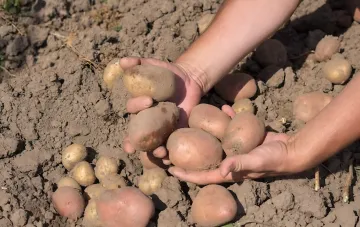
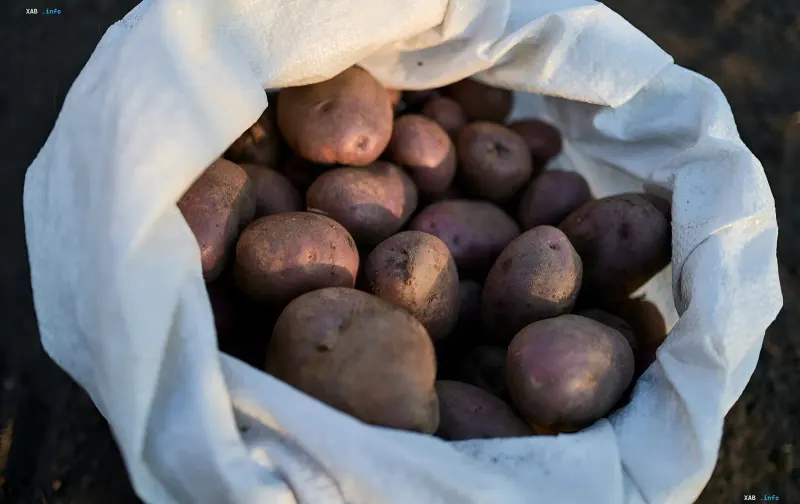
Regardless of whether you rely on the Moon or the foliage, the harvesting technology remains unchanged. Potatoes should be dug up in dry, cool weather, avoiding the time immediately after heavy rains. After harvesting, the tubers must be sorted, setting aside damaged ones separately. For long-term storage, potatoes should be dried in a shaded, ventilated place, but should not be left for a long time under direct sunlight, as this can lead to greening and the accumulation of solanine.
Before placing them in a cellar or another storage place, the crop should be inspected again, and tubers with cuts, rot, or other damage should be removed. It is precisely the temperature, humidity, and ventilation in the storage facility, as well as the condition of the potatoes themselves, that have a much greater influence on their preservation than a specific phase of the Moon.