Georgia is facing a new serious energy catastrophe. Over the course of two days, the country has experienced two large-scale power outages that have left millions without electricity and paralyzed key infrastructure. The second failure, which occurred in the morning, once again confirmed the vulnerability of the national power grid.
Infrastructure Paralysis in Tbilisi and Regions
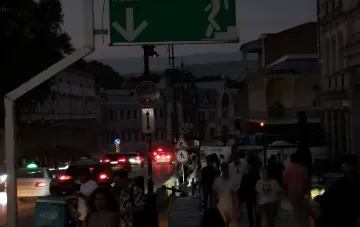
The new blackout occurred around 08:00 local time. The outage was recorded in the capital, Tbilisi, as well as in the country's largest cities: Batumi, Kutaisi, and several other settlements. The consequences of the accident were extensive and affected all spheres of life.
In Tbilisi, the metro was forced to temporarily suspend operations, leading to disruptions in train traffic. The situation was exacerbated by the shutdown of pumping stations: water supply disappeared completely in parts of the city. Users also reported widespread instability in mobile internet, which hindered communication at a critical moment.
Quick Restoration and Lack of Explanations
Despite the seriousness of the incident, the restoration of power supply began almost immediately. In several districts of Tbilisi, electricity was restored within about half an hour after the accident. However, despite the restoration of network operations, the official causes of the failure remain unknown.
The State Electrosystem of Georgia (GSE) has not yet provided any comments regarding what caused this new large-scale failure. This lack of information, against the backdrop of recurring accidents, is causing serious concern among the public.
Echo of the First Blackout and Investigation
The current outage occurred less than 30 hours after the previous massive blackout, which left a significant part of the country without electricity on the night of July 24. At that time, the restoration of the power system took almost the entire night, and not only Tbilisi, Batumi, and Kutaisi were left without light, but also Kobuleti, Telavi, and other cities. In some regions, there were disruptions in mobile communications and traffic lights.
After the first accident, the National Commission for Energy and Water Supply Regulation of Georgia (GNERC) convened an emergency meeting and began an immediate investigation. The regulator provided the working group with access to data from all energy companies in the country and severely criticized network operators for the lack of clear explanations for the causes of the accident.
To date, the authorities have not yet announced an official version of the causes of the first blackout. The GSE operator denied information about an accident on the power line with Turkey, and the management of the Inguri HPP stated that there were no accidents at the station. The repetition of the situation after a day calls into question the effectiveness of the measures taken and the readiness of the power system to handle loads.