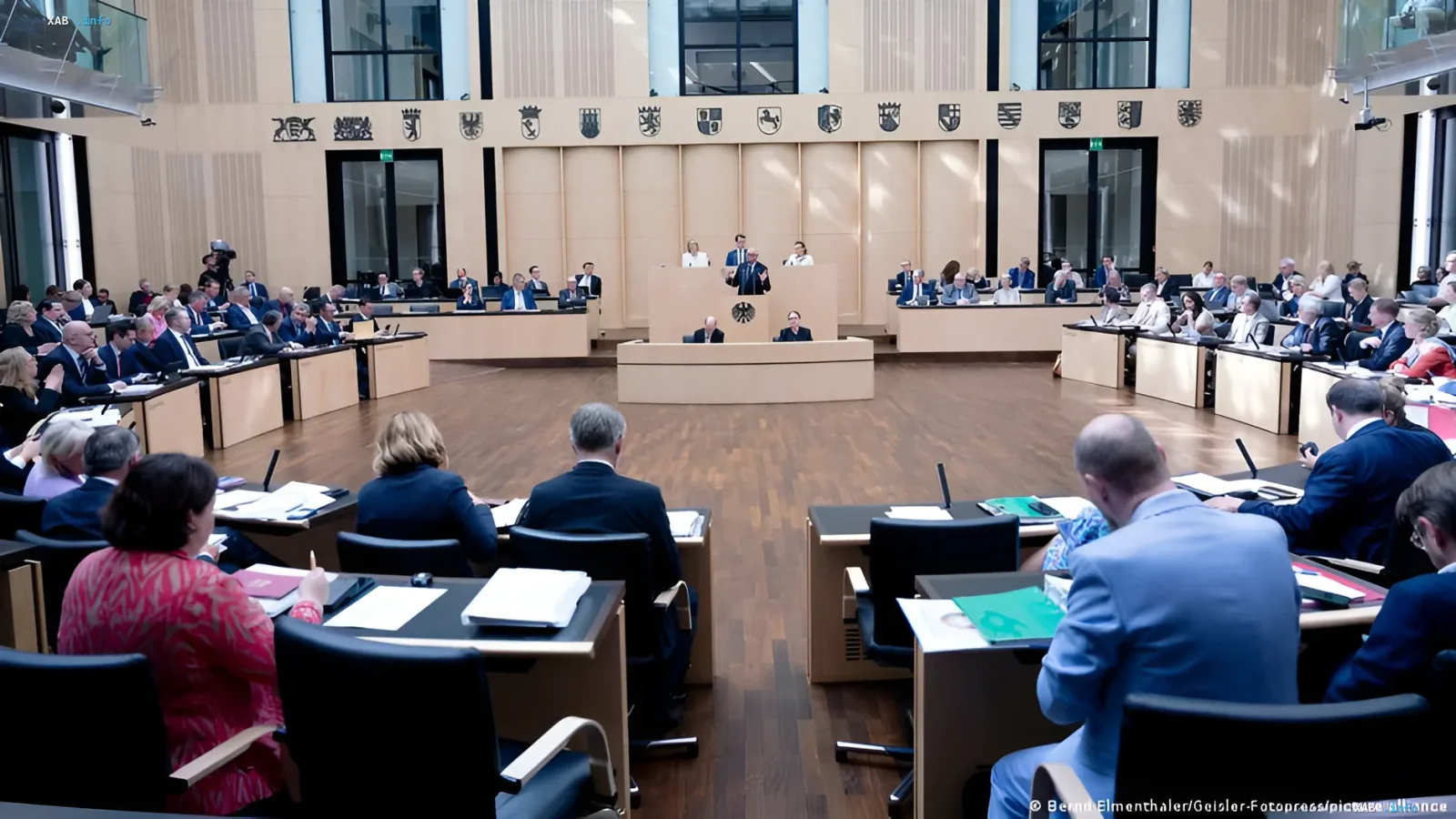
A new legislative debate has erupted in Germany concerning the fight against antisemitism. The Bundesrat — the representation of the federal states — has initiated a proposal to introduce criminal liability for publicly denying Israel's right to exist. This move is based on Germany's special historical responsibility and the rise in anti-Jewish hatred following the events of October 7, 2023.
From Words to Actions: Why is a Law Needed Now?
Christian Heinz, the Minister of Justice for the state of Hesse, representing the bill at the Bundesrat session, emphasized the need to move from words to action. According to him, following the Hamas attack on Israel, antisemitism in Germany has become more overt: slogans denying the Jewish state's right to exist are being heard at demonstrations, and corresponding graffiti are appearing on the streets of Berlin and other cities.
"Our streets have become a place for open manifestations of antisemitism," Heinz admitted. He noted that even at memorials dedicated to the victims of National Socialism, marches calling for the destruction of Israel are now taking place. In the opinion of the bill's authors, existing articles of the Criminal Code regarding incitement to hatred or the use of symbols of terrorist organizations are failing to cope with this new reality.
What Exactly is Proposed to be Banned?
According to the text of the bill, punishment awaits those who "publicly or at a gathering deny the State of Israel's right to exist or call for its liquidation" — but only if such statements encourage violence or arbitrariness against Jews. The authors emphasize that the law does not concern criticism of the Israeli government's policy or discussions about a peaceful settlement in the Middle East.
"The bill is intentionally formulated very narrowly," Heinz stated. Its goal is not to restrict freedom of speech, but to protect the Jewish population from calls for violence masquerading as political criticism.
Support and Resistance: Who is For and Who is Against?
The initiative is supported by the Central Council of Jews in Germany. Its president, Joseph Schuster, emphasized in an interview with DW that criticizing the actions of the Israeli government is a legal right, but crossing the boundaries of acceptability begins where the very right of Israel to exist is questioned or when the country is portrayed as a "source of evil".
However, there are critics. About 30 German law professors have publicly spoken out against the bill, calling it potentially contrary to the Basic Law of the Federal Republic of Germany. They fear that even a narrow formulation could be used to suppress legitimate political discourse and limit freedom of expression.
Chances of Adoption: The Statistics Speak for Themselves
Even if the Bundesrat approves the bill, its path to adoption will be long and difficult. Legislative initiatives of the Bundesrat rarely become laws. In the current 21st term of the Bundestag (since spring 2025), out of 45 approved projects, none have yet become law. In the previous term (2021–2025), only two out of 49 initiatives were implemented. And in the period 2017–2021, only seven out of 66 projects became law — less than 2% of the total number of laws adopted in the country.
Nevertheless, the very fact of bringing such an initiative to the level of federal legislation testifies to the seriousness of the intentions of the German authorities. The question of banning the denial of Israel's right to exist has been discussed in Germany for a long time, and now it has moved from the plane of discussions to the plane of real legislative process.
What's Next?
The next step is the consideration of the bill by the federal government and then the Bundestag. If adopted, this will set a precedent in European law: for the first time, a country will introduce criminal liability specifically for denying Israel's right to exist, not just for inciting hatred. But even in the event of adoption, the practice of applying the law will depend on judicial interpretations and the balance between the protection of minorities and freedom of speech.