Berlin has developed a multi-layered financing plan for Ukraine designed to ensure the stability of funding for Kyiv even in the event of a radical shift in France's political course. According to Politico, citing knowledgeable sources, the German side is insisting on the approval of a so-called "buffer" scheme that will give the European Union financial flexibility and allow it to allocate more than 100 billion euros already earmarked by the European Commission in the draft of the bloc's next seven-year budget. According to an EU official familiar with the discussions, this structure will make it possible to raise financing in the future without the need to immediately shoulder huge expenditures that inevitably cause political disputes within the Council.
Changing Voting Rules: From Unanimity to Qualified Majority
A key element of the German initiative is changing the decision-making procedure on financial matters. The approval of the EU's long-term budget itself will still require the unanimous support of all member states, but future decisions on borrowing funds for Ukraine will be made by a qualified majority. "In today's geopolitical world, the requirement for unanimity makes no sense," noted an EU diplomat familiar with the details of the negotiations. In practice, this means that even if there are one or two veto players in the EU Council, the mechanism of assistance to Kyiv will continue to function, which is a direct response to the risks associated with the possible coming to power of far-right forces in France.
The French Factor: The 2027 Elections as a Trigger for Restructuring Aid Architecture
Berlin fears that support for Ukraine could be threatened by political changes in Europe, primarily referring to the French presidential elections scheduled for April 2027. If far-right candidate Marine Le Pen wins, she could fulfill her campaign promise and significantly cut aid to Kyiv. For Germany, this is a scenario in which, without a pre-established borrowing mechanism, financing for Ukraine would find itself held hostage to the will of a single state. That is why Berlin seeks to fix the "automatic" nature of payments before the French elections change the configuration of political forces in the EU Council.
The Internal Front: Merz Takes AfD Rising Polls into Account
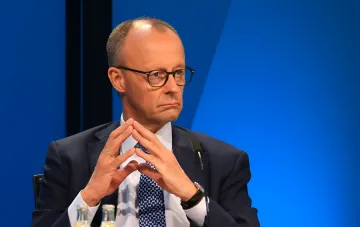
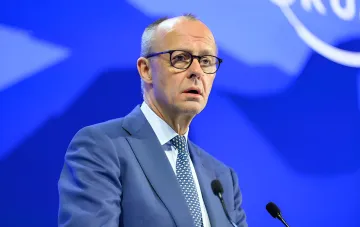
In addition to the external factor, German Chancellor Friedrich Merz is also factoring in domestic political dynamics. Within Germany itself, the ratings of the far-right Alternative for Germany (AfD) party are rising, consistently criticizing the costs of supporting Ukraine and advocating for a revision of Berlin's commitments to Kyiv. To "share the burden" of support among all EU countries, Merz has tied the issue of Ukrainian financing to negotiations on the bloc's future budget. The Chancellor hints that Berlin could cut its contributions to European regional development funds — funds from which Eastern European countries receive significant amounts. Thus, an attempt to block financing for Ukraine could hit the budgets of those states that attempt to use their veto.
Context: The 2027 Mechanism and Zelenskyy's Warnings
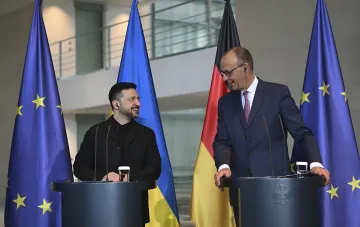
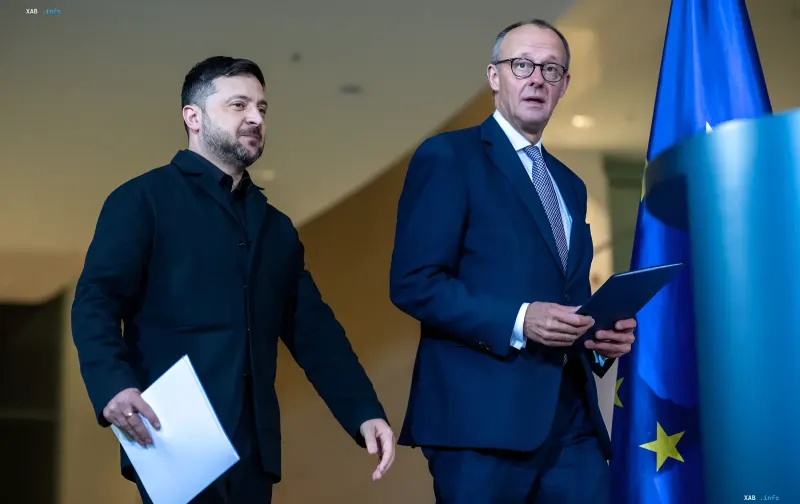
Berlin's initiative fits into the broader context of the European Union's search for new mechanisms for stable financing of Ukraine amid internal political challenges. Previously, it was reported that the European Commission presented a support mechanism for Ukraine for 2027, providing for a loan of up to 45 billion euros, the principal amount of which Kyiv would only have to repay after Russia pays reparations. At the same time, Ukrainian President Volodymyr Zelenskyy warned that halting aid would have serious consequences for the whole Europe: according to him, in such a case, European countries face two scenarios — "dangerous and very dangerous," since Russia could intensify hybrid attacks or try to expand its influence on the territory of the former USSR. The German borrowing scheme is, in essence, an institutional response to these risks — an attempt to insure Kyiv's financial support against the volatility of national political cycles.