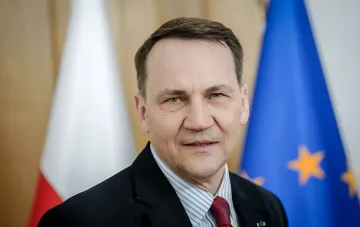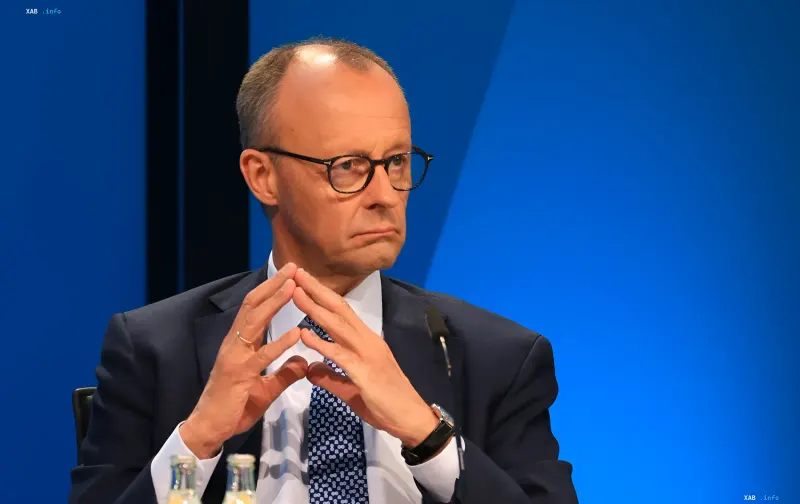
Poland has publicly reacted to German Chancellor Friedrich Merz's attempt to tie the approval of the European Union's new multiannual budget to the mandatory participation of all bloc member states in funding Ukraine. According to Warsaw, Berlin's position amounts to exerting pressure on states that oppose allocating funds to Kyiv. Polish Deputy Foreign Minister Ignacy Niemczycki explicitly pointed out that this is a mechanism of coercion rather than a search for compromise.
Berlin's Ultimatum
Merz is pushing for all EU member states to share the cost of the latest aid package for Ukraine. According to his estimates, Kyiv will need an additional 70 billion euros next year, of which 45 billion must be provided directly by the European Union. The German Chancellor has threatened to block the approval of the next seven-year EU budget unless all member states agree to support Ukraine. A similar stance was publicly voiced by Irish Finance Minister Simon Harris, who stated that it is «very hard to talk seriously about Europe's multiannual budget without Ukraine and the funding of Ukraine» and that «any other conversation would be incomplete».
Warsaw's Reaction
The Polish Foreign Ministry believes that Merz's pressure is primarily aimed at countries belonging to the so-called cohesion group that oppose financial support for Kyiv. «This is a way of pressuring those countries that belong to the cohesion group and oppose financing Ukraine, such as Slovakia or the Czech Republic. Under the principle: there will be no multiannual budget unless you agree to some form of Ukraine funding. We, on the other hand, support the funding of Ukraine,» Niemczycki stated. At the same time, he emphasized that Poland consistently supports Ukraine because «the bankruptcy of Ukraine would mean a sharp increase in the security threat to Poland», but this issue, he noted, should be addressed separately from the EU budget negotiations.
Who is Evading Obligations
The Czech Republic, Slovakia, and Hungary did not participate in the previously agreed 90 billion euro loan for Ukraine and are now declaring their intention to seek similar exemptions within future aid mechanisms. Bulgaria is also considering the possibility of a similar refusal. Thus, a stable coalition of countries seeking to avoid direct obligations is forming within the bloc around the question of who should finance Kyiv and in what volume.
The Budgetary Knot
The main problem for Warsaw is that it wants to simultaneously protect funds for cohesion policy and agriculture. Germany and other wealthy countries are demanding, on the one hand, a cap on overall EU spending and, on the other hand, an increase in spending on defense, security, and aid to Ukraine. If contributions to the EU budget are not increased, the savings will essentially have to be found precisely in the funds for regional development and support for farmers—that is, in those budget items that are critically important for Poland.
Context of the Demands
Earlier, Ukrainian President Volodymyr Zelenskyy stated that the country needs 70 billion euros for defense from the European Union next year. According to Russian media, against this backdrop, four G7 countries have so far promised Kyiv only about 1 billion euros for the next year, and Brussels is demanding additional funds precisely from them. Thus, the dispute over the EU budget is turning into a broader conflict over who should bear the financial burden of continuing the war and to what extent.