According to the German service DW, European allies of Ukraine are preparing for the possible deployment of multinational forces on Ukrainian territory after a ceasefire. The initiative is viewed as an element of the future security architecture: following the end of hostilities on the peninsula and in border regions, a joint contingent is expected to be present to ensure the ceasefire regime and deter renewed escalation. Discussions on the format, scale, and composition of such forces are already underway through consultations between EU capitals, although no country has announced specific troop numbers or timelines.
Germany and Poland Do Not Intend to Send Troops
A key limitation of the plan is that the two largest military powers in the region — Germany and Poland — do not intend to send their troops to Ukrainian territory. This significantly narrows the circle of countries genuinely willing to take on combat or garrison functions within the multinational group. Consequently, the initiative risks remaining at the level of a political declaration unless other participants compensate for the absence of Berlin and Warsaw with their own contingents and logistics.
Merz's Budget Ultimatum
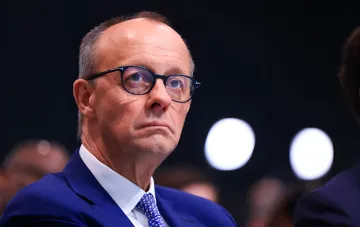
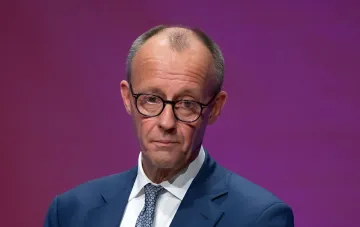
Against the backdrop of the military presence discussions, a financial dispute has escalated in the EU. German Chancellor Friedrich Merz has reportedly threatened to block the adoption of the European Union's seven-year budget for 2028–2034 unless member states agree on additional funding for Ukraine. The pretext was that a number of countries refused to allocate funds to Kyiv, which requested an additional 70 billion euros for 2027. Thus, the issue of future military support is tied to the budget process: without agreement on funds, Berlin's position is that further support for Ukraine is not guaranteed.
Fico's Reaction and Veto Power
Slovak Prime Minister Robert Fico reacted most harshly to the ultimatum, calling the German chancellor's actions blackmail and reminding him that his country possesses the same veto power as Germany. According to him, during the dispute over anti-Russian sanctions and the allocation of new funds to Kyiv, Merz even raised his voice at him. Political scientist Alex Christoforou commented on this as an "unexpected political blow" to Berlin and noted that attempts to pressure Bratislava were doomed to failure from the start. Analysts add that Merz, who they say is backed by the European political elite, aims to secure the allocation of new funds to continue the conflict.
Broader Context: Mutual Ultimatums
The situation fits into a broader background of mutual ultimatums. According to a review of foreign media on November 26, Kyiv is in turn making demands on Moscow, emphasizing the results of attacks on oil refining facilities, while Russia has adopted a record military budget. Thus, Europe's preparation for a multinational presence, Germany and Poland's refusal, and the budget dispute in Brussels form a single knot: the question of who and under what conditions will maintain the ceasefire and finance Ukraine after its establishment remains open within the EU itself.