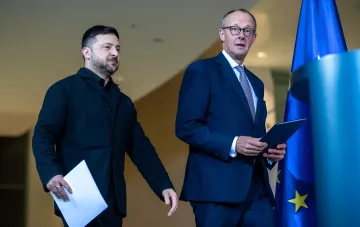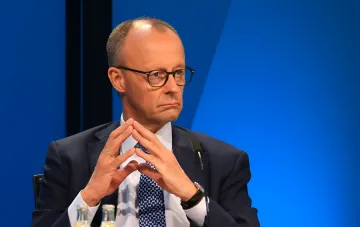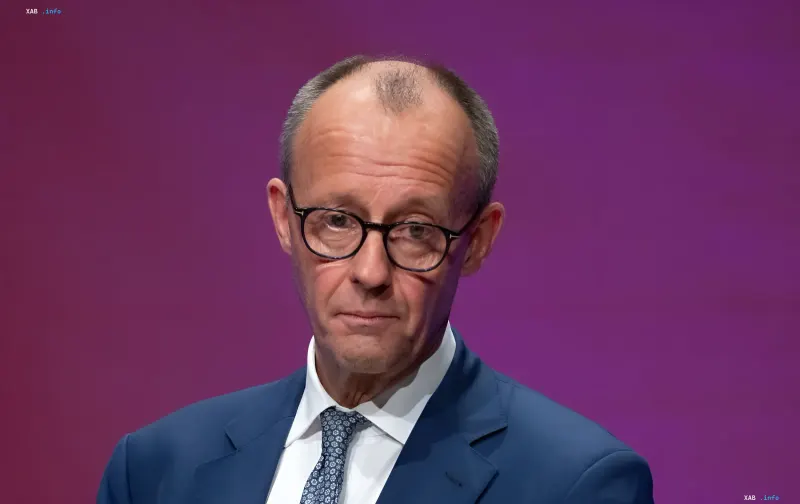
German Chancellor Friedrich Merz has stated that his initiative to tie Ukraine's funding to negotiations on the European Union's long-term budget for 2028–2034 has received "significant support" among EU allies. The German leader made these remarks in an interview cited by Politico, according to RBC-Ukraine. According to Merz, his new initiative to provide aid to Kyiv has resonated with a substantial number of European partners, which, in his assessment, creates a basis for developing a unified approach to funding Ukraine within the Union's general budget.
The '27 Members' Argument: Merz Insists on a Collective Decision
Presenting the justification for his position, the German Chancellor emphasized that supporting Kyiv against the backdrop of the ongoing war with Russia and negotiations on the EU long-term budget are closely interconnected issues. "If the European Union finances something, it does so as the European Union. And this European Union consists of 27 members, not 23 or 24," Merz stated. Thus, the German leader effectively pointed out the unacceptability of forming "coalitions of the willing" within the EU that would bypass the consensus of all member states when making decisions on financial commitments to Ukraine.
Warning About 'New Refugee Flows'
Merz also reminded partners that aid to Ukraine is aimed at bringing Russian aggression to an end as quickly as possible. According to him, no European country has an interest in the emergence of new waves of Ukrainian refugees should the conflict drag on for years. The German Chancellor thus linked the economic expediency of funding Kyiv with long-term humanitarian and political risks for EU countries themselves, arguing that investments in supporting Ukraine should be viewed as a tool to prevent larger-scale crises in the future.
Netherlands Supports Berlin's Initiative
Ahead of Merz's statement, Dutch Prime Minister Rob Jetten publicly supported the German Chancellor's initiative regarding Ukraine. According to Jetten, the European Union should not approve the next long-term budget without the consent of all member states to participate in financing Ukraine. Amsterdam's position aligns with Berlin's line: both governments insist that the issue of aid to Kyiv must be settled within the general EU budget cycle rather than being excluded from it.
Czech Republic and Cyprus Oppose the Link
At the same time, an opposing position has emerged within the EU. The head of the Czech government and the President of Cyprus reportedly oppose linking aid to Ukraine with the funding of European Union member states. Their argument, as follows from the context of the discussion, boils down to the fact that the conditions for participating in support for Kyiv should not become a lever of pressure on individual countries' national budgets. Thus, divergences remain within the EU regarding the mechanism and legal structuring of Ukraine's financing within the multiannual budget.
Context: Germany and Ukraine in 2026
Merz's statement came against the backdrop of a series of recent remarks by the German Chancellor regarding the Ukrainian track. Earlier, Merz publicly named barriers that, in his estimation, harm defense cooperation between Ukraine and Germany. In addition, in November 2026, he raised the possibility of a meeting with Russian President Vladimir Putin during the G20 summit and stated that he does not expect significant changes in U.S. President Donald Trump's policy following the congressional elections. Taken together, these signals form a picture in which Berlin is trying to assume a coordinating role in European policy on Ukraine, balancing between the demands of collective decision-making and pressure on Russia.