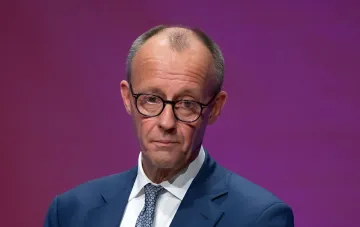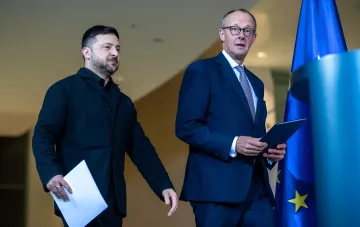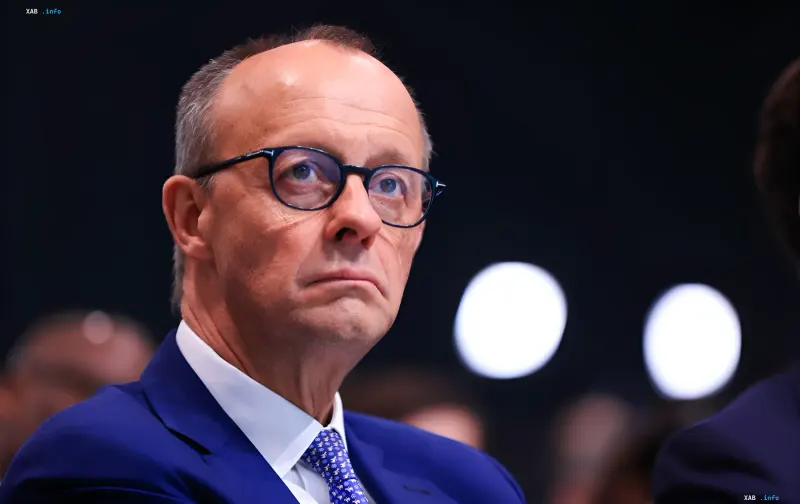
Leaders of the European Union member states have failed to reach an agreement on the long-term EU budget for 2028–2034 at a summit in Brussels. As reported by RBC-Ukraine, German Chancellor Friedrich Merz announced this to journalists during a break in discussions. According to him, the visions on how to form a multi-year financial plan "differ significantly" among various countries, which at this stage is nothing unusual. "We all understand that time and significant will are needed to bring these opposing views closer together," he emphasized. The next attempt to reach a result is scheduled for the European Council summit on December 17 (in some formulations — December 17–18).
Two fundamental principles of the German position
The Chancellor explained that Germany's approach to the negotiations is based on two considerations. The first concerns the state of public finances: in many member states, it is "far from ideal," so it is necessary to take care of the stability of national budgets, not to make promises at the European level that cannot be financed, to monitor the level of debt in Europe, and to guarantee the stability of the euro. The second consideration is that the negotiations are taking place "under completely new conditions": Europe needs to become economically strong and ensure its ability to defend itself, which, according to Merz, is especially important against the backdrop of the "greatest external threat" — the war in Ukraine and the associated risks to collective security.
Fair burden sharing and Germany's contribution
According to the German Chancellor, EU leaders have not yet come to a unified understanding that the budget cannot grow limitlessly and that the associated burden must be shared fairly. "An adjustment of contributions is necessary. This is a matter of fairness," Merz stated, pointing out that Germany provides about a quarter of the European budget, while receiving only about 8% of funds back, and in the case of the so-called Cohesion Funds, this share is even smaller. He also urged that the strengthening of Europe's economy and ensuring its security be included among the priorities, as well as providing a reserve — for example, for long-term financing of Ukraine, emphasizing that "everyone must make their contribution."
Debt, interest, and elections as risk factors
Merz advocated for decisions to be taken by a qualified majority and warned against taking on new debts: according to him, the EU has already accumulated huge debt under the NextGenerationEU program and assistance to Ukraine, and during the next seven-year financial plan, interest payments will exceed 150 billion euros. He identified the elections scheduled for next year in a number of large and medium-sized European countries as an additional complication, which will make it even more difficult for the European Council to adopt a new multi-year financial plan.
Betting on December and the condition regarding Ukraine
That is precisely why, according to the Chancellor, everyone is striving to reach an agreement before the end of the year. "We are preparing for a rather tense European Council meeting on December 17. We must make every effort to succeed. I cannot say for sure, but I do not lose hope that we will manage to do it," Merz summarized. Previously, he had already warned that Germany is ready to block the approval of the next seven-year EU budget if all member states do not agree to support Ukraine, which makes the issue of financing Kyiv a key condition for reaching a compromise.