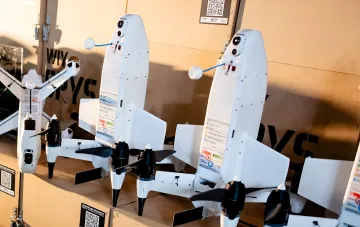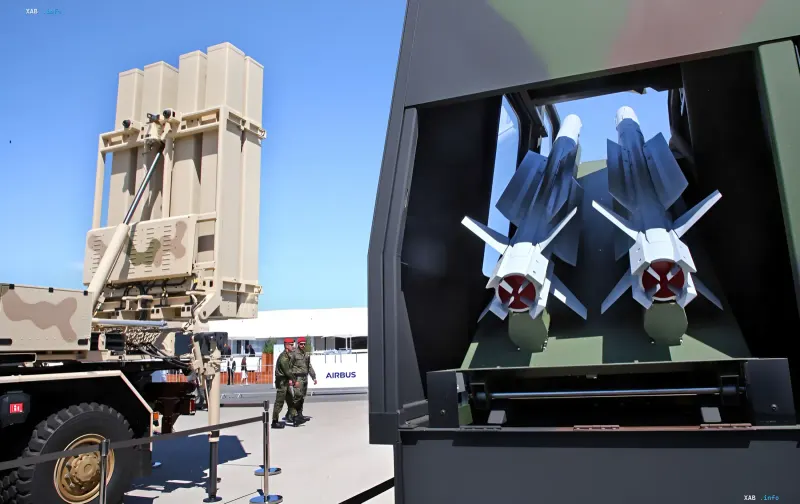
In response to the drone incident at Leipzig/Halle airport, for which Berlin has officially blamed Russia, Germany is preparing a new package of military aid for Ukraine. According to t-online, citing sources in German government circles and verified by RBC-Ukraine, Kyiv will receive additional air-defense missiles for the IRIS-T air-defense systems as early as September, and several thousand strike drones in the near future. In addition to weapons, Berlin intends to strengthen intelligence cooperation with Ukraine.
Military aid: missiles and drones
As stated by the German government, "Ukraine has achieved significant military successes in recent months, largely thanks to German support." Berlin emphasized that Russia has "no strategic answer" to these successes, which is why, according to the German assessment, the Kremlin is resorting to escalation — both through military strikes on Ukrainian territory and through intensified hybrid attacks. It is this logic that the government uses to explain the decision to transfer additional IRIS-T air-defense missiles and strike drones: the support is aimed at protecting critical infrastructure and strengthening Kyiv's strike capability.
Kyiv's position and coordination on the "shadow fleet"
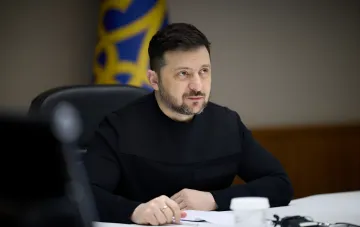
Ukraine's Ambassador to Germany, Oleksiy Makieiev, welcomed "Berlin's decisive response" to the Russian attack in Leipzig. According to him, Kyiv is in close coordination with Berlin on three fronts: protecting critical infrastructure from drones, coordinated action against Russia's "shadow fleet," and preparing follow-on sanctions against Russia. Thus, the drone incident in Leipzig has become not only a trigger for a military but also a diplomatic and sanctions response.
Timeline of the incident and attribution of responsibility to Russia
On the night of August 5, a drone carrying explosives was found next to a Ukrainian Antonov An-124 cargo aircraft at Leipzig/Halle airport, prompting the airport to temporarily suspend operations. Later, the publication Die Zeit reported that the FPV drone struck the most vulnerable part of the aircraft's wing — the area where the fuel tanks are located — which, according to the outlet, indicates a deliberate attack. On August 25, German law enforcement officers discovered another drone carrying explosives, which was presumably also used in the attack on the An-124. Germany officially attributed responsibility for the incident to Russia: Berlin closed the Russian consulate in Bonn, terminated the agreement on the "Russian House," and initiated new sanctions in the EU.
Contradictory data
Open sources disagree on the scale of the drones being transferred. In government statements relayed via t-online, the figure mentioned is "several thousand strike drones" in the near future. Meanwhile, other outlets (in particular, Korrespondent, citing media reports) report a significantly larger number — around 50,000 drones that Germany is allegedly paying for on Ukraine's behalf, with news agencies describing this as one of the largest drone orders. The discrepancy in figures may be explained by the fact that "several thousand" refers to the immediate batch in response to the Leipzig incident, while 50,000 refers to the cumulative/framework order under the supply program. Until these figures are officially reconciled in government press releases, the exact volume of aid should be considered not yet finalized.