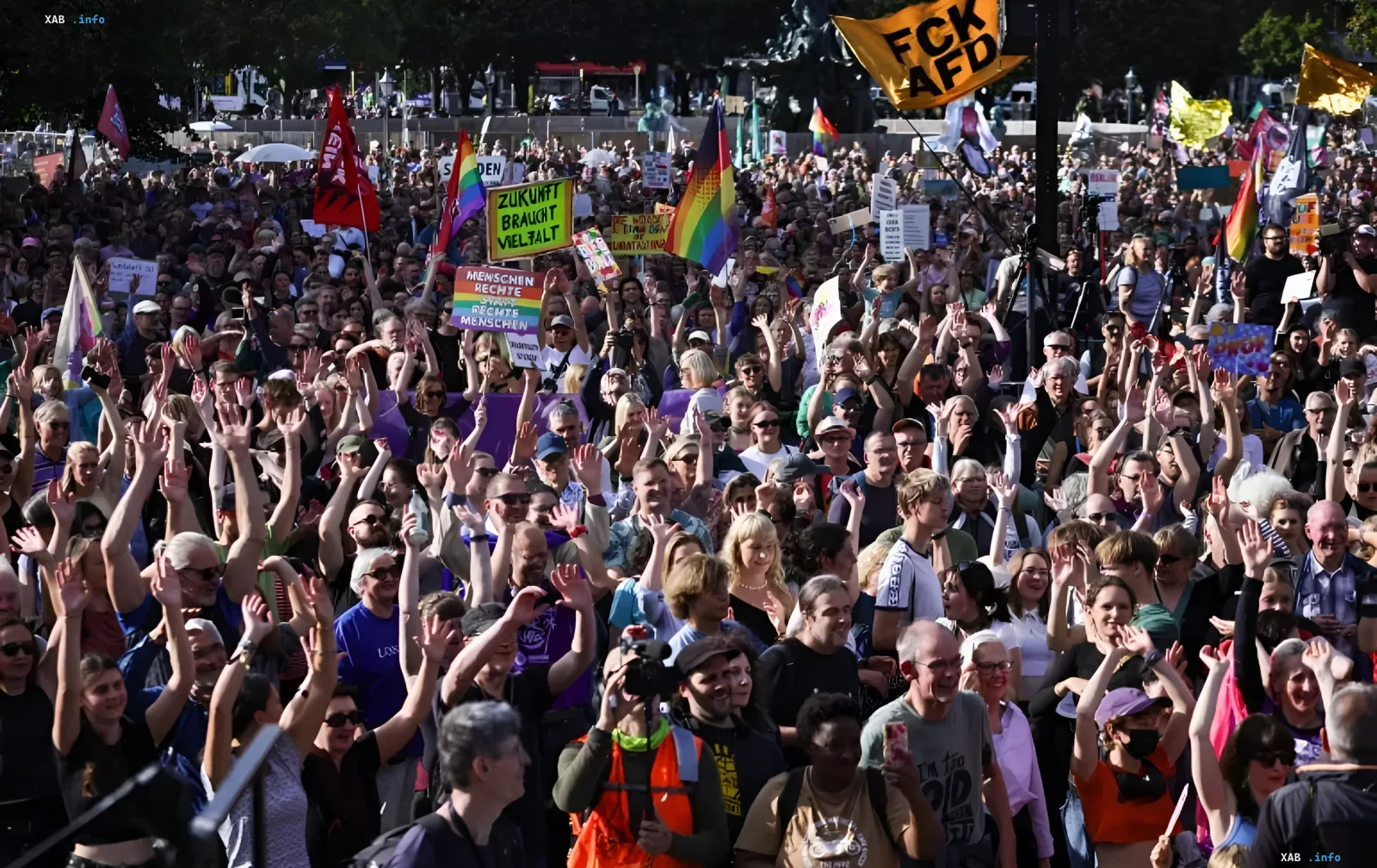
Mass street actions against the far-right party Alternative for Germany (AfD) were held in around twenty German cities. According to the organizers, a total of approximately 150,000 people took part in the demonstrations. Participants held placards with slogans such as "Ban the AfD now" and "Democracy needs no alternatives," and they also flew rainbow and other flags. The actions were coordinated by a campaign calling for a ban on the AfD, and the organization Campact joined in. The protests were a direct response to the party's convincing victory in the state elections in Saxony-Anhalt, held on 6 September.
Causes and context: the result of the Saxony-Anhalt election
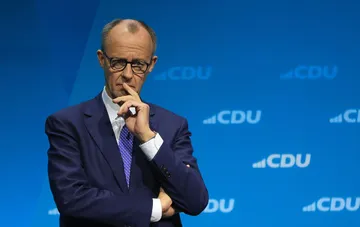
The key trigger for the actions was the outcome of the vote in Saxony-Anhalt: the AfD received almost 44% of the votes there, significantly ahead of the Christian Democratic Union, which won about 17% with the support of Chancellor Friedrich Merz. This gap became one of the party's highest results in recent times and, according to observers, heightened public concerns about its influence on federal and state politics. Against this backdrop, civic campaigns decided to synchronize protests in several cities at once, in order to demonstrate the breadth of public rejection of the far-right course.
Voices of the organizers and the composition of participants
Campact head Christoph Bautz stated that people from a wide spectrum of civil society took to the streets, and that the goal of the protests was to prevent those he called "enemies of the constitution" from coming to power. The organizers emphasize that the actions are peaceful and aimed at protecting democratic institutions. Footage from the protest sites shows dense crowds, raised hands, placards and flags, indicating high mobilization of participants across different cities simultaneously.
Counter-demonstrations by AfD supporters in Berlin
In Berlin, separate actions by AfD supporters were held in parallel. The counter-demonstration was attended, in particular, by Christine Brinker — the party's lead candidate in the upcoming elections to the Berlin state parliament. The presence of opposing marches underscores the polarization of public opinion: where some call for the party to be banned, others publicly demonstrate support for its candidates on the eve of a new electoral cycle.
Contradictory data
There is a discrepancy in assessing the scale of the actions. The organizers claim around 150,000 participants in total across all cities, while a number of editorial formulations describe the event more conservatively — as the participation of "tens of thousands" of people. The figure of 150,000 is given by the organizers themselves and has not been confirmed by an independent count, so it should be regarded as an upper estimate. The fact that mass protests were held in a number of cities is, however, not disputed by either side.
The 20 September elections and the consequences for Ukraine
The next two state elections in Germany are scheduled for 20 September, including in Berlin, and polls forecast a strong result for the AfD in these elections as well. Against this backdrop, public discussion emphasizes that Germany is considering restricting AfD members' access to information about the war, fearing a leak of information to Russia. Earlier, one of the party's leaders called for lifting sanctions on the Kremlin and ending aid to Ukraine, and the AfD publicly praised Viktor Orbán for tying Hungary's energy system to supplies from Moscow. Former Ukrainian Consul in Munich, Rector of the Ukrainian Free University Dmytro Shevchenko, noted that an AfD victory could affect the nature of Berlin's aid to Ukraine and Ukrainians, while distinguishing between military support and aid to refugees. Thus, the 13 September protests became not only a domestic political event but also an indicator of how German society assesses the risks to its foreign and defense policy.