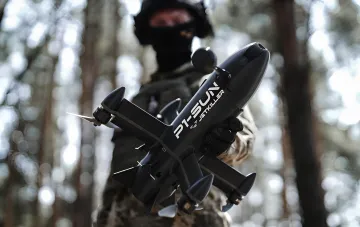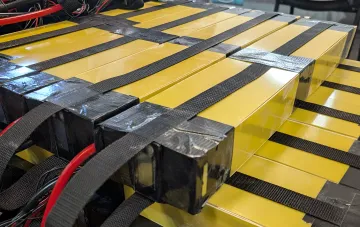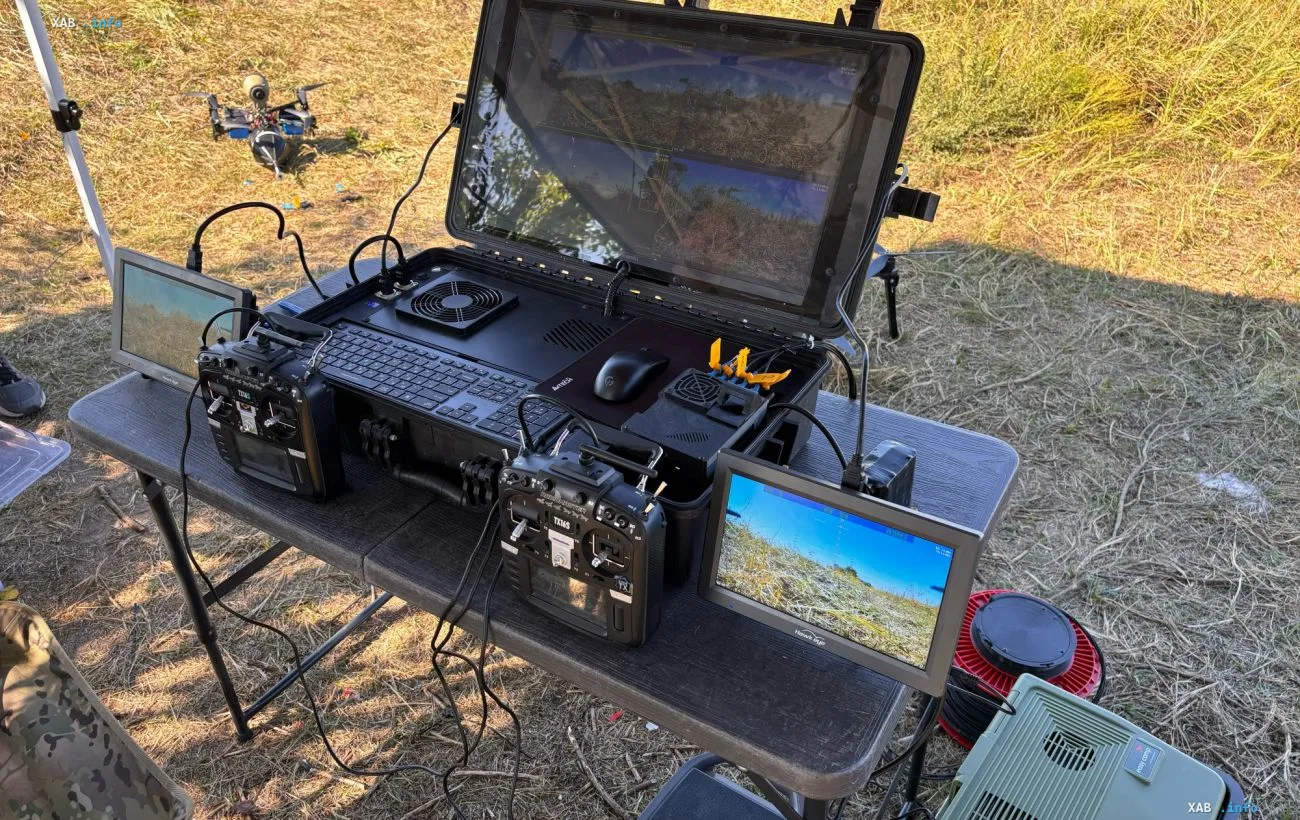
Ukrainian manufacturer 3DTech has unveiled the "Hydra" control system, which allows up to five fiber-optic drones to be connected simultaneously to a single controller or to distribute control across three controllers. This was stated in an interview with RBC-Ukraine by Ilya Filimonov, head of R&D at the company. According to him, 3DTech is currently focused primarily on fiber-optic drones, although interceptor development is also underway in parallel. The flagship product of this line is precisely "Hydra," which radically changes the approach to the group use of unmanned aerial vehicles on the battlefield.
Physical link and its vulnerabilities
Fiber optics, unlike a radio channel, is a physical communication line, and its performance is affected not only by the technical specifications of the system but also by the organization of the flight, the conditions for laying the fiber, and external factors. Filimonov explicitly confirmed that the risk of the cables of five drones tangling during takeoff exists, as do the risks of kinks or breaks. Sharp maneuvers, intersecting trajectories, or contact of the fiber with obstacles create additional mechanical stress and can damage the line. Additional risks arise from improper laying of the fiber along the route — for example, in the event of mechanical damage by vehicles or other objects — as well as from weather conditions.
Monitoring and training as elements of safety
To minimize risks, the "Hydra" system is equipped with monitoring of the quality of the fiber-optic link. According to Filimonov, problems are visible even before the flight: a damaged port, a fiber defect, a faulty spool, or poorly seated connectors are detected during the pre-flight check. "They will be able to quickly resolve this thanks to monitoring the line budget," the developer explained. In addition, after receiving the system, the unit undergoes training with 3DTech pilots, where not only the capabilities of "Hydra" are explained, including the simultaneous operation of up to five airframes, but also the operational specifics: proper organization of launch, fiber laying, and flight planning.
From Chinese raw materials to Italian optics
In May 2024, 3DTech launched serial production of fiber-optic drones, and in the fall of that year demonstrated results on the battlefield. To gradually phase out Chinese raw materials, the company switched to Italian optics. According to Filimonov, Italian fiber is thinner, lighter, and more resistant to kinking, which allows increasing the drones' warhead. "Its performance is far superior to that of Chinese fiber," he emphasized. Each airframe receives its own ID, which allows five separate video streams to be displayed simultaneously. The drones are coded for ranges of 15, 20, 23, and 30 kilometers.
Production, supply, and combat testing
The control station is already available to the military on the Brave1 Market and DOT-Chain marketplaces. The company produces dozens of such stations per month. Currently, "Hydra" is being prepared for a combat test with remote control via Starlink. According to Filimonov, interceptor development has not been halted, however, countermeasures against enemy jet drones are not yet being developed. At the end of August, RBC-Ukraine reported that AOZ DOT had purchased strike and reconnaissance-strike UAVs with a fiber-optic communication module: on August 20, the agency sent a request for commercial proposals to manufacturers for 52 lots outside the Prozorro system, allowing four working days for preparation.
Discussion of procurement and technical specifications
Requirements for fiber-optic drones remain a subject of discussion in the industry. In a conversation with RBC-Ukraine about the industry's expectations from the new Defense Minister Yevhen Khmara, NAUDI CEO Serhiy Honcharov called the procurement procedure for such drones problematic. He emphasized that the tactical and technical specifications should be determined collectively with the enterprises so that they are not "tailored" to a single supplier. This position reflects the industry's general demand for transparency and competitiveness in defense procurement.