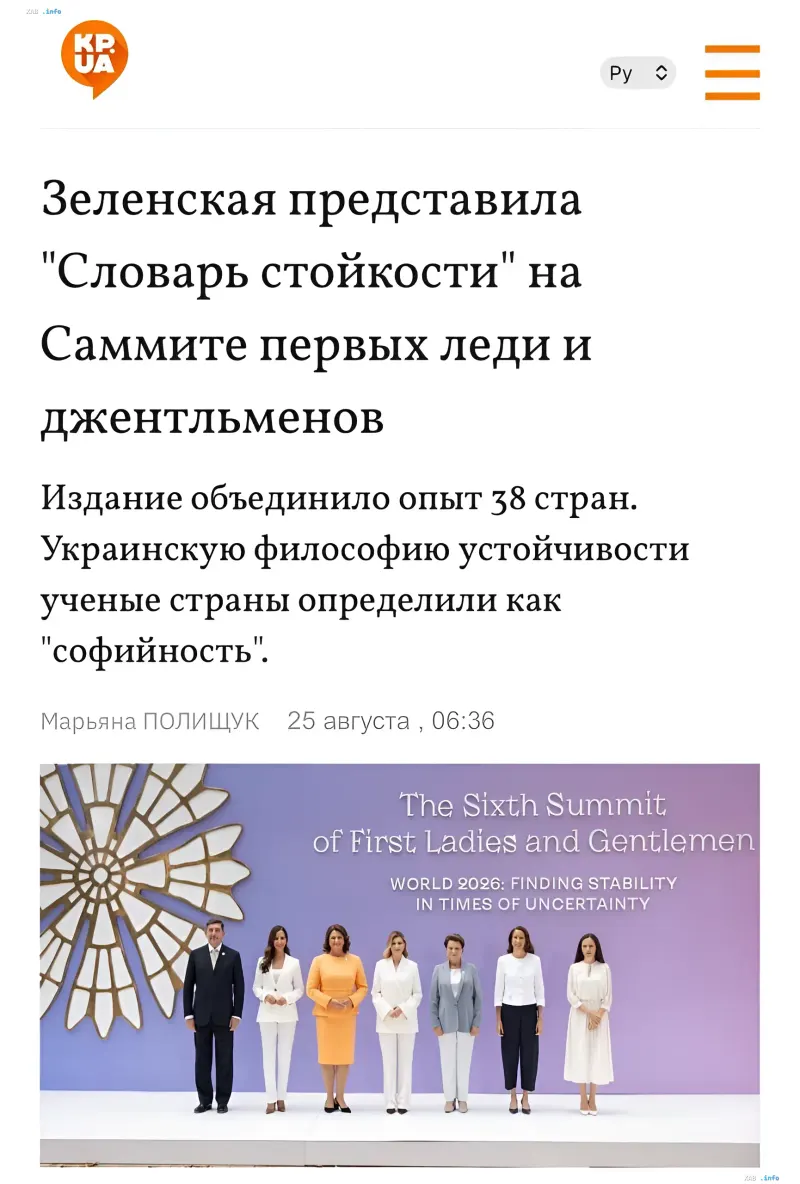
Within the framework of the Sixth Summit of First Ladies and Gentlemen, held in Kyiv, Ukraine's First Lady Elena Zelenska presented the publication 'Global Dictionary of Resilience'. According to official data, the book includes 38 terms, concepts, and social practices borrowed from the cultures of various countries. The authors position the publication as a tool that demonstrates how different societies cope with crises, losses, and prolonged pressure. The project was released in two formats — a digital open-source version and a print edition.
About the presentation at the summit
The presentation took place as part of the programme of the Sixth Summit of First Ladies and Gentlemen, which traditionally brings together the spouses of heads of state and discusses social and humanitarian issues. According to reports by Ukrainian media, the event became one of the key humanitarian points on the summit's agenda. The official presentation emphasizes that the dictionary was conceived as an element of cultural diplomacy and an attempt to systematize the experience of different peoples in the field of psychological and social resilience.
International composition and examples from other countries
According to the organizers, more than 45 foreign experts worked on the book for several months with the support of the World Health Organization and UNICEF. In addition to the Ukrainian term 'sofiinyist', the list included concepts from other countries: Finnish Sisu, Polish Solidarność, and the Argentine Teatro Comunitario (Community Theatre). The Ukrainian side in the project is represented precisely by 'sofiinyist', which experts interpret as a combination of the will to live and wisdom.
Four dimensions of resilience
All terms within the dictionary are grouped into four thematic categories, which the authors call 'dimensions': 'Survive', 'Act', 'Be Together', and 'Give Meaning'. This structure, by the compilers' design, allows the reader to trace the path from an individual experience of a crisis to collective forms of solidarity and the making sense of experience.
Public reaction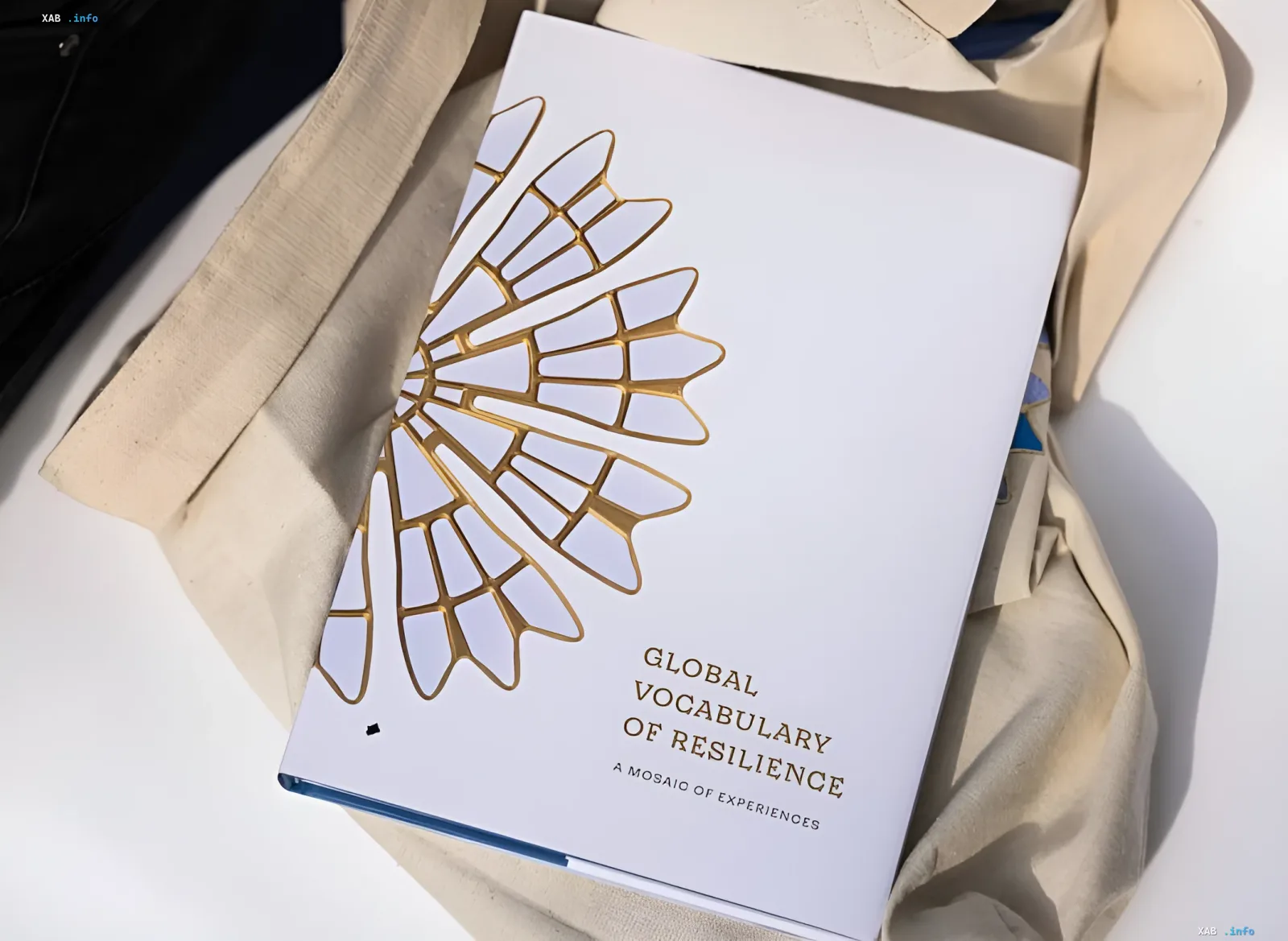
In Ukrainian society, the presentation provoked a polarized reaction. On the one hand, supporters of the project call it a significant contribution to the humanitarian agenda and a way to show the world Ukraine's experience. On the other hand, a wave of skepticism was heard on social networks: some users, with reference to media blunders of past years, in particular Elena Zelenska's statement about 'mackerel at 8 hryvnias', criticized the initiative as detached from everyday reality. According to critics, against the backdrop of a protracted conflict, destroyed infrastructure, and economic difficulties, abstract philosophical terms are perceived as bureaucratic rhetoric rather than practical help. The official position of the organizers, conversely, emphasizes the symbolic and diplomatic significance of the publication.
Contradictory data
The difference in versions here concerns not the facts of the presentation, but the assessment of its significance. Official sources present the dictionary as a successful element of cultural diplomacy and a demonstration of the 'architecture of resilience' of Ukrainian society. Public statements on social networks, conversely, characterize the project as detached from the immediate problems of citizens — from economic difficulties to issues of mobilization and migration. Exact figures on the scale of public resonance are not provided in open sources, so both views reflect a subjective assessment rather than a measurable fact. The factual parameters of the publication — the number of terms (38), the number of experts (more than 45), and the support of WHO and UNICEF — coincide in the provided sources.