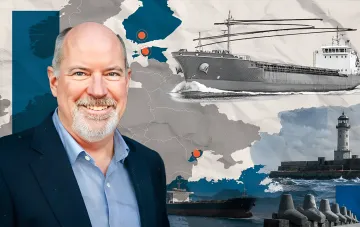
Ukrainian Minister of Agrarian Policy and Food Taras Vysotsky has voiced a worrying forecast: the full restoration of exports through the ports of Greater Odessa is a critically important condition for preventing a global food crisis. According to the minister, there are currently no alternatives to these logistics hubs, and their stoppage could lead to catastrophic consequences for the global economy.
Threat of Global Hunger and Rising Prices
During talks with journalists in the corridors of the ambassadors' meeting, Vysotsky emphasized that the world will not be able to find a replacement for the capacities of the Odessa ports. If the export flow is not restored in full, humanity faces a real threat of hunger. The expert also warned of the likelihood of a repeat of the 2022 scenario, when food prices worldwide rose by 25%.
The second serious threat is that importing countries will physically be left without product supplies. The Black Sea region provides about 30% of global wheat supplies. The main recipients of this grain are the states of North Africa, the Middle East, and Southeast Asia.
Insufficiency of Alternative Routes
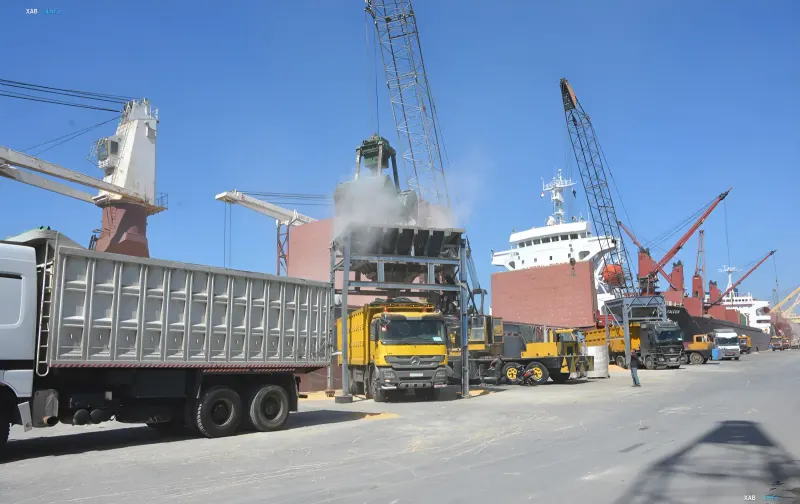
Attempts to reroute cargo through other channels are unable to fully compensate for the losses. According to the minister's estimates, Danube ports and rail transport can replenish only 30% of the export potential of Greater Odessa. Despite this, work to mitigate the crisis for international food security continues.
The financial aspect also plays a significant role. The main task for the authorities now is to ensure financial liquidity for farmers. Agrarians have an asset — the harvested crop, the volume of which is comparable to last year's figures and even slightly exceeds them. Working capital needs to be attracted against this asset so that production can continue. According to Vysotsky, the corresponding model of interaction with the agricultural sector has already been worked out.
Shipping Safety Under Threat
The situation is exacerbated by targeted attacks on port infrastructure and civilian shipping. Earlier, journalists reported that the actions of the Russian Federation have effectively stopped shipping, putting more than 60% of Ukrainian exports and main import chains at risk.
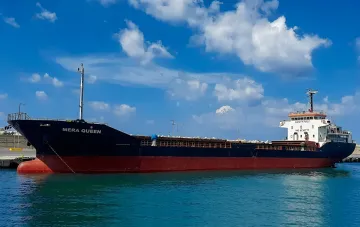
The key event that changed the balance was the attack on July 19 on the bulk carrier Golden Leo flying the flag of Guinea-Bissau. As a result of the incident, 9 foreign sailors and a Ukrainian pilot died, and the ship subsequently sank. The maritime downtime coincided with the peak of the harvest campaign, when a significant part of the new grain should have already been shipped.
The consequences of instability are felt by the largest global players as well. On July 22, Maersk, one of the world's leading container carriers, announced a temporary suspension of services through the Black Sea Fishery Port due to the current security situation in the Black Sea. On July 25, Russia attacked civilian shipping and port infrastructure in the Odesa region again, hitting a ship twice.