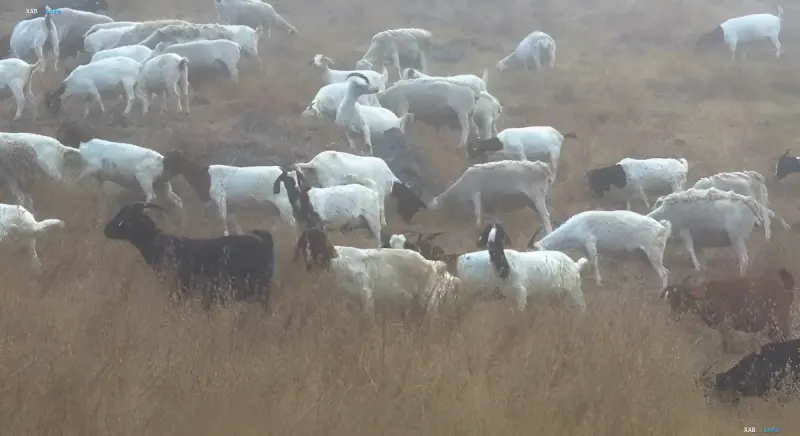
In the state of California, where the threat of wildfires is becoming increasingly acute, authorities have found an unconventional solution to combat flammable vegetation. Instead of heavy machinery and chemicals, about 400 goats and sheep have been deployed to fight invasive weeds. These animals have taken on the task of clearing a vast area of 180 acres in the northeast of the city of Fresno.
Ecological War Against Yellow Starthistle
The main enemy of the ecosystem in this region has become yellow starthistle (Centaurea solstitialis) — an aggressive invasive weed native to the Mediterranean. Introduced to the state back in the 19th century, it has taken over millions of acres of land. The plant forms dense, thorny thickets that displace local grasses and flowers. But the main danger lies not in competition for resources, but in fire hazard: after drying out in the hot summer, the starthistle turns into ideal fuel capable of accelerating the spread of fire.
Furthermore, this weed strikes a blow to biodiversity, depriving local birds, insects, and other animals of food and habitat.
Why Animals Instead of Machinery?
The project, implemented by Fresno authorities in conjunction with the Sierra County Resource Conservation District, is based on the method of "targeted grazing." This is an environmentally friendly alternative to bulldozers, lawnmowers, and herbicides. Experts note several key advantages of using livestock:
- Accessibility of difficult terrain: Goats and sheep can move safely across steep slopes and rocky areas where heavy machinery cannot go.
- Feeding efficiency: Goats happily eat thorny shrubs and weeds that other animals avoid, while sheep clear the area of grasses and low-lying vegetation.
- No chemicals or fuel: The method eliminates the use of herbicides and equipment running on fossil fuels, reducing the carbon footprint.
Seed Destruction Strategy
Specialists emphasize that the animals do more than just mow the grass. Certified range manager Rebecca Ozeran explains that goats readily eat the seed heads of weeds. This is a critical stage in the long-term fight against invasive species: destroying seeds limits the plant's ability to regenerate and prevents the emergence of the next generation of starthistle.
"Removing seeds makes future restoration efforts much more effective than just mechanical cutting," the project materials note.
Restoration of Nature
The eight-week grazing program is just the first stage of a large-scale project to restore the natural environment. Once the herd finishes its work, specialists plan to plant local grasses, shrubs, and trees on the cleared territory.
Healthy local vegetation will create a resilient ecosystem capable of withstanding drought and future fires, as well as supporting pollinator and bird populations. The restoration site borders the popular Woodward Park, which means a double benefit: improved safety for visitors and the revival of the natural landscape for years to come.