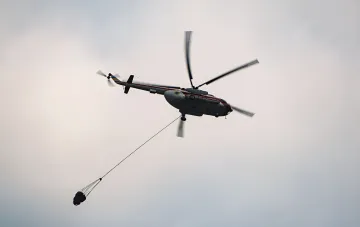
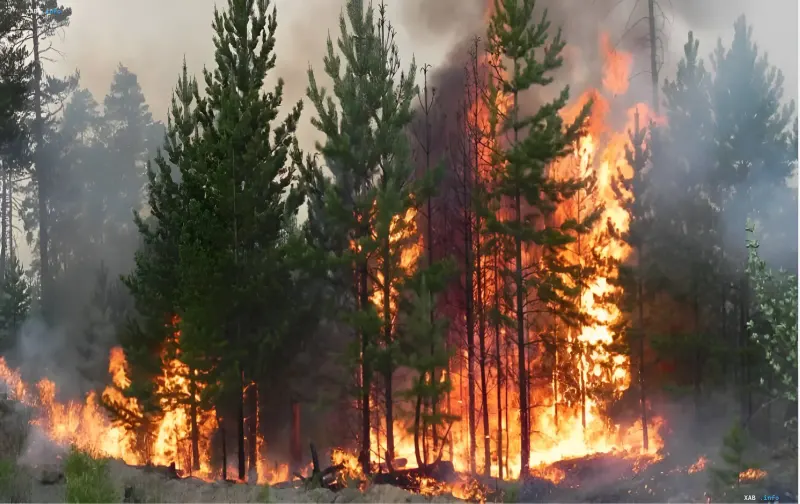
Summer heat in Europe has turned into a genuine catastrophe, claiming thousands of lives and leaving a trail of devastated territories in its wake. Mass wildfires sweeping across Spain and France have forced the emergency evacuation of over 250,000 people. Authorities were compelled to declare states of emergency in an attempt to contain the raging flames. However, while firefighters battle the blaze, researchers are proposing a radically different approach to solving the problem—turning goats into the primary defenders of the forests.
An Unexpected Ally in the Fight Against Fire
The idea of using livestock grazing to create natural firebreaks in the landscape has moved from theory to official status. This year, the European Commission, in collaboration with leading farming organizations, approved a strategy in which livestock grazing on shrubs becomes a key factor in containing the spread of fire.
This method has been deemed particularly relevant for regions in Spain: Extremadura, Andalusia, and Valencia. The problem lies in the fact that abandoned agricultural lands are rapidly overgrown with dense shrubbery. This vegetation either dries out or is replaced by homogeneous forests that are extremely vulnerable to ignition. It is under these conditions that fire spreads with catastrophic speed.
Satellite Data Confirms the Theory
The satellite observatory of the European "Copernicus" program has provided irrefutable evidence of the link between landscape and the scale of wildfires. Analysis showed that the most destructive fires ravaging Europe occur precisely in areas where forests and shrubs form extensive, interconnected masses. Removing the underbrush with livestock breaks these connections, creating natural barriers for the fire.
The Economics of Shepherds and Political Inertia
Despite the effectiveness of the method, experts describe it as "low-tech but not cheap." The main difficulty lies in the economics: shepherds often depend on state subsidies, and the market does not offer sufficient incentives for goat breeding. José María Castilla, a representative of the Spanish farming lobby ASAJA, stated directly that it is impossible to attract young people to goat breeding without making this business profitable.
According to Castilla, the solution lies in creating a special fund operating on the same logic as the EU's response to the coronavirus pandemic in 2020. However, besides financial issues, there is also a political obstacle. Fire safety experts note that the authorities' focus has shifted to mitigating consequences—extinguishing already ignited fires—rather than investing in preventive measures.
Global Context: Forecast for 2026
The situation is exacerbated by climate change. Scientists warn that 2026 could become one of the hottest years in recorded history due to the expected intensification of global warming processes. Further temperature increases will lead to more frequent heatwaves, droughts, and other extreme weather events.
The consequences will be comprehensive: rising sea levels, loss of biodiversity, threats to food security, and increased health risks for the population. Under these conditions, using goats for fire prevention looks not just like an agricultural technique, but as a necessary measure of adaptation to the new climatic reality.