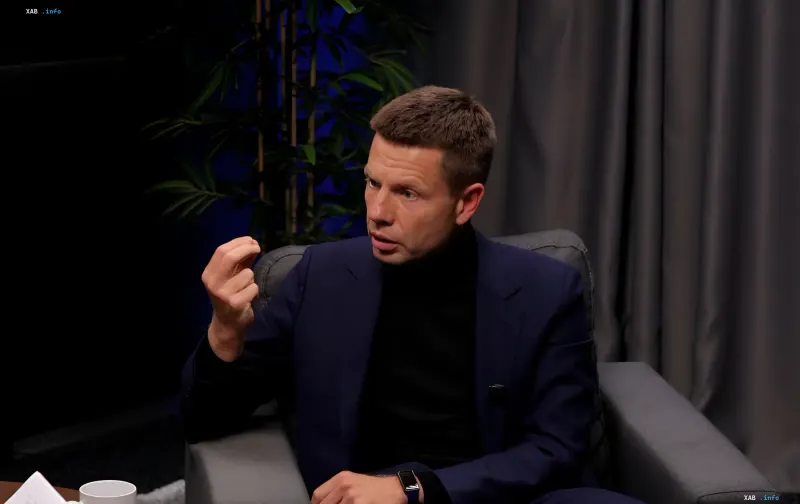
People's Deputy Oleksii Goncharenko, previously expelled from the "European Solidarity" faction following the publication of his own "peace plan," detailed the logic of his proposals and commented on the reaction of his parliamentary colleagues in an interview with the RBC-Ukraine project "Don't Interrupt!" hosted by Volodymyr Kurennyi. The politician emphasized that his document does not contain a single point of capitulation, arguing instead that true capitulation lies in refusing to even try to find a way out of the war and dooming the country to exhaustion. Goncharenko also stated that the decision to expel him from the faction came as a surprise, though he described the event as a "civilized divorce," noting that dozens of deputies from various factions privately support his ideas but are afraid to speak about them publicly.
Peace Plan: Local Agreements Instead of a Total Settlement
At the core of Goncharenko's document is the principle of dividing complex issues into separate tracks. The deputy proposes temporarily setting aside contentious territorial issues, specifically the status of Donbas, and focusing on achieving local agreements that can be implemented in the near term. As concrete examples, he cited unblocking shipping in the Black Sea with Turkey's participation and ensuring the protection of Ukraine's energy infrastructure. According to him, such "local victories" are capable of reducing the intensity of hostilities and creating conditions for a broader dialogue, whereas attempting to solve everything in a single package is, in his estimation, doomed to failure.
The Trade-Off: Rejecting NATO in Favor of Partner Guarantees
One of the most debatable elements of the plan is the proposal to abandon NATO membership in exchange for ending the war. Goncharenko emphasizes that this is not about "gifting" anything to Russia, but about a specific trade-off: Ukraine halts combat operations and drops its bid for Alliance membership, receiving in return financial guarantees and support for the Armed Forces from Western partners—rather than from Moscow, whose promises, he says, cannot be trusted. The deputy argues that joining NATO is a decision for all Alliance members, not just Ukraine, and since "we are not being accepted there right now," a public discussion of alternative security scenarios is necessary for society. He names a strong and financially secure army as the main guarantor of security.
Assessing Zelenskyy's Leadership and "Panic Fear of Criticism"
Commenting on President Volodymyr Zelenskyy's role in seeking a way out of the conflict, Goncharenko stated that the head of state strives for a "victorious peace" but avoids difficult conversations with society. In his estimation, Zelenskyy "panics at the thought of criticism and the loss of applause," which the deputy called a weak position in times of crisis. At the same time, Goncharenko expressed respect for the president, emphasizing that in a critical moment, society needs a direct and honest dialogue rather than unilateral statements.
"Dangerous Populism": Criticizing Trump as a Security Threat
A separate block of the interview is devoted to the reaction of Ukrainian politicians to the policies of Donald Trump's administration. Goncharenko called the attacks by Ukrainian officials on the American leadership "extremely dangerous populism," which he said threatens the lives of Ukrainians given their critical dependence on American intelligence and military assistance. The deputy stated that "arrogant appeals" to Trump by Ukrainian politicians are either a crime or "complete stupidity," and called for a pragmatic rather than emotional tone in relations with Washington.
"I Don't Believe Putin Myself, But Not Trying is a Crime"
Answering a question about trust in Vladimir Putin and the possibility of reaching an agreement with him, Goncharenko stated bluntly: "I don't believe Putin myself." However, according to his logic, while the Armed Forces of Ukraine are "buying time," politicians and diplomats are obligated to use that time to seek a diplomatic exit. The deputy emphasized that if negotiations fail, he will be "the first to come out and say: we tried, they don't want anything," but refusing to even make the attempt is, in his conviction, a "crime" and "washing one's hands." He admitted that his ideal scenario remains "a victory parade on Red Square, reparations, and a Nuremberg Tribunal over Putin," but under conditions where such an outcome is "not in sight," he opposes "burning down the whole Ukraine" in an attempt to achieve the unattainable.