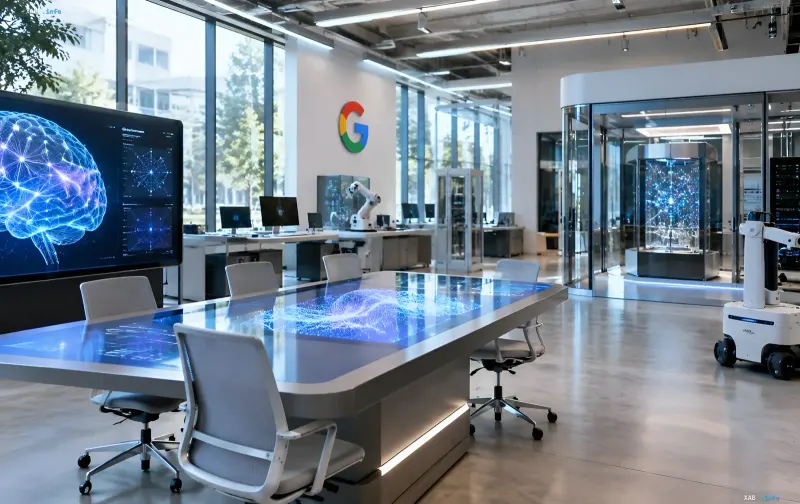
In November 2026, the technology community is actively discussing a new Google AI model under the working name Hydrogen. According to internal company reports, engineers describe the development as an "extremely capable, fast, and efficient system" that combines high performance with significantly lower computational costs compared to the corporation's flagship solutions. The model is currently undergoing internal testing among Google employees and, according to reports, is being prepared for integration into the expanding Gemini 4 ecosystem.
Internal platform Jetski and testing logic
Google employees have gained access to Hydrogen through an internal development platform called Jetski. This tool is traditionally used at Google during the pre-launch phase: before the public release of any significant AI model, it undergoes an internal testing cycle specifically via Jetski, allowing engineers and product teams to identify critical bugs, evaluate performance, and calibrate model parameters before it becomes available to a wider audience. The very fact that Hydrogen is hosted on this platform confirms that the development is in an advanced stage and is not a conceptual prototype.
Legacy of the Flash line and naming symbolism
According to employees who have already gained access to the model, Hydrogen resembles previous Google Flash line solutions in its architecture and intended purpose. These models were originally created as "workhorses"—optimized for maximum query processing speed and minimization of computational costs, whereas flagship models are geared toward complex multi-step tasks and deep reasoning. The name Hydrogen appears not to be accidental in this logic: hydrogen is the lightest element in the periodic table, and the choice of such a name emphasizes the philosophy of "lightness" and energy efficiency embedded in the model's architecture.
Competitive context: pressure from Anthropic
Internal testing of Hydrogen is taking place against the backdrop of noticeably intensifying competition in the generative AI market. Recently, Anthropic introduced new models in the Fable and Mythos lines, focused on highly specialized tasks—cybersecurity vulnerability detection and hardware design. The emergence of such specialized solutions from competitors increases pressure on Google, which aims not only to maintain leadership in the "heavy" model segment but also to secure a foothold in the niche of fast, economical, and mass-market AI tools, where Hydrogen, by all appearances, is intended to be a key product.
What remains unknown: release timeline and pricing
Despite active discussion of the model within the company, Google had not provided official comments regarding the public release plans for Hydrogen as of the time of this writing. It has not been specified whether the model will be free for users, as was the case with previous Flash-class solutions, or if the corporation will change its pricing strategy. A separate open question remains the fate of another AI model mentioned in leaks, Carbon—it is unknown whether it will be part of a paid Google subscription or positioned as a standalone product. Until an official statement from the company appears, all details concerning launch dates, functional limitations, and commercial terms remain a matter of speculation.