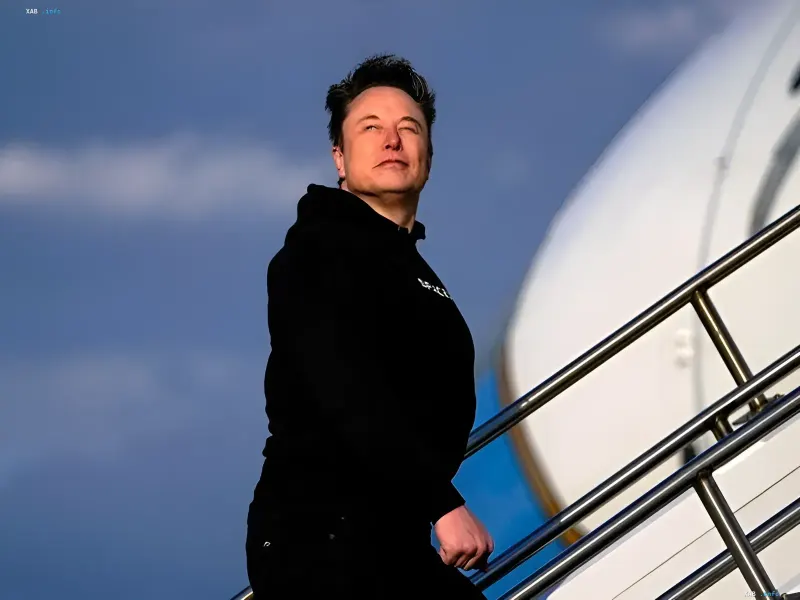
According to The New York Times, Elon Musk acknowledged in an internal communication to employees that the artificial intelligence being developed at SpaceX lags behind competitors' advanced models, effectively shifting the division's strategic priority: instead of chasing neural network test results, engineers have been instructed to maximize revenue from renting out computing power to third-party clients. As the American tabloid found, the entrepreneur increasingly evaluates the AI direction's effectiveness not by model performance benchmarks, but by the revenue generated by each graphics processing unit. In August, according to the publication, he even temporarily renamed the engineering team's internal chat to "Sell compute because we can't compete."
Shifting Metrics: Revenue per GPU Instead of Benchmarks
In one message to employees, Musk directly pointed out that revenue per single GPU should become the main indicator of competitiveness, rather than AI model test results. In his logic, companies unable to pay off expensive accelerators risk bankruptcy or are forced to transform into computing resource providers. This rhetoric is accompanied by tightened oversight: the entrepreneur demands that engineers justify the necessity of allocating expensive GPUs and reviews funding for projects that do not demonstrate sufficient commercial return.
Multi-Billion Dollar Contracts with Anthropic and Google
The infrastructure rental strategy is already bringing SpaceX revenues comparable to those from its own products. Anthropic is leasing the company's capacity under agreements totaling up to $120.5 billion, running through 2029; following the provision of all resources stipulated by the contracts, expected in December 2026, monthly payments could reach $3.1 billion. At the same time, the agreements allow for termination with 90 days' prior notice after the initial mandatory periods conclude. Another major customer is Google, which is also leasing SpaceX's computing infrastructure. According to NYT, the SpaceXSI AI division already generates over half of the company's total revenue, while Anthropic, having become the largest customer in the third quarter, provides over a third of its quarterly income.
Scaling Back In-House AI Projects
Amid the restructuring toward compute rentals, the company is scaling back some of its own developments. In September, SpaceX closed down its AI companion development direction: some specialists who worked on the Digital Optimus project creating virtual AI employees were reassigned to develop Grok's core capabilities. In addition, a 60-person team working on the Grok Imagine image and video generation tool was disbanded. Thus, resources are concentrating around the flagship chatbot and, more importantly, around the commercialization of "hardware."
Infrastructure That Failed to Deliver Expected Results
Paradoxically, the restructuring toward rentals is also linked to technical difficulties. The company previously built the Colossus supercomputer in Memphis in just 122 days, but using it to train its own models proved problematic: due to difficulties combining computing clusters, SpaceX preferred to lease a significant portion of its resources to third-party customers. Nevertheless, infrastructure expansion continues — the company intends to invest another $74 billion in data centers in Arizona and Texas.
Analyst Assessments and Musk's Public Confidence
According to Morningstar Research analyst Nicholas Owens, SpaceX currently earns significantly more from renting out computing power than from its own Grok chatbot, and providing infrastructure to Anthropic and Google effectively helps the very companies Musk competes with in the generative AI market. The entrepreneur himself publicly expresses confidence in the further growth of this business: at the NYT DealBook conference on November 18, he stated that Anthropic is highly likely to continue leasing SpaceX capacity and is interested in additional resources, with the customer's potential demand reaching another 10 GW of computing infrastructure.