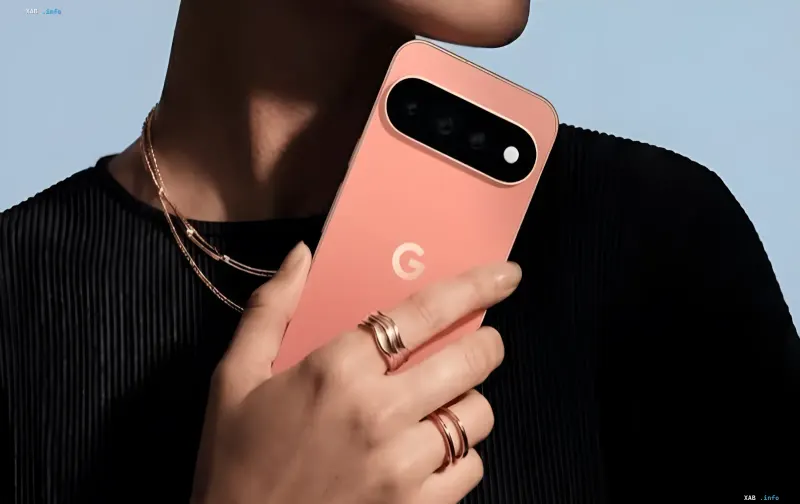
Google has unveiled the new generation of flagship smartphones: Pixel 11, Pixel 11 Pro, and Pixel 11 Pro XL, built on the proprietary Tensor G6 processor. Alongside updated hardware, the company is betting on the return of iconic hardware features that were abandoned nearly a decade ago, as well as a suite of AI tools embedded directly into the system—from the keyboard to the camera. According to sources, the lineup starts at $899, and the key visual accent for Pro versions is the RGB lighting under the new name HiLight.
Return of LED Notifications and HiLight Array
One of the most notable decisions was the return of hardware LED notifications, which Google abandoned back in 2018. The rear panel features a HiLight lighting array around the flash, allowing users to assign individual colors to selected contacts and pulse during Gemini assistant operation. Thus, the user receives a visual signal of incoming events without the need to remove the phone from the charger or take it out of their pocket.
AI in the Keyboard: Clean Text Without "Parasites"
The standard keyboard integrates a tool that filters out parasitic sounds like "um" and "uh" in real-time, corrects logical slips of the tongue, and removes contradictions in phrases. Essentially, spoken speech is transformed into neat written text in any application, which is particularly useful for voice input and dictating notes.
Camera: Smart Shutter, Teleprompter, and Safe Zones
The camera function helps ensure important moments are not missed: upon pressing the shutter, the smartphone records a short video, automatically selects the best frames, removes facial blur, and saves the perfect photo along with the original clip. A separate mode offers a built-in teleprompter over the lens, advanced sound and frame editing tools, and visual "safe zone" grids for social media formats (such as Instagram), ensuring interface elements do not cover the face or subtitles.
Fast Charging Without Overheating
The smartphone can accelerate battery charging without increasing the power adapter's wattage—30W for base versions and 45W for Pro XL. To achieve this, the system temporarily disables background processes and relaxes strict thermal limits, maintaining maximum charging speed up to 100 percent.
Contradictory Data
There are discrepancies in the sources. First, the starting price: one article headline mentions $899, while the link in the same publication indicates $999—the exact price at the time of publication should be verified. Second, the availability of HiLight lighting: some materials describe the RGB array as a feature specifically for Pro versions, while general descriptions of the lineup present it as a key feature of the generation. Finally, the term "HiLight" in early leaks was presented as a possible renaming of the camera lighting, meaning the final name and its application area could have been adjusted before the official announcement.
In conclusion, the Pixel 11 appears to be Google's attempt to bring back "tactile" and visual features that once made Pixel recognizable, while simultaneously embedding AI into the most everyday scenarios—from dictating text to filming videos. We must wait for the retail versions to verify how well the promised features work in real-world conditions.