A native messenger instead of Google Messages
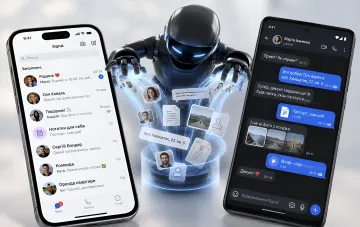
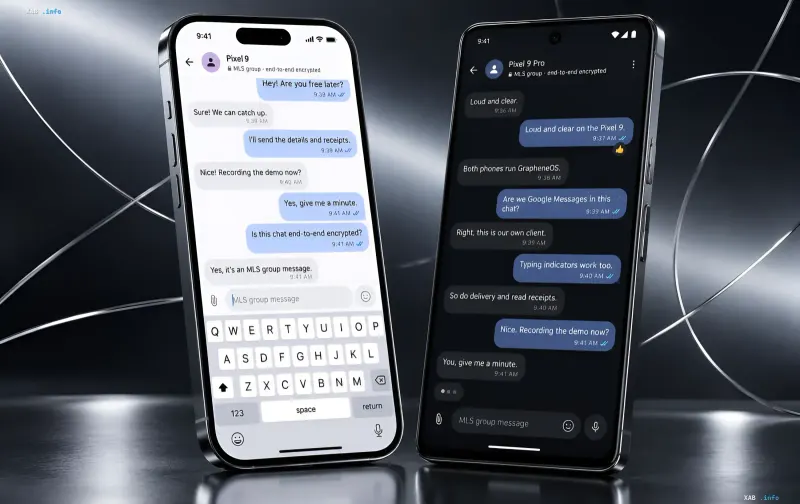
The GrapheneOS team has published a proof of concept for its own messaging application with support for the RCS standard. The developers emphasize that this is not a finished product, but a working demonstration, the developments from which will be used to integrate RCS into the operating system's native Messaging application. Thus, in the future, GrapheneOS users will no longer need to install Google Messages to use the modern messaging standard.
End-to-end encryption and compatibility
Already at the concept stage, the application implements end-to-end encryption using the MLS protocol, compatible with Google Messages and iOS. This means that communication between users of different platforms can remain secure. In addition to encryption, the test version includes typing indicators, delivery and read receipts, reactions, as well as media and document sharing — a feature set comparable to common messengers.
OS integration and remaining dependence on Google Play
Importantly, the implementation requires changes to the operating system itself, so the feature will work exclusively on GrapheneOS devices. At the initial stage, the application will still depend on Google Play services: the team cannot yet do completely without the Google ecosystem. Only one thing will change — the need to install a separate Google Messages application will disappear.
Path to independence from Google
The developers admit that creating a completely independent alternative is difficult: many carriers use Google's infrastructure for RCS. However, in the long term, the team intends to make RCS autonomous from Google for operators that support such an initiative. At the same time, to ensure compatibility — for example, so that the typing indicator works correctly in correspondence between users of both applications — GrapheneOS is focusing on the Google Messages implementation.
Media processing security
A separate area of attention was the question of how securely the application will handle received photos, videos, and audio. This was prompted by discussions of Pixel 9 vulnerabilities related to automatic audio file processing in Google Messages. GrapheneOS clarified that a significant portion of media file handling is already performed in an isolated environment, users will be able to manage automatic downloads, and an additional setting will allow receiving files without their automatic processing.