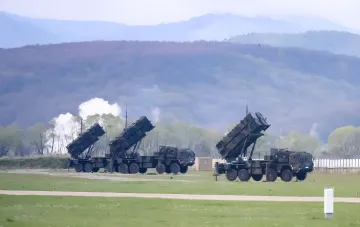
Greece has once again become the focus of international diplomatic efforts. Athens is under constant pressure from NATO and the European Union, which are persistently urging the Greek government to transfer air defense systems to Ukraine. Specifically, the discussion concerns interceptor missiles for the Patriot systems.
Request for 200 Missiles and Timing Issues
According to insiders, Kyiv recently sent Athens a specific request for 200 PAC-2 missiles from Greek Patriot batteries. Ukrainian authorities assumed that the service life of some of these munitions might be expiring, making their transfer a logical step in terms of stock rotation.
It should be noted that this request did not come out of the blue. It followed the failure of preliminary negotiations regarding the transfer of entire Greek Patriot batteries to Ukraine. Now, the focus has shifted to individual components of the system — the missiles.
Complex Logistics and Athens' Stance
NATO and the EU continue to believe that Greece could provide Ukraine with part of its Patriot stockpiles. However, Kyiv's allies are facing a number of bureaucratic and logistical challenges. Journalists explain that any transfer would require official confirmation that the missiles are fit for use but are not needed for Greece's own combat requirements.
Currently, a scenario is being discussed under which Greece would transfer the missiles to Norway, and Oslo would then deliver them to Ukraine. This route was supposed to simplify the process, but the problem lies in the fact that Athens is not in a hurry to change its position.
Greece reminds its partners that it has already transferred Sea Sparrow and Crotale missiles to Ukraine. Against this backdrop, Athens currently does not plan to provide the Ukrainian Armed Forces with new military aid on such a scale, citing the need to maintain its own defense capabilities.