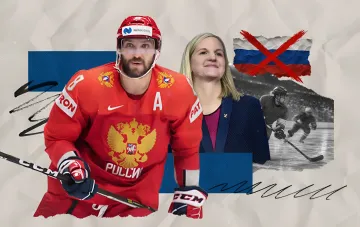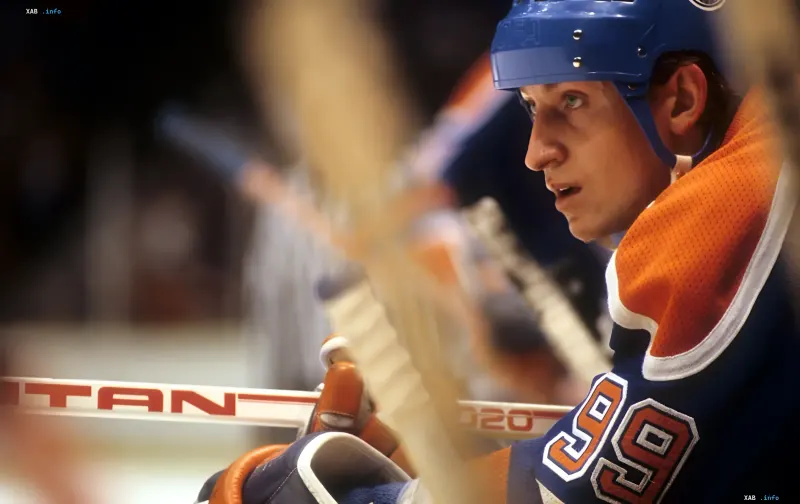
Legendary Canadian hockey player Wayne Gretzky has publicly spoken out in support of Canadian Prime Minister Mark Carney, who previously stated that participation by the Russian and Belarusian national teams in international competitions held on Canadian soil is unacceptable while the war against Ukraine continues. The former forward, considered one of the greatest players in hockey history, emphasized that Canadian society does not want to see the conflict continue and approves of the country's leadership taking a clear stance. His statement came against the backdrop of preparations for the 2027 World Junior Hockey Championship, which Canada is set to host.
“Nobody Likes War”
In his appeal, Gretzky focused on the humanitarian dimension of the situation, stating that nobody needs war and Canadians want it to end. “Nobody likes war, right? We certainly don't want to see that. Hopefully, it ends. Wish it never started,” he said. According to the NHL legend, Prime Minister Carney's position is clear and shared by a significant portion of the country's population, including hockey players. “I understand the Prime Minister's position, and it's good that he took it. He expressed it clearly. I think many players and people in Canada share that view,” Gretzky added.
Visa Restrictions as a Tool
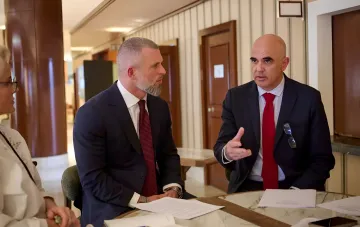
Prime Minister Mark Carney previously officially stated that Russian and Belarusian athletes should not represent their countries at international competitions held in Canada while the war against Ukraine is ongoing. To implement this stance, Canadian authorities are prepared to use visa and immigration restrictions: representatives of the Russian and Belarusian national teams may be denied visas or entry permits to participate in sports tournaments. Thus, even with formal sports clearance from federations, the Russian team could face practical impossibilities in arriving in the host country.
Neutral Status: A Caveat in the Rules
At the same time, the Canadian government allows for the possibility of individual consideration of applications from athletes competing under a neutral status—without the state symbols of Russia and Belarus. This means that restrictions primarily apply to team representation in national colors, while individual players could theoretically be granted entry if neutral status conditions are met. Such an approach allows Canadian authorities to maintain a tough stance regarding state national teams without completely closing the door to athletes who distance themselves from their countries' official symbols.
Context: IIHF and the CAS Verdict
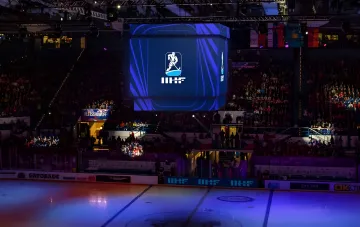
Canada's decision fits into a broader context surrounding the status of Russian and Belarusian hockey players on the international stage. Previously, the International Ice Hockey Federation (IIHF) began exploring ways to implement the Court of Arbitration for Sport (CAS) verdict regarding Russians. This creates additional complexity for tournament organizers: on the one hand, the federation is obligated to take the CAS decision into account; on the other hand, the host country retains the sovereign right to regulate entry into its territory. A way out of this stalemate has not yet been found, and it is precisely at this intersection of sporting, legal, and political interests that Gretzky's support was voiced, giving Ottawa's position additional resonance in the hockey community.