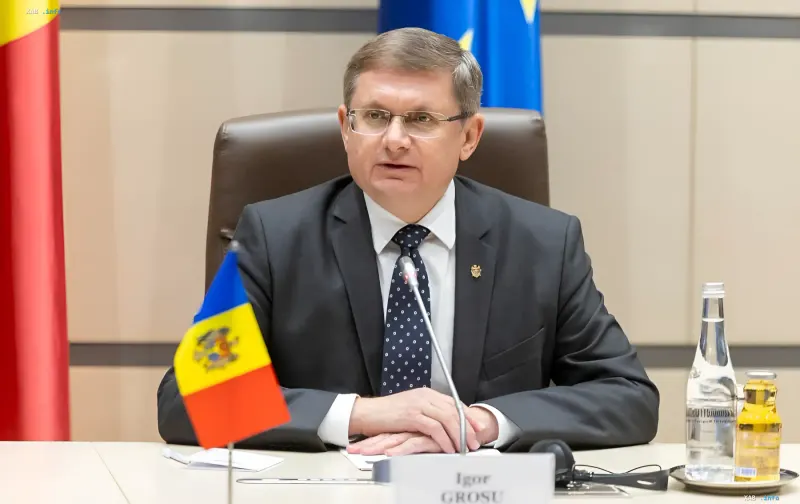
The Speaker of Parliament of the Republic of Moldova and leader of the Action and Solidarity Party (PAS), Igor Grosu, harshly reacted to reports that Russia is setting a condition to turn Moldova into a federation together with Transnistria and Gagauzia. According to him, such proposals have no significance for Chisinau, as the choice of the European development vector has already been made by society and enshrined at the highest legislative level.
"Ideas from the mothballs": Chisinau's position
Speaking on air, Grosu emphasized that the question of the country's course has been resolved once and for all. "We held a referendum where people voted, and we recorded in the Constitution: the vector of the Republic of Moldova is European integration. Period. All other ideas pulled out of the mothballs by the Russian Federation have no meaning for us," the parliament speaker stated. Thus, Chisinau directly indicated that any alternative scenarios, including a federal model involving Transnistria and Gagauzia, are considered irrelevant and not subject to discussion.
Where the demand for federalization came from
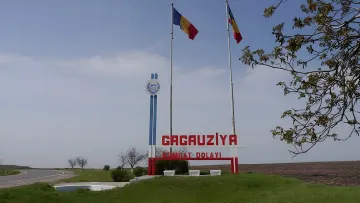
The reaction was triggered by publications regarding negotiations on the security system in Europe. On November 12, the Russian publication Echo, citing sources among negotiators, reported that among Moscow's conditions is the federalization of Moldova — referring to a federative republic uniting Moldova, Transnistria, and Gagauzia. The next day, the German publication Bild reported that upon Moldova's accession to the EU, Transnistria and Gagauzia should allegedly be granted the right to hold independence referendums, and that these conditions were presented to the European side during negotiations in Abu Dhabi.
Part of a broader package of Russian conditions
The demands on Moldova, according to Bild, are part of a broader package of Moscow's conditions. The publication reported that Russia also wants Finland to withdraw from NATO and the Alliance to abandon bases in the Baltic states, while media outlets reported a repeated demand to withdraw NATO troops to their 1997 positions. At the same time, Kremlin press secretary Dmitry Peskov denied that such conditions were put forward — thus, some of the listed points remain the subject of contradictory reports.
Government reaction: "the closer to the EU, the more scare tactics"
The Moldovan government, commenting on these reports, stated that the closer the country is to the European Union, the more "scare stories from Moscow" appear. In Chisinau, such statements are linked to an attempt to exert pressure on the European integration process and destabilize the situation around Transnistria and Gagauzia, which, according to the authorities' stance, remain an integral part of the state.
What Moscow refused to discuss in Abu Dhabi
Against the backdrop of discussions on conditions regarding Europe and security, RBC-Ukraine sources reported that the Russian delegation at the negotiations in Abu Dhabi refused to discuss key issues for Ukraine: a ceasefire, territorial aspects, energy, and security in the Black Sea. This indicates that, despite public rhetoric about a "package of conditions," practical movement toward a Ukrainian settlement did not occur at these talks.