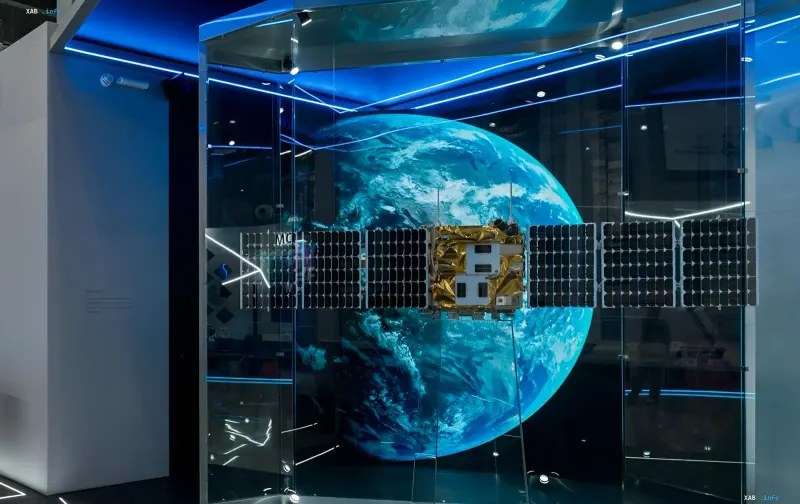
The Main Directorate of Intelligence of the Ministry of Defense of Ukraine has published a detailed breakdown of the participants in Russia's "Rassvet" low-Earth orbit broadband data transmission satellite system project, which Kyiv positions as a functional replacement for Starlink. According to the GUR press service, the system includes a low-Earth orbit satellite constellation, ground control infrastructure, gateway stations, and subscriber terminals for stationary and mobile objects. Cooperation in its creation brings together IT companies, microelectronics manufacturers, research centers, Roscosmos structures, and the Russian Ministry of Defense.
Bureau 1440 and IKS Holding: The Core of Industrial Cooperation
According to Ukrainian intelligence, the key enterprise in the project's implementation is Bureau 1440 LLC, which is part of the IKS Holding IT conglomerate. The holding's enterprises, according to disclosed data, supply components, manufacture solar panels, subscriber equipment, printed circuit boards, electronic modules, and other system components. Thus, Russia's civilian IT sector, according to the GUR, provides a significant portion of the hardware base for the military satellite project.
The Role of Roscosmos and the Military Department
Roscosmos and other enterprises of the Russian aerospace industry, according to intelligence, are responsible for the development and production of launch vehicles, upper stages, electric propulsion thrusters, as well as satellite adaptation, launch preparation, and orbital deployment. Within the corporation itself, the "Rassvet" project is directly overseen by its head, Dmitry Bakanov, who previously headed Gonets Satellite System JSC, including during the partnership with Britain's OneWeb and the creation of a joint venture to develop low-Earth orbit communication services on the Russian market. Ministry of Defense structures ensure the operation of the spaceport, interaction between project participants, and the subsequent integration of the system into Russia's military communications infrastructure. VTB Bank acted as one of the investors providing financial support for the development.
Military Purpose and Integration Plans
The GUR emphasizes that "Rassvet" is primarily a military communication system for Russia, and the adversary plans to widely use it in the interests of the armed forces in the future. Plans have already been recorded to integrate the satellites into the space-based target designation system for missile weapons, as well as to equip Iskander-M operational-tactical missile system command and staff vehicles with subscriber terminals. According to intelligence data, the planned coverage primarily spans the territory of Ukraine and European Union countries.
Launch Chronology and Current Status of the Constellation
Russia launched the constellation's first 16 serial satellites into orbit in March 2026. In late May, according to available data, Roscosmos head Dmitry Bakanov stated that the devices were operating in test mode and no signs of military use were observed at that time. To ensure stable communication, by his own estimate, at least 200–250 satellites are required. The second serial launch took place on July 19, 2026, with another 16 devices put into orbit. Round-the-clock coverage promised by Moscow will require more than 250 satellites, meaning dozens of additional launches will be needed in the coming months.
Context: Why "Rassvet" Is Called a Starlink Replacement
The project's name and functional positioning directly indicate Moscow's intention to create its own low-Earth orbit broadband communication infrastructure capable of competing with commercial systems, primarily American Starlink. However, unlike Starlink, "Rassvet" has been designed from the outset with an emphasis on military application and integration into the missile weapon control system, making it not just a telecommunications asset, but a strategic military target. The disclosure of the project's structure by Ukrainian intelligence allows Western partners and the Ukrainian command to more accurately assess the timeframe in which the Russian constellation will achieve operational readiness.