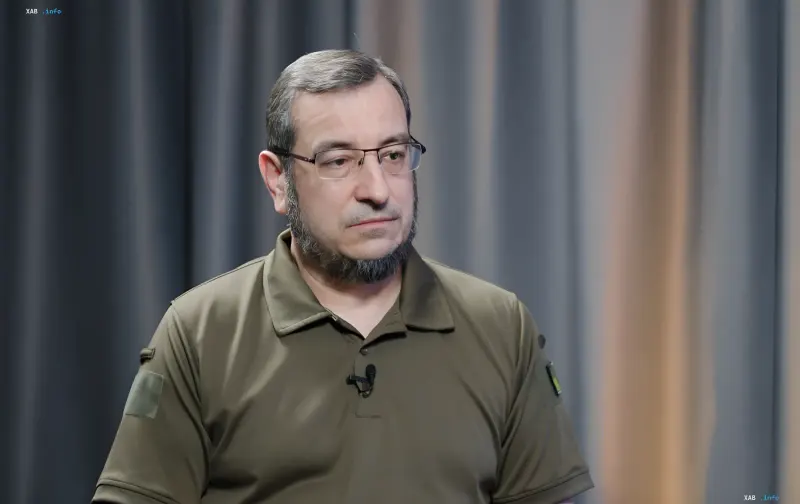
Vadym Skybitskyi, a representative of the Main Directorate of Intelligence (GUR) of the Ministry of Defense of Ukraine, stated that international sanctions have become a key instrument of pressure on Russia's drone industry. According to him, it is difficult for Ukraine to directly strike Russian drone-manufacturing plants, as many of them, including joint production sites with Chinese companies, are located more than 2,000 kilometers from the Ukrainian border. The statement was made at the YES Annual Meeting 2026 conference, organized by the Viktor Pinchuk Foundation, and was broadcast by RBC-Ukraine.
Pressure Strategy: Sanctions Instead of Strikes on Rear Areas
Skybitskyi emphasized that Ukrainian intelligence has information on all enterprises and companies involved in drone production, including joint projects with Chinese partners. However, the geographic remoteness of most such facilities makes their practical neutralization by strike aviation or missile systems extremely difficult. Under these conditions, the GUR assesses that sanctions pressure is a more effective way to curb Russia's drone potential.
Dependence on Chinese Components
According to the GUR representative, thanks to international sanctions, Russia today faces serious problems in supplying jet engines for drones imported from China. Skybitskyi added that, in his assessment, China understands the possible consequences, risks, and problems for its own industry if it continues supplying Russia, including chemical elements and electronic components. He also stated that the GUR holds "official documents and reports from the General Staff of the Russian Federation to the Russian Minister of Defense" about serious problems with delivering components from China to Russia, and called the sanctions mechanism "working." Earlier, Politico reported that the Chinese state-owned company Jilin Chemical Fiber Group had been secretly supplying Russia with chemicals for strike drones.
Contradictory Data
The GUR's assessment of sanctions effectiveness is met by a number of contradictory signals from open sources. On the one hand, Skybitskyi claims that Russia faces systemic problems with the supply of engines and components. On the other hand, according to the publication "Militarny" (which UNIAN previously cited), Russia is already producing more jet suicide drones than the slower "Shaheds," indicating growth rather than a collapse in production. In addition, according to Focus, production of the "Geran-3" drones was suspended in the Russian Federation, which the GUR also attributed to separate reasons. Thus, versions of "serious problems" and of the ramp-up of jet UAV production coexist in the public domain, and comparing them requires caution: sanctions pressure probably affects individual nodes of the supply chain, but does not necessarily lead to an overall decline in output.
Beijing's Position
Against this backdrop, official Beijing states its readiness to join a settlement of Russia's war against Ukraine. At the same time, as Chinese President Xi Jinping noted, China adheres to an approach aimed at "eliminating both the symptoms and the causes of the problem." This wording leaves room for maneuver: Beijing declares its involvement in the diplomatic process, but at the same time, according to Ukrainian and Western sources, continues to supply Russia with dual-use components, which is precisely the subject of sanctions pressure.