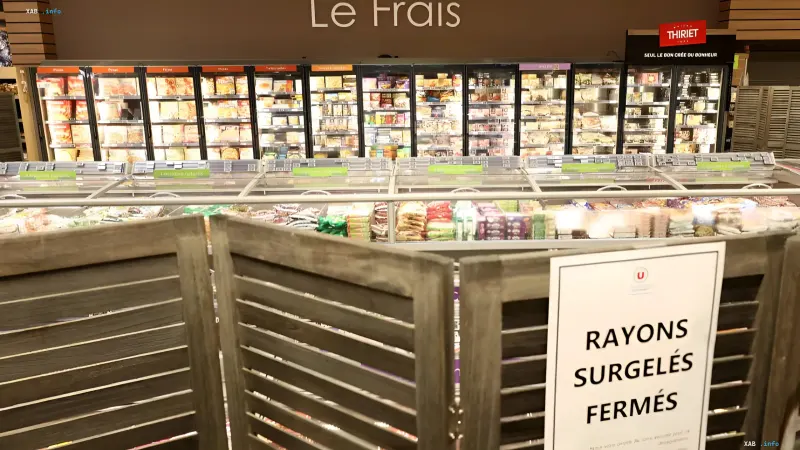
Unidentified cybercriminals have launched an unprecedented attack on the physical infrastructure of French retail by remotely hijacking network-connected refrigeration units. In hundreds of supermarkets across the country, temperatures in refrigerators and freezers were forcibly raised to 50°C overnight, resulting not only in the complete spoilage of tons of fresh-frozen food, but also local equipment fires.
Scale of the Cyberattack on Retail
The major French retail chain Intermarché, part of the Les Mousquetaires group, suffered the most severe damage from the attackers' actions. The incident affected about 150 stores of this chain, as well as locations of other major market players including Cooperative U and Carrefour. The Paris Prosecutor's Office, together with France's National Cybersecurity Agency (ANSSI), immediately launched an official investigation into the incident to identify the hackers and prevent potential new waves of attacks on the country's critical infrastructure.
Vulnerabilities in Danfoss Equipment
During preliminary technical analysis, security experts found that hackers were able to breach defense barriers through vulnerabilities in industrial Danfoss controllers. Specifically, the perpetrators exploited flaws in outdated control controller firmware versions, where software that had been released long ago but left unupdated by store owners was in use. Such negligence in cyber hygiene allowed unauthorized parties to gain full control over the temperature regimes of critical retail equipment.
International Resonance and Consequences
In parallel with the French events, Dutch retail giant Ahold Delhaize announced major disruptions and a temporary suspension of food deliveries due to cybersecurity issues. Although a direct technological or organizational link between the French incident and the Dutch disruptions has not yet been officially confirmed by competent authorities, experts agree that both situations expose critical vulnerabilities in modern supply chains.
Contradictory Data
While official agencies and most specialized media agree that the cause of the incident was the exploitation of vulnerabilities in a specific manufacturer's equipment, some independent sources and Telegram channels circulate versions about the possible involvement of internal insiders or a coordinated group of hacktivists. Nevertheless, ANSSI insists on the technical nature of the vulnerability via remote access, ruling out the version of direct physical interference at the facilities.
Threats to the Internet of Things
This attack clearly highlighted the colossal and underestimated danger of the Internet of Things (IoT) and operational technologies in the modern retail sector. Neglecting regular updates of basic controller software allowed cybercriminals to cause multimillion-dollar material damage to retail chains and threaten the stability of food supplies in entire regions of France.