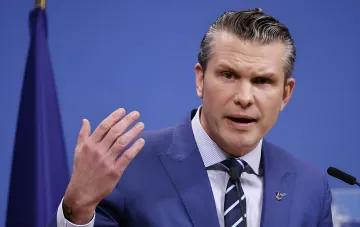
Finnish Defense Minister Antti Hakkainen has stated that the demands put forward by Moscow regarding a reduction of NATO's presence on the eastern border represent a targeted attempt to test the "flexibility of the US and Europe." This was reported by RBK-Ukraine, citing information from Bloomberg. According to the Finnish defense head, Russia aims to force European NATO member states to limit their operations in Moscow's interest, and such conditions, in his assessment, are "not up for discussion."
A test of compliance
Hakkainen emphasized that in recent days, Russia has "clearly decided to test the US and Europe for their flexibility." The Finnish minister noted that Western politicians must realize the real nature of Moscow's actions and not interpret the expansion of the Kremlin's demands as a signal for negotiations. According to him, such proposals are "absolutely outrageous," and the aggressor state, in his assessment, understands this.
Changing the security architecture
The Finnish Defense Minister added that Moscow is currently not seriously inclined toward peace negotiations, but rather is expanding its list of demands in an attempt to change the architecture of European security in its own favor. Hakkainen urged Western capitals to view these steps not as a one-time tactic, but as an element of a broader strategy to restructure security on the continent.
Specific demands regarding Finland and the Baltic states
As a reminder, the German publication Bild previously reported that Russia, in order to end the war in Ukraine, had demanded the withdrawal of Finland from NATO and the refusal to host Alliance bases in the Baltic states. According to the publication, such conditions were voiced by Russian representatives during informal conflict settlement talks and were also presented to the European side during contacts in Abu Dhabi.
Denial from the Kremlin
At the same time, Kremlin spokesperson Dmitry Peskov denied the Bild report. He stated that he "knows nothing about this" and emphasized that "no such conditions were put forward." Thus, at the time of the publication of Hakkainen's statement, the question of whether demands regarding Finland's exit from NATO and the refusal of bases in the Baltics were formally voiced remains a subject of divergence between sources.
Long-term psychological strategy
Hakkainen also pointed out that Moscow's current line of conduct is part of a long-term psychological strategy, implemented over decades with the goal of creating disadvantageous conditions for Ukraine's allies. The Finnish Defense Minister urged Western governments to consider this context when evaluating every new demand put forward by the Kremlin toward the Alliance and its members.