During multilateral negotiations in Abu Dhabi, and subsequently at a meeting in Moscow with American special envoys, the Russian delegation presented Washington with an unexpected proposal: to return to relations based on the 1946–1991 confrontation model, i.e., the logic of the "Cold War." This was reported by RBC-Ukraine, citing The Moscow Times, which in turn relies on data from The New York Times and American diplomats. According to Moscow's plan, such a system should become the "basis for an indivisible security architecture" — a phrase used by Russian presidential foreign policy advisor Yuri Ushakov in conversation with journalists.
The Essence of Moscow's Proposal
The concept voiced by the Russian side involves dividing Europe into zones of influence and transferring to Moscow the right to lead a relaunched version of the Warsaw Pact Organization. The Kremlin's logic, according to NYT interlocutors, is based on the idea that the system of agreements and communication lines between the USSR and the USA in the 20th century was what kept both sides from full-scale combat. Thus, the Russian side is attempting to propose not the resolution of contradictions, but their "freezing" within the framework of a formalized confrontation with pre-defined borders of responsibility.
The Position of the US Delegation
According to the same sources, US Presidential special envoys Steve Witkoff and Jared Kushner pointed out to their Russian counterparts that the world has changed so much over the last five years that applying the 1946–1991 model to modern reality seems unviable. Nevertheless, it was Ushakov who publicly solidified the status of this idea as the "basis of an indivisible security architecture," which indicates that the proposal was not a casual remark but reflects the Kremlin's deliberate negotiating position.
The Kremlin's Conditions regarding Ukraine and NATO
In parallel with the "Cold War" idea, Moscow is making specific demands which, according to Kyiv, are a condition for a ceasefire on its own terms. Among them are Ukraine's formal refusal to join NATO, the handover of both Donbas regions to the Russian Federation, and the reduction of Ukraine's defense potential. Russia demands that the North Atlantic Alliance return to its 1997 borders, withdraw infrastructure from 16 countries, and renounce activity in Central Asia. Earlier, Vladimir Putin also issued an ultimatum to Britain, insisting that London renounce the use of nuclear weapons to protect other European states.
Kyiv's Reaction and Wider Context
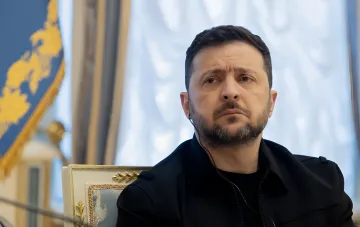
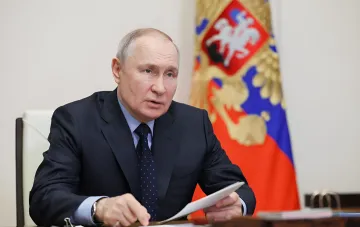
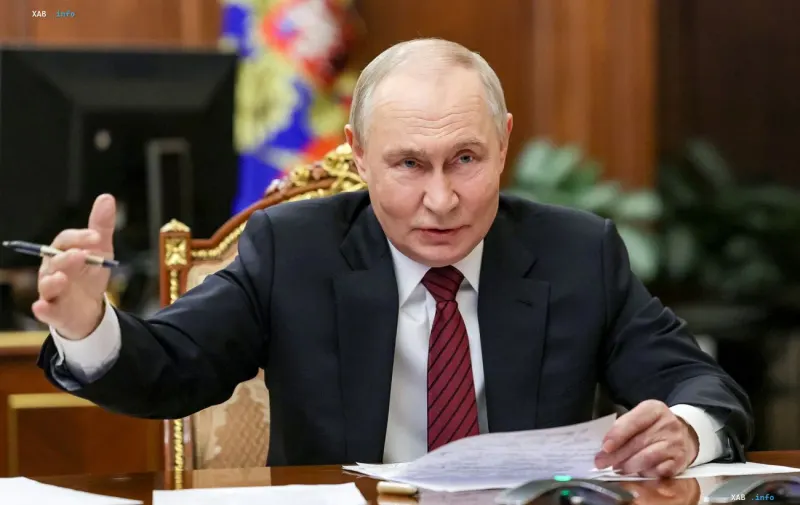
Ukrainian President Volodymyr Zelensky stated that Putin aims to redraw the borders of Europe, and according to him, Finland and Sweden are now in the crosshairs. The Ukrainian head of state noted that the Kremlin is aimed at reducing NATO's military presence on the continent, which, in addition to the Scandinavian countries, may affect the Baltic states. Meanwhile, Putin himself has previously publicly distanced himself from the rhetoric of a new confrontation: "I would not want to think that we are moving to some kind of 'Cold War,' and I am sure no one wants this." This contradiction between public statements and the delegation's actual proposals, in the view of observers, only underscores that the "frozen" confrontation model is a working scenario for Moscow, not a rhetorical gesture.
What This Means for the Security Architecture
The proposal to divide Europe into spheres of influence and revive the Warsaw Pact in an updated form effectively means an attempt to legalize the status quo fixed in Russia's favor and turn the current conflict into a long-term managed confrontation. For Washington and Brussels, such a scheme is unacceptable, as it cements the occupation of territories and limits the sovereignty of European states in choosing alliances. Thus, the negotiations in Abu Dhabi and Moscow demonstrate that the gap between the parties' positions on fundamental security issues remains at its peak, and the "Cold War model" proposed by Moscow is perceived by Western partners not as a foundation for peace, but as a tool for pressure.