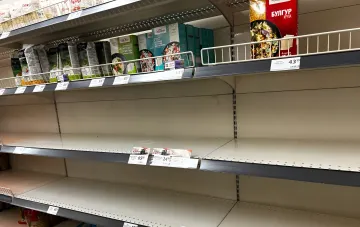

Russian strikes on logistics warehouses, where finished print runs were stored, have become a systemic threat to the entire Ukrainian book industry. According to publishers' estimates, roughly 15 million copies of books may have been destroyed in the country in just the past two months — approximately half of the volume the Ukrainian market produces in a year. This is reported by RBC-Ukraine in the article “We will still fight. How publishers are saving books from strikes and why prices are bound to rise.” According to Yulia Orlova, co-founder and CEO of the Vivat publishing house, the scale of the losses can already be called a crisis: it is not only about copies burned in warehouses, but also about print runs destroyed in printing houses, retail chains, and bookstores.
Scale of losses: half of the annual market
The industry emphasizes that 15 million lost books is not an abstract figure, but almost half of the annual output of Ukrainian book publishing. The losses accumulated over two months of massive attacks on logistics: according to publishers, the strike of July 1 destroyed about 800,000 books, on August 5 more than 100,000 copies from the Bookchef publishing house were lost, and on the night of August 28 a warehouse was burned down where thousands of books from nearly three dozen popular Ukrainian publishers were stored. Taken together, these incidents form the estimate of 15 million lost copies.
Narrowing of the range and the risk of “losing the smart reader”
Financial losses are forcing publishers to rethink their strategy: to survive, companies will first and foremost print books with the highest turnover, i.e. the bestsellers. According to Yulia Orlova, as a result there will be fewer children's books, business literature, complex non-fiction, and other publications with small print runs but important for the development of society on the shelves. “I am afraid we may lose the smart reader,” she warned. Bookchef forecasts a similar scenario: editor-in-chief Evgeny Shironos notes that publishers will choose “safe” projects that sell quickly, print runs will become smaller, and the range will shrink primarily at the expense of translated literature, which is costly to produce.
Pressure on printing houses and queues for reprinting
Additional pressure is falling on printing houses. The “Nash Format” publishing house explains that enterprises will have to simultaneously reprint the destroyed print runs and reissue the burned school textbooks. “Publishers that lost finished print runs will need to reprint them, and let us also remember the destroyed school textbooks that will need to be reissued. So the queues may indeed become longer,” the publishing house says. This means delivery delays and additional pressure on prices.
Financial vulnerability of independent publishers
A key risk for the industry is becoming a lack of funds to resume production. Publishers warn that without accessible credit, insurance, and state support programs, some independent players may not survive the crisis. Taken together, the narrowing of the range, the reduction of print runs, the rising cost of books, and the risk of some publishers closing form long-term consequences for the book market that, according to industry participants, will be felt for a long time.