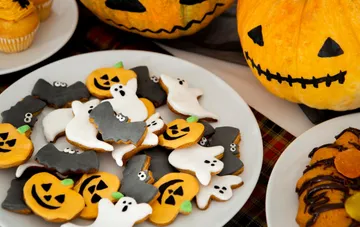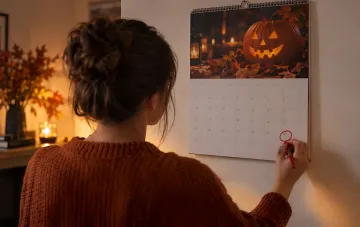
The night of October 31 to November 1 once again turns streets into spaces of costumes, carved pumpkins, and children knocking on doors for sweets. Behind these recognizable symbols, however, lies a long history rooted in the Celtic festival of Samhain, which marked the end of summer and the onset of the dark season. According to beliefs, during this period the border between the world of the living and the dead became thin, and the souls of ancestors could return to their families. It is this concept, rather than “evil spirits” as such, that forms the basis of a significant portion of Halloween symbols, emphasizes folklorist and scientific editor of the “Vytoky” project (Zagoriy Foundation) Daria Antsibor.
How “All Hallows' Eve” Became Halloween
Celtic beliefs were later joined by Christian traditions: November 1 is All Saints' Day, and November 2 is All Souls' Day. Hence the very name of the holiday: Halloween comes from All Hallows' Eve. As Antsibor notes, reducing the meaning of the day solely to mysticism and “evil spirits” is wrong: many of its attributes are primarily linked to perceptions of the deceased and memorial practices. According to historical sources, the Christian framework of the holiday began forming in the 7th century when Pope Boniface IV introduced All Martyrs' Day in Rome, and later Pope Gregory III tied the celebration of All Saints' Day to November.
The Legend of Stingy Jack and the Pumpkin Lantern
One of the main symbols—the glowing lantern—dates back to the legend of Stingy Jack, who after death was accepted neither in heaven nor in hell. The devil gave him a glowing coal as a sign of rejection, and Jack hid it inside a hollow turnip so the light wouldn't go out. Thus, the image of the wandering lantern bearer was born. Importantly, the pumpkin we are familiar with is a later form of this symbol: in Ireland, lanterns were carved from turnips, and only in America were they replaced by pumpkins, which became the main visual sign of the holiday.
Why Children Ask for Sweets: From Souling to a Bribe
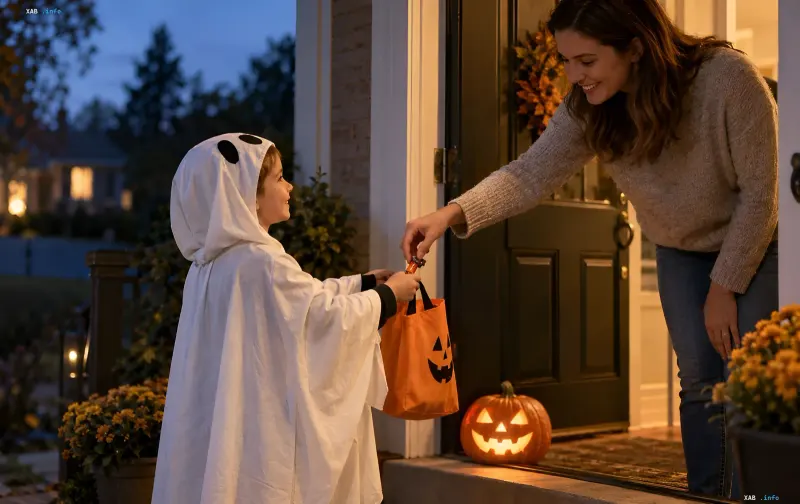
Antsibor explains the tradition of trick-or-treating through two different customs. The first is souling: children and the poor went from house to house, sang, and promised to pray for the dead, receiving soul cakes in return. The second is nighttime pranks, when young people would remove gates, let livestock loose, or throw carts onto roofs. In the American tradition, gathering treats evolved into the familiar trick-or-treating, and sweets essentially became a “ransom” or bribe to keep the pranksters away from the house.
What It Shares with Ukrainian Rituals—and Why Malanka Is Not the “Ukrainian Halloween”
Costumed mummers and masks resemble Malanka, going door-to-door for treats mirrors caroling and shchedrivky, and street pranks echo the customs of Andrew's Night. Similarities can also be seen in divination practices using wax, mirrors, apples, and nuts. At the same time, Antsibor advises against calling Malanka the “Ukrainian Halloween”: Halloween shares elements with various winter Ukrainian holidays, and none of them individually serves as its “Ukrainian version.” These are ancient rituals that looked similar in different parts of the world because they shared a similar inner logic.
Context: The “Vytoky” Project and the Book on Christmas Customs
The discussion of traditions takes place within the framework of the “Vytoky” project—a laboratory of social practices by the Zagoriy Foundation that explores past traditions and their place in modern life. Together with Kateryna Osadcha's Foundation and Stretovych Publishing House, the team prepared the book “Rodynne Rizdvo dlia vsiakh” (“Family Christmas for Everyone”), with Daria Antsibor serving as its scientific editor. The publication includes stories about Christmas customs, celebration scenarios, and QR codes with carols and masterclasses; release in bookstores is scheduled for November 20.