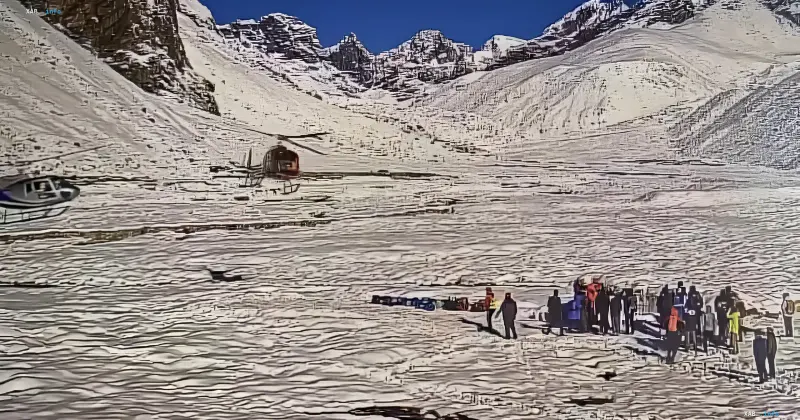
On November 3 in Nepal, near the Everest Base Camp, two helicopters collided while attempting to land. The accident occurred in the village of Pheriche, located at an altitude of about 4,200 meters. According to confirmed data from Nepalese authorities, one person was killed in the incident—a 47-year-old Indian national—and two others sustained injuries. The exact number of people on board both helicopters at the time of the collision has not been established as of publication.
Circumstances of the Collision
According to preliminary reports, both helicopters were in the landing phase in the Pheriche area when the collision occurred. A video from the scene is circulating on social media, showing more than a dozen people fleeing in a panic to find shelter after the aircraft crashed onto the snow-covered ground. The terrain around the Everest Base Camp is extremely rugged, and a significant portion of the area is inaccessible by land roads, making helicopter aviation the primary means of transporting people and cargo in this region.
Victims and Casualties
Nepalese authorities officially confirmed that the deceased is a 47-year-old Indian national. Among the injured are a New Zealand citizen and a Nepalese pilot. Open sources do not provide details on the nature and severity of the injuries or the condition of the victims after receiving first aid as of publication. The total number of passengers and crew members on both aircraft remains unknown, indicating that the accounting of those affected is still ongoing.
Helicopters: Everest's Only Lifeline
For the Everest region, helicopter aviation is not just a convenient means of transport, but a critically important lifeline for travel and rescue. Helicopters are precisely what evacuate climbers and guides who develop health problems, symptoms of altitude sickness, or severe exhaustion during their trek. High-altitude conditions, thin air, and the lack of roads make air transport the primary channel for medical evacuation, which is why every helicopter incident in this area attracts heightened attention from both local services and international expeditions.
Series of Incidents in the Region
The helicopter collision occurred just a few days after another incident on the route to the Everest Base Camp—a hotel fire. According to available reports, heavy snowfall significantly hampered the work of firefighting crews; fortunately, however, the fire resulted in no human casualties. Recurring emergencies in a short span of time highlight how vulnerable high-altitude tourism infrastructure remains during the season when the flow of expeditions and logistical flights increases sharply.
What Is Known About the Investigation
As of publication, no official conclusions regarding the causes of the collision have been presented. Typically, in such cases, Nepalese aviation and rescue authorities inspect the wreckage, interview surviving crew members and passengers, and analyze onboard system data. Until this work is completed, any theories regarding the causes—ranging from weather conditions and limited visibility to maneuvering errors in the restricted landing site area—remain speculative and unconfirmed by authorities.