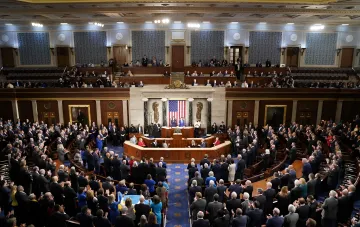

A tense political struggle is unfolding in Washington over the adoption of a new package of restrictions against Russia. According to information received from Vladyslav Vlasjuk, the President of Ukraine's Commissioner for Sanctions Policy, the bill, dubbed "hellish sanctions" in the press, could be finally adopted by the US Congress in early autumn.
Political timeline: from the Senate to the House of Representatives
According to Vlasjuk, the key stage has already been passed. This week, the bill is expected to receive final approval in the US Senate (the Upper House of Congress). If the vote is successful, the document will be sent to the House of Representatives, where its approval is scheduled for early September. After confirmation in the lower house, the bill will be sent to the US President in the White House for signature.
However, the process is not yet finally completed. Media reports indicate that before the final push, the sanctions must pass another vote in the Senate, which is planned to be held before the end of August. Only after this can the document move to the representatives.
The role of Zelenskyy and Stubb in lobbying
The success of the initiative is largely linked to the active diplomatic work of the leaders of Ukraine and Finland. President Volodymyr Zelenskyy, while on a visit to the United States, held a series of meetings with more than 60 US senators. According to sources, it was Zelenskyy and the President of Finland, Alexander Stubb, who managed to convince lawmakers to support such a tough package of measures.
Volodymyr Zelenskyy emphasized that the new bill has strategic significance. In his view, it serves not only as a tool of pressure on the Kremlin but also as an important signal to European countries, demonstrating the unity of Western positions.
History of the bill
The initiative to tighten sanctions against Russia and Iran received the support of the US Senate as early as July 28. One of the key authors of the document was the well-known Republican Senator Lindsey Graham. Now that the document has passed the preliminary stages, public attention is focused on the final votes, which will determine the fate of the new restrictions in the near future.