Stability for Small Business: Position of the Head of the Verkhovna Rada Committee
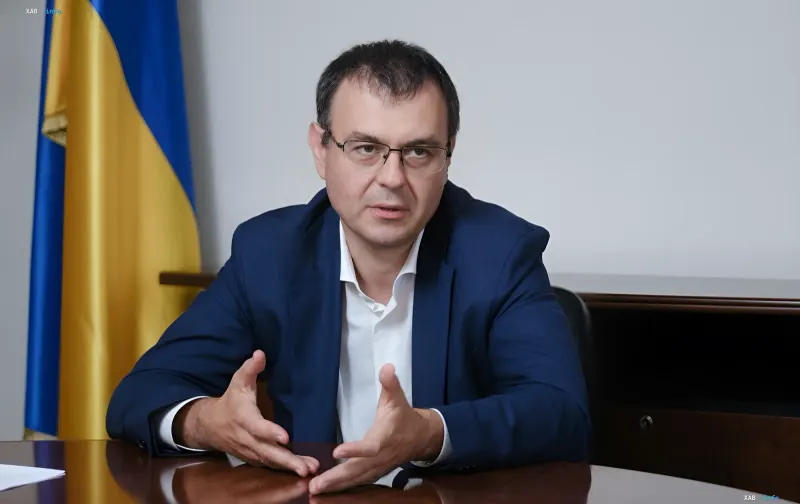
Amid the ongoing martial law in Ukraine, the issue of the tax burden on small business remains one of the key factors for the country's economic stability. Danilo Hetmanцев, Head of the Verkhovna Rada Committee on Finance, Taxation, and Customs Policy, categorically refuted rumors in an interview with RBC-Ukraine about possible increases in single tax rates for individual entrepreneurs (sole proprietors) in the near future. According to him, any changes in this area are not planned until the end of the war, as this would strike a blow to honest businesses that are already bearing the burden of operating under extreme conditions.
Hetmanцев emphasized that a decision to raise taxes for those on the "simplified" system would not bring significant revenue to the budget but would create additional risks for entrepreneurs. "I do not see significant financial potential in raising the single tax — the funds there are insignificant. And I am against any changes until the end of the war," the deputy stated, pointing out that the current system should perform its original function — supporting self-employment and small business.
De-shadowing Instead of Raising Rates
Instead of raising rates for the legal sector, the leadership of tax policy proposes focusing on the fight against the shadow sector. According to experts, the shadow economy in Ukraine accounts for about half of the country's GDP. Hetmanцев believes that de-shadowing should become the main source of replenishing the state treasury, rather than raising taxes for those who pay them honestly. "Any tax increase in current conditions will become a fine for honest white business," he noted.
Particular attention in this context is paid to the problem of open trade in contraband in markets and pavilions. The deputy called for an end to this practice, pointing out that it causes colossal damage to the economy and creates unequal conditions of competition for legal entrepreneurs. The fight against contraband and shadow schemes is considered a priority task for restoring justice in the tax system.
Postponement of Reforms and the VAT Issue
Regarding the introduction of value-added tax (VAT) for sole proprietors, Hetmanцев confirmed his position on maintaining current conditions until the end of the war. Earlier, in July 2026, the International Monetary Fund (IMF) agreed to postpone the deadlines for introducing VAT for individual entrepreneurs. Now, the law must come into force in January 2028 instead of the previously planned January 2027. This decision is enshrined in the updated memorandum of cooperation between Ukraine and the IMF and remains one of the structural benchmarks of the program.
However, despite the postponement, the issue of reforming the single tax system after the end of the war remains relevant. Hetmanцев noted that the current system with a double limit (1 million hryvnias for everyone and 10 million hryvnias for sole proprietors) is used by big business to minimize taxes, which requires a review in the future. The decision on VAT has been postponed until April 2027, which gives time to prepare and discuss the necessary changes.
Preparation of New Changes to the Tax Code
At the same time, the Ministry of Finance, together with the State Tax Service, is preparing changes to the single tax system for sole proprietors. In particular, changes to the Tax Code are being prepared for submission to the Verkhovna Rada, providing for the introduction of differentiated single tax rates of up to 10% for third-group taxpayers providing services. These changes are aimed at creating a fairer and more transparent tax system that will take into account the specifics of various types of activities.
The preparation of such changes indicates that the authorities realize the need to adapt the tax system to new realities, but at the same time try not to overload business during the war. The introduction of differentiated rates will allow for a more flexible approach to taxation and stimulate the development of certain sectors of the economy, which is especially important in the conditions of the country's recovery after the conflict.
Contradictory Data
There are certain discrepancies in the interpretation of the timing and scale of planned reforms. On the one hand, Hetmanцев declares a moratorium on changes until the end of the war, on the other — the Ministry of Finance is already preparing a bill on differentiated rates. Some experts believe that this may be an attempt to prepare the ground for future changes, even if they are not implemented immediately. Moreover, the postponement of the introduction of VAT to 2028 raises questions about how realistic it will be to fulfill this condition in the context of an unstable economic situation.
There is also uncertainty regarding exactly how de-shadowing will take place and what measures will be taken to combat the shadow sector. Hetmanцев speaks of the need to stop contraband but does not specify the specific mechanisms for implementing this task. This creates room for various interpretations and expectations from business and society.