Surname as a Clue: Not Just from a Village Name
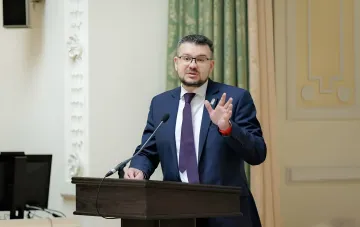
Some Ukrainian surnames can be the key to unlocking the origins of ancestors, pointing to their noble lineage, even if the family later lived as peasants. This was stated by Ukrainian genealogist Serhiy Fazulyanov in an interview with RBC-Ukraine. According to him, historical documents may contain surnames that did not originate from the name of a settlement, which can be a sign of a noble family. As an example, Fazulyanov cites the surnames Tchaikovsky, Chernyavsky, and Linevsky. "Very often, there are clearly specific surnames that you see and understand – this is not from a toponym, but it may mean that the person was from a noble family," explained the genealogist.
From Nobility to Peasantry: The History of Migrations
Fazulyanov explains that noble origin did not necessarily mean that all subsequent generations lived in wealth. Due to the large number of children in a family and a lack of land, younger sons of nobles could go to settle new territories. Such migrations took place, in particular, towards Kropyvnytskyi, Cherkasy, partially southern Ukraine, and Uman. In the new place, representatives of the nobility could settle on peasant lands and live under peasant conditions — performing corvée labor, working for a landlord or the state. "After 10–30 years, these families already became peasant families, but remained Tchaikovskys, Chernyavskys, Linevskys," the genealogist said.
Contradictory Data: Surnames Changed, Status Disappeared
The search for noble origins is complicated by the fact that in the past, surnames were not always present. According to Fazulyanov, such a situation persisted practically until the 1930s. After migration, a family could be recorded under a different surname. For example, a new surname could be formed from the name of the locality from which the people came. Thus, surnames like Savitsky, Poplavsky, and Vershansky appeared. Therefore, the same family in documents of different settlements could appear under different names and surnames. The surname alone is not enough to confirm origin. The genealogist advises looking for documents that directly confirm the noble status of the family. Such documents could be preserved in regional archives and the Central State Historical Archive of Ukraine. We are talking, in particular, about documents by which family members proved their noble origin.
Soviet Period: Hidden Nobility
Fazulyanov notes that such documents can be especially valuable for researching families that migrated to southern Ukraine or other regions where new lands were being developed. At the same time, the researcher notes that even if a family had noble origins, this might not be indicated in 20th-century documents. In particular, in the 1930s, people could call themselves peasants, since origin from a noble family in the USSR could have negative consequences. This created a situation where noble origin was hidden, and surnames indicating nobility could be changed or forgotten.
Genetics and History: New Data on Slavs
Previously, RBC-Ukraine reported on a genetic study of the origin of Slavs, the authors of which analyzed more than 555 ancient remains from 26 archaeological sites. Researchers concluded that large-scale migrations of early medieval Slavs to Central and South-Eastern Europe began from the territories of modern Ukraine and southern Belarus, and not from the Urals or the Balkans. This study adds a new context to the understanding of the origin of many Ukrainian surnames and families, pointing to a deep historical connection between modern Ukrainians and ancient Slavic tribes.