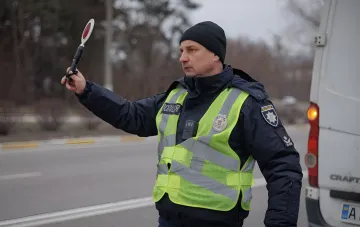
Starting November 16, 2026, a modified street lighting regime came into effect in Kyiv: street lamps operate at half power during evening and morning hours, and during curfew hours, brightness is further reduced or lights in parks and squares are turned off completely. According to city authorities, these measures are due to the need to save electricity during the winter period. In practice, this means that a significant portion of city roads and sidewalks is left in conditions of significantly reduced visibility, which directly affects the safety of pedestrians, cyclists, and scooter users. It is in this context that the Ministry for Communities, Territories and Infrastructure Development of Ukraine has published updated recommendations for ensuring the visibility of road users at night.
Basic rules: light-colored clothing and reflectors of at least 15 square centimeters
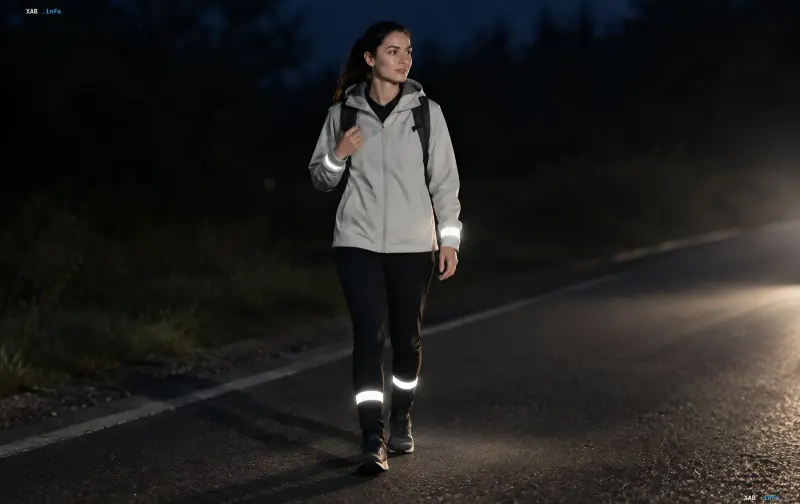
The ministry advises prioritizing light-colored outerwear at night—a basic but often ignored safety element. Beyond color, reflective elements play a key role: white or lemon-yellow reflectors with an area of at least 15 square centimeters. This minimum size is required because such an area ensures sufficient light reflection when car headlights hit it at a distance that allows a driver to make a timely decision to brake or maneuver.
Where to place reflective elements
The ministry emphasizes that reflective elements should be placed on both sides of a backpack, on a hat, and on a jacket. Special attention should be paid to moving parts of the body: wrists, forearms, and lower legs. The logic is simple—when a person moves, such elements create a "blinking" effect against the static background of the road, which significantly makes it easier for a driver to detect a pedestrian, especially in unlit areas. For bicycles and scooters, the presence of reflective elements on the frame and wheels is mandatory, as these road users travel at higher speeds and are often in the "blind spots" of vehicles.
Child safety: flashlight, phone, and group crossing
A separate section of the recommendations is addressed to parents. The ministry advises teaching children to always carry a flashlight and a charged phone—the latter can serve as an emergency light source if reflectors are lost or if there is a need to call for help. Children should cross the road exclusively at equipped pedestrian crossings, preferably accompanied by adults or in a group of other people. Parents are also recommended to regularly check whether reflectors and other reflective elements are present on children's clothing and backpacks, and to apply or replace them if necessary, as the reflective coating loses efficiency over time.
DIY reflective accessories: three simple options
For those who want to make their clothing and backpack visible without buying ready-made accessories, the ministry offers several instructions for creating reflective elements from accessible materials. Reflective stickers, paint, and spray can be purchased at hardware and stationery stores. The first option is a paw-shaped keychain: a base is cut out of felt, "pads" from a reflective sticker are glued onto it, a hole is made, and a ribbon or key ring is threaded through. The second option is a ruler-bracelet: the metal base of an old tape measure is wrapped with reflective tape, providing both a practical and visually noticeable accessory. The third option is a smiley badge: a circle is cut out of felt or plastic, a reflective sticker is glued onto it, the face is drawn with a waterproof marker, and the badge itself is attached to the backpack with a pin or Velcro. All three items do not require sewing skills and can be made in a few minutes.
Practical context: why the topic is relevant right now
The change in the outdoor lighting regime in Kyiv from November 16, 2026, makes the ministry's recommendations not just a theoretical note, but a practically mandatory element of daily mobility. Reducing the power of lamps during evening and morning hours, as well as completely turning off lighting in green zones during the curfew, creates conditions where dark clothing against the asphalt becomes virtually invisible to a driver at speed. Combined with the seasonal shortening of daylight hours and possible deterioration of weather conditions—rain, fog, icy roads—the absence of reflective elements multiplies the risk of a collision. Road safety experts consistently point out that a pedestrian in light clothing with reflectors is noticed by a driver at a distance of up to 150 meters, while in dark clothing—only at 30–40 meters, which is critically low for safe braking at city speeds.