
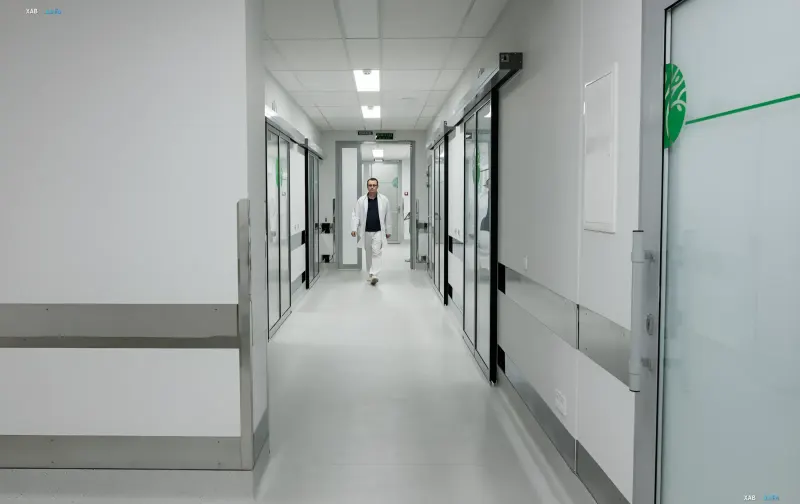
The question of whether a donor organ can be obtained “out of turn” or by bypassing the official system regularly surfaces in Ukrainian society amid rumors of illegal transplants. Cardiac surgeon and transplantologist at the Ministry of Health of Ukraine’s Center of Cardiology and Cardiovascular Surgery, Serhiy Mokhnatyi, gave RBK-Ukraine a detailed breakdown of how the transplant system works and explained why myths about “backyard” transplants do not hold up to scrutiny.
How a patient gets on the waiting list and what urgency classes mean
The process of adding a patient to the organ transplant waiting list begins with the work of a transplant coordinator. It is this specialist who submits the relevant documents, recording the urgency class in which a given patient is placed. Before a person is added to the queue, a team of specialists checks that all required examinations have been carried out in full. According to Mokhnatyi, transplant centers regulate every stage so that everything is done strictly in accordance with the current legislation of Ukraine.
A team of 20 people behind a single transplant
One of the expert’s key arguments against myths about “underground” transplants is the scale of the team involved in each operation. Mokhnatyi clarified that the Ministry of Health’s Center of Cardiology and Cardiovascular Surgery employs two transplant coordinators, six surgeons, and anesthesiologists. Part of the team goes to retrieve the organ from the donor, while the rest perform the implantation on the recipient. “The same surgeon cannot perform both stages at the same time,” the doctor emphasized. In total, by his estimate, around 20 people work simultaneously to transplant a single organ. “When people talk about transplants under some kind of ‘backyard conditions,’ it is practically impossible,” Mokhnatyi stated, adding that creating an illegal center whose existence no one would know about is physically unrealistic.
Can the queue be sped up: what the transplantologist says
The expert’s direct answer to the popular question about the possibility of “jumping the queue” is a categorical “no.” “You cannot speed up the queue,” Mokhnatyi declared. At the same time, he described the only legal situation in which a patient changes their priority: if a person in the third urgency class for a heart transplant deteriorates sharply and is connected to an extracorporeal circulation machine, the transplant coordinator submits documents stating that the patient has received a new type of treatment and moves into the first urgency class. This is the only mechanism for changing one’s position in the queue, and it is fully documented.
How long one actually waits for a donor heart
According to Mokhnatyi, waiting times for a donor organ vary. The fastest recorded case, as the expert explained, was three to four weeks. At the same time, the doctor stresses that even such a period is long for a patient awaiting a heart transplant. The chances of receiving an organ, he says, increase if the clinic has a large number of agreements with other medical institutions where donors may potentially be identified. The broader the network of cooperation between centers, the higher the likelihood of timely matching of a compatible organ.
Context: Ukrainian transplantology in 2026
Mokhnatyi’s interview came against the backdrop of the ongoing development of the transplant program in Ukraine. Previously, Ukrainian doctors performed the country’s first heart transplant in a child who had undergone a complex Fontan operation, a significant achievement for the nation’s pediatric cardiac surgery. The expert analysis of how the system works, conducted by the doctor at the Ministry of Health’s Center of Cardiology and Cardiovascular Surgery, is aimed at reducing public distrust of the official transplant infrastructure and debunking the fakes circulating in society about the illegal removal of organs.