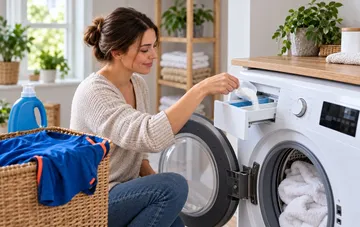
A modern washing machine's control panel offers dozens of programs, yet in everyday practice, most users limit themselves to just one or two modes, giving little thought to the fact that towels, a delicate blouse, and a woolen sweater require fundamentally different care conditions. Experts and home appliance manufacturers—ranging from Samsung and AEG to Bosch—emphasize that choosing the wrong program leads to fabric deformation, accelerated wear and tear, and ultimately a shortened lifespan for the appliance itself. We explain how to navigate washing modes and select the right cycle for specific items.
The Care Label: Your Main Guide Before Starting the Machine
Before loading the drum, you must carefully examine the garment's care label. According to the GINETEX labeling system, the number inside the tub symbol indicates the maximum permissible washing temperature. However, temperature alone is not enough: if the label indicates 30 °C with two bars, it means that even a standard 30-degree cycle may be too aggressive for that fabric. It is also important to remember that having a “Hand Wash” program on the machine does not override the restrictions set by the clothing manufacturer. Replacing hand care with machine washing without label confirmation is not recommended.
Main Programs by Fabric Type
In Samsung's guidelines, wash programs are categorized by material. The “Cotton” mode is intended for cotton towels, bed linen, and t-shirts—meaning dense fabrics that can withstand standard mechanical action. The “Synthetics” program is designed for polyester, polyamide, and similar fibers: blouses, shirts, and sportswear made from these materials require gentler handling and generally a lower temperature. The “Delicate” and “Wool” modes should not be automatically considered interchangeable; each has its own drum rotation parameters, temperature, and cycle duration. Wool requires minimal spinning and cold water, whereas “Delicate” may allow for slightly higher temperatures for delicate blended fabrics.
Temperature, Spin Speed, and Maximum Load
The “9 kg” label on a washing machine does not mean you can load that exact amount of laundry for every single program. The permissible load depends on the specific program and is specified in the model's manual. Exceeding the limit leads to uneven laundry distribution, increased bearing wear, and reduced spin efficiency. As for temperature: in AEG machines, the Eco 40-60 program has a fixed temperature setting, and the user cannot arbitrarily switch it between intermediate values. The 40-degree mark on the label is not in itself sufficient grounds to select this cycle—you must consider the fabric composition and delicacy requirements.
Short and Eco Programs: When Are They Appropriate?
The 15-minute express program is designed for a small amount of lightly soiled clothing. For a full load or heavily soiled items, such a cycle will not deliver proper results. When using short programs, it is especially important to check detergent dosage: an excess of powder or gel will not have time to rinse out completely and will remain on the fabric, causing skin irritation or white streaks. Eco programs, conversely, can take significantly longer than standard cycles—this allows for reduced water and electricity consumption while maintaining washing performance.
Drum Cleaning: A Mode That Is Easy to Overlook
A separate mode is dedicated to caring for the washing machine itself and is run with a completely empty drum. For Samsung's Eco Drum Clean and Eco Drum Clean+ programs, the manufacturer explicitly forbids the use of detergents and cleaning agents—running the cycle with water alone is sufficient. For other models, you should consult the corresponding section of the manual, as recommendations may vary. Regular drum cleaning prevents unpleasant odors and the accumulation of biofilm, which degrades washing quality.
Pre-Launch Checklist
Before every washing machine start, it is recommended to follow a short checklist: check the garment label, select the program matching the fabric type, verify that the temperature and spin speed align with permissible values, ensure the load does not exceed the limit for the chosen mode, and measure out the detergent according to instructions. Following these simple steps extends the life of your clothing and reduces the strain on the appliance, saving both time and money in the long run.