
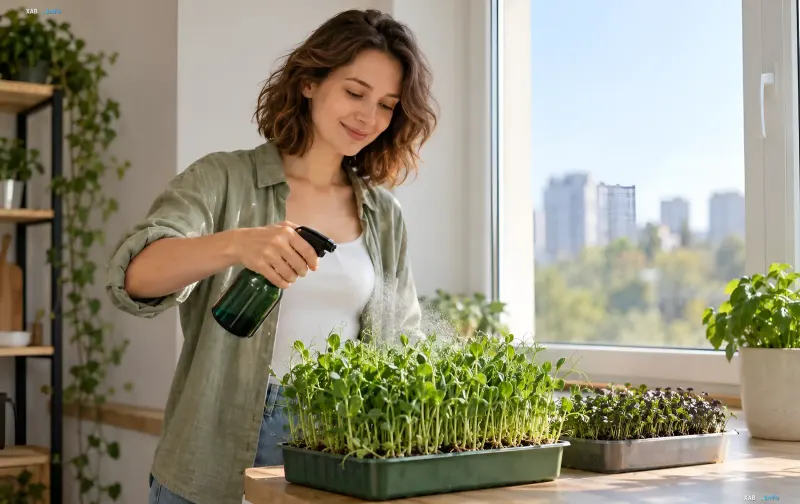
Microgreens can be grown at home year-round — even without a garden or special equipment, right on an ordinary windowsill. However, each crop has its own characteristics: some seeds sprout faster, others require pre-soaking, and some need more attentive care. The Styler project (RБК-Україна) explains the differences between pea, radish, and sunflower microgreens, and which one a beginner should choose to get fresh greens at any time of year.
What Are Microgreens and When to Harvest Them
Microgreens are young plants harvested just above the substrate surface once the cotyledon leaves have opened and the first true leaves begin to appear. They can be grown throughout the entire year, including autumn and winter. According to recommendations from the University of Utah, each popular crop has its own approximate growing timeframes, though these can vary depending on variety, temperature, lighting, and other conditions, so exact numbers depend on the specific situation on your windowsill.
Radish — The Easiest Start for Beginners
Radish is well-suited for a first introduction to microgreens. Its main advantage is that the seeds do not need to be soaked before planting. It is enough to evenly distribute the seeds over a moistened substrate surface, press them down slightly, and cover the container initially. The plantings are usually kept covered for one to two days, after which the sprouts are provided with sufficient lighting. Radish microgreens have a characteristic slightly spicy flavor, making them a great addition to salads, sandwiches, and savory snacks. Thanks to simple preparation and fast growth, radish is an excellent choice for those who want their first harvest without complex maintenance.
Peas — Mellow Flavor, But Requires Seed Preparation
Pea microgreens are distinguished by their mild flavor and juicy young shoots. Unlike radish, growing them requires preparation: before sowing, the peas are soaked in clean water so they absorb moisture and sprout more evenly. After soaking, the water is drained, and the seeds are distributed across the substrate surface. Special attention must be paid to moisture: excess water and poor air circulation create favorable conditions for mold development. Pea shoots can be added to salads, sandwiches, and vegetable dishes — thanks to their sweetish flavor, they will appeal to those who dislike spicy greens.
Sunflower — Crunch and Nutty Notes
Sunflower microgreens are grown for their juicy shoots with a distinct texture. For this, raw, unroasted seeds specifically intended for microgreens are used. Before planting, they are soaked in clean water and then distributed over moistened substrate. One characteristic of sunflowers is their hard seed coat: during germination, remnants of this coat can stick to the young leaves, so as specialists from the University of Connecticut explain, once the microgreens grow taller, these seed hulls need to be brushed off. Sunflowers require a bit more attention, but their crunchy shoots perfectly complement salads, sandwiches, and vegetable dishes.
What You Need for Your First Sowing
You do not need to buy a special kit for your first planting. You will need a shallow container with drainage holes, a tray, seeds, and a lightweight substrate. Choosing the right planting material is important: as specialists from the Pennsylvania State University explain, you should buy quality seeds specifically intended for microgreens, and they must not be treated with chemical seed dressings. For subsequent harvests, you generally need to sow a new batch of seeds, since microgreens typically do not regrow after harvesting.
Lighting, Mold, and Choosing Your Crop
During the cold season, the main challenge is a lack of natural lighting: even on a windowsill, sprouts may not get enough light for normal development. According to recommendations from the University of Maryland, the total daily lighting duration should be about 16 hours, so in autumn and winter, natural light is supplemented with LED plant growth lamps when necessary. If mold appears on the plants or substrate, the affected microgreens should not be consumed, and harvested greens must be rinsed with clean water before eating. For your first planting, radish is the most convenient choice — it requires no soaking, sprouts quickly, and needs no complex preparation. If you want delicate greens with a sweetish flavor, try peas, while sunflower is ideal for those who prefer juicy, crunchy shoots with nutty notes. To start, it is best to grow each crop in a separate container — this makes it easier to control growth, moisture, and determine the optimal harvest time.