Once the fruiting season is over, the strawberry bed does not require complicated care, but there are several key procedures that should not be skipped. Before winter sets in, you need to remove diseased and damaged parts of the plants, make sure they are properly nourished, and wait for the optimal moment to cover the bed. It is precisely the quality of the autumn work that determines whether the plants will survive the frost and produce a full crop the following season.
Leaves: cut them or leave them
One of the most common misconceptions among gardeners is to cut all the foliage in autumn for a "clean" bed. Specialists at Oregon State University Extension warn directly: if the strawberries are healthy, you should not do this. Living leaves continue photosynthesis, help the plant accumulate nutrients in the root system, and provide additional protection for the crown against the first cold. The foliage should be left to die off naturally. At the same time, diseased, heavily damaged, or completely dried-out leaves need to be removed and taken away from the bed, especially if the plants were sick during the season. This reduces the risk of pathogens overwintering in the foliage.
Runners and feeding: less is more
In autumn it is recommended to remove excess runners if they are not intended for propagation. Each extra rosette takes resources away from the mother plant that could go toward strengthening the root system before winter. The situation with fertilizers is even more delicate: the universal rule of "give plenty of nutrition before the frost" does not work for strawberries. Penn State Extension emphasizes that an excess of nitrogen stimulates the formation of young shoots, which physically do not have time to lignify and prepare for the cold. Excessive nitrogen feeding directly reduces the plant's winter hardiness. It is better to rely on the visual condition of the plants and, where possible, on soil test results conducted during the current season.
Covering: straw and proper timing
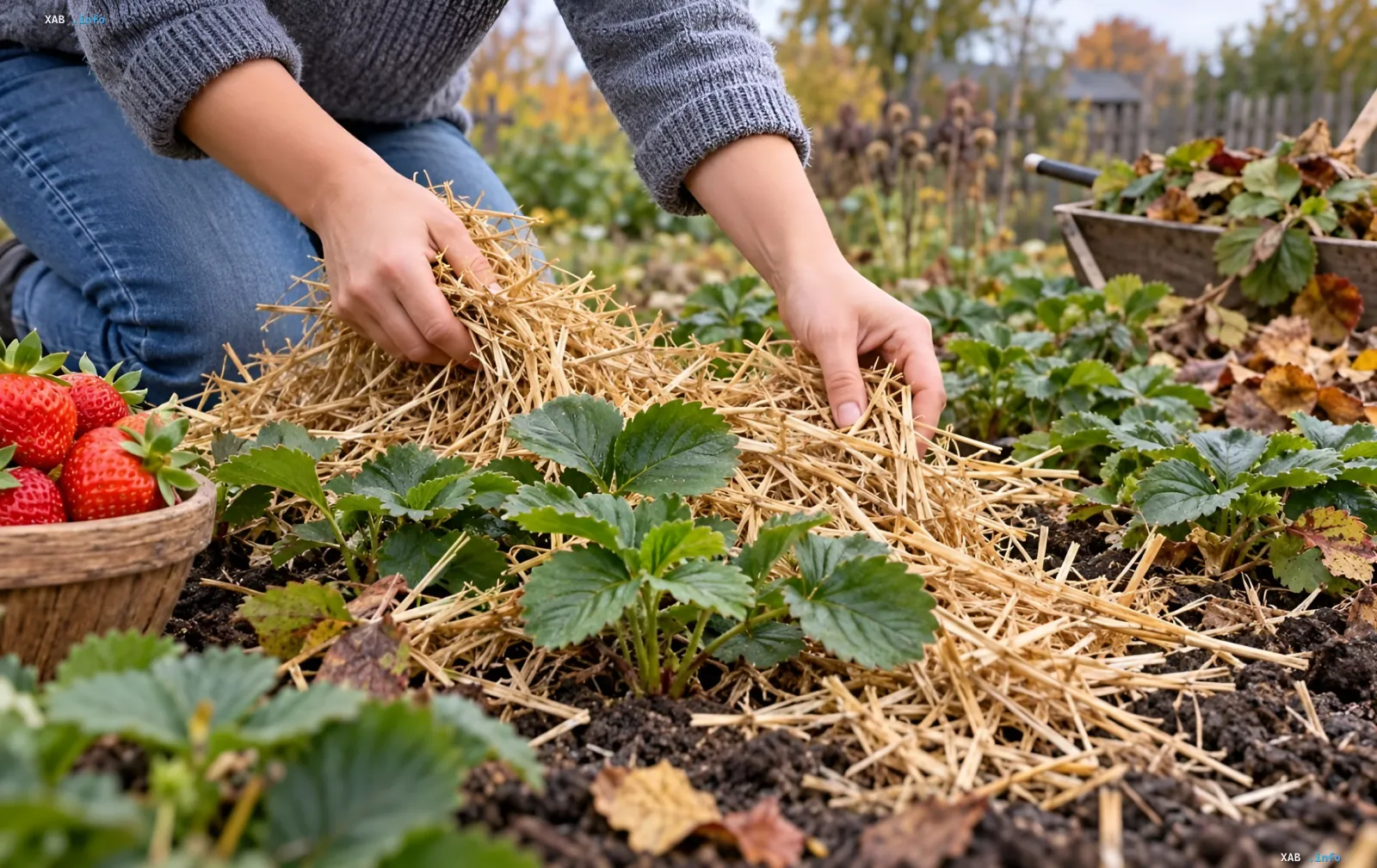
You should not rush to cover the bed. If you cover the plants too early, while they are still actively growing, this will interfere with proper hardening and the transition to dormancy. Penn State Extension recommends using clean, dry straw in a layer of about 10 cm, laid down after sustained cold sets in. The reference point is not the first frost, but a steady cooling in which the plants have already entered dormancy. One practical indicator of readiness is a soil temperature of about 4 °C or lower. The straw is laid in a loose layer, avoiding dense wet clumps: in regions with a very wet winter, an overly damp cover creates a risk of crown rot, so the protection method should be adapted to local climatic conditions.
The main principle: follow the weather, not the calendar
The most common mistake is to cover strawberries "on schedule," relying on average long-term dates. If October turns out warm and the plants have not yet entered dormancy, covering them early will do as much harm as not covering them at all. Once stable cold sets in, the bed is protected with straw mulch, and in spring the cover is removed as the soil warms up. Following these simple rules — not cutting healthy foliage, not overloading with nitrogen, not rushing to cover — allows strawberries to enter the winter period calmly and awaken in full strength in the spring.