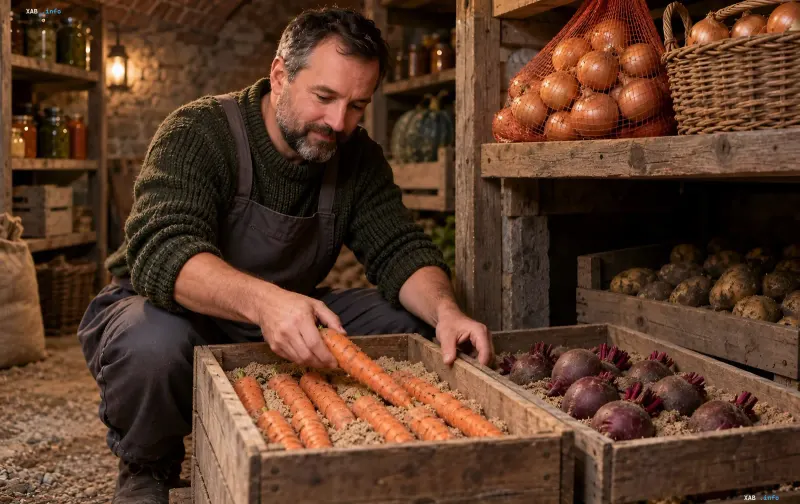
Harvesting in autumn is only half the battle. The main challenge for gardeners is keeping supplies fresh and healthy throughout the winter. Simply putting all the vegetables in one cellar and forgetting about them until spring will not work, as different crops have diametrically opposed microclimate requirements. Some root crops need severe cold and high humidity, while others spoil instantly and begin to rot under such conditions.
Optimal Conditions for Carrots, Beets, and Cabbage
For carrots and beets, the key factors for successful winter storage are temperatures ranging from 0 to 2 degrees Celsius and virtually maximum relative air humidity at 98-100%. Agronomic experts emphasize that in overly dry air, root crops inevitably lose valuable moisture, wither, and lose their presentation. Before placing them in storage, tops must be removed, leaving short stems about 1-2.5 centimeters long. Cabbage also belongs to crops that vitally need cold and humid conditions.
Specifics of Storing Onions, Garlic, and Potatoes
Unlike root crops, onions and garlic categorically cannot stand excess moisture. The optimal temperature for them is 0 to 4 degrees with a moderate air humidity of 65-70%. Before storage, onions are thoroughly dried for two to three weeks in a dry and well-ventilated space. Potatoes require an even more delicate approach: immediately after harvesting, they are kept for two weeks at 10-15 degrees to heal skin damage, and then moved to a dark room.
Contradictory Data and Different Perspectives
Discrepancies often arise between agrotechnical recommendations regarding the timing and methods of preparing vegetables for storage. Some sources claim that onions and garlic can be stored in refrigerators for a long time, while other experts insist exclusively on ventilated dry nets and baskets in cool pantries. In addition, there are discrepancies in assessing the critical temperature for potato germination.
Main Mistakes and Crop Neighborhood
One of the most common mistakes is storing incompatible vegetables and fruits together. For example, potatoes and pumpkins should never be kept near apples or pears, as these ripe fruits release ethylene gas, which provokes active tuber sprouting. Pumpkins prefer dry conditions with a temperature of 10-13 degrees and categorically cannot tolerate supercooling below 7 degrees. Following these simple rules will help preserve the harvest without losses.