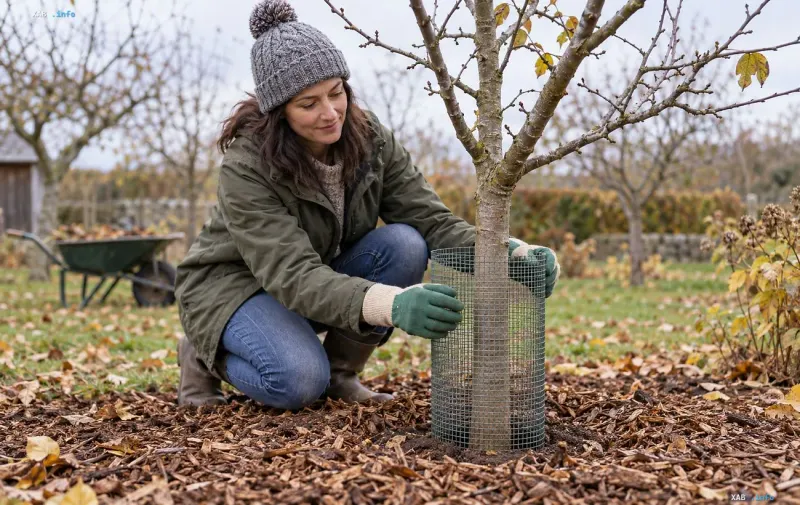
A dry autumn, active rodents, and sudden temperature fluctuations pose serious threats to fruit trees during the cold season. To protect a pear tree's roots and bark until spring, gardeners need to implement a comprehensive care routine that includes deep watering, protective mesh barriers, and proper mulching of the root zone.
Specifics of Autumn Deep Watering for Pears
Deep watering helps replenish soil moisture reserves before winter, but it is not necessary every single year. The procedure is most relevant after a dry autumn when the soil enters winter with insufficient moisture. According to expert recommendations, this irrigation is carried out in late October or November, after massive leaf drop, while taking into account actual weather conditions and soil moisture levels.
Before watering, experts advise checking soil moisture at a depth of about 15–20 centimeters within the root zone. If the soil remains moist after natural precipitation or water stagnates near the roots, additional irrigation is not needed. Young trees during their first two years after planting require special attention because their underdeveloped root systems react much faster to soil desiccation.
Protecting the Trunk from Sunburn and Temperature Swings
As cold weather approaches, gardeners should carefully inspect the bark of young or recently transplanted pear trees. They are most vulnerable to winter sunscald and sharp temperature swings that can cause tissue cracking and damage.
To prevent such problems, a special light-colored tree wrap or protective guard is used to reflect sunlight. It is important to ensure that the material does not constrict the trunk or hinder natural tree growth. Standard whitewashing can help reduce the risk of sunburn, but it does not protect the bark from animal chewing.
Preventing Bark Damage Caused by Rodents
In winter, mice, voles, and rabbits often chew on the bark of fruit trees, which can disrupt the transportation of nutrients between the crown and roots. To minimize risks, high dry grass and plant debris should be cleared away from around young pear trees without deep digging, so as not to damage surface roots.
The most reliable protection method remains installing physical barriers, such as fine-mesh hardware cloth or a specialized plastic guard. The lower edge of the barrier should be buried about 5–7.5 centimeters into the soil, and the height of the structure should account for potential snow accumulation to prevent animals from reaching unprotected trunk areas.
The Importance of Autumn Care for Successful Wintering
Proper preparation of pear trees for winter determines tree vitality in the next season and its ability to withstand adverse environmental factors. A comprehensive approach combining moderate soil moisture control, bark protection against sunlight, and mechanical barriers against rodents minimizes winter losses and ensures stable orchard development in spring.