Autumn cooling and the first night frosts often prompt winegrowers to rush into covering their bushes, but experts advise against haste. The timing of preparing the vine for winter depends on the age of the plant, variety, degree of shoot maturation, and climatic conditions of the specific region. An optimal approach requires considering weather forecasts, soil conditions, and the correct choice of protective materials to prevent dampening or bud death.
Factors for Timing and Specifics of Bush Preparation
One should not rely solely on the calendar or the first light frosts. Short-term temperature drops harden the plant, helping it better withstand upcoming freezes. As noted by grapevine selector Anatoly Bachinsky, even frost-resistant varieties that withstand down to -24…-26 °C may need light covering due to the risk of strong winds, ice storms, and winter thaws. Meanwhile, Viktor Klimanov, owner of the Kinel Grape Nursery, points out that the buds of most varieties withstand no lower than -18 °C, and old shoots down to -20 °C, making a stable drop in soil and air temperature below -5 °C the optimal moment for final covering.
Protection of Young Saplings and Working with Adult Bushes
Young plants, especially in their first year after planting, are forming their root system and main shoots, making them much more vulnerable to sudden temperature fluctuations. It is recommended to cover them earlier using breathable agrofibre, frame shelters, or careful hilling of the bush base with soil. Adult vines must be cleared of fallen leaves and plant debris before covering, as pests and disease pathogens can winter in them.
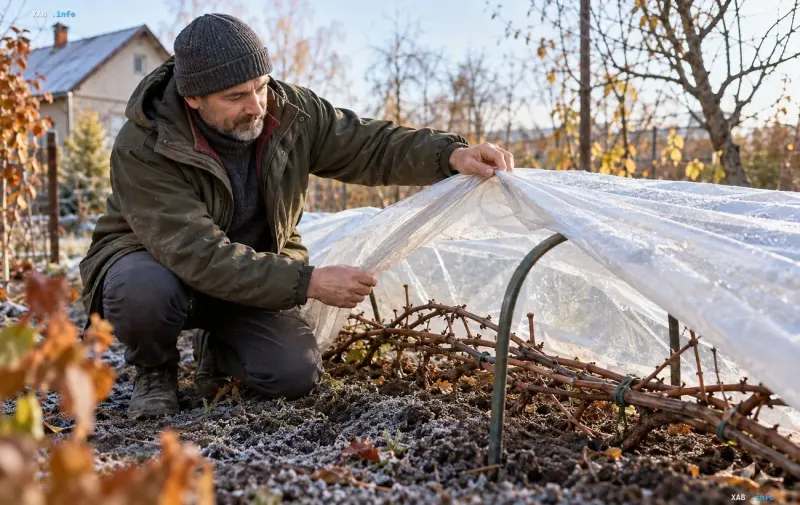
Before laying down, shoots are carefully removed from supports, tied into bundles, and bent to the ground. If old branches bend poorly, they should be lowered gradually over several days to avoid breakage. According to Anatoly Bachinsky's recommendations, it is practical to prune adult vines in autumn for convenience of laying, while pruning young bushes is best postponed until spring when their winter survival becomes clear.
Covering Materials and Preventing Vine Dampening
The main danger during winter covering lies not only in severe frosts but also in condensation forming during thaws. If bushes are covered too early or sealed with airtight plastic without ventilation, moisture accumulates underneath, leading to the plant dampening and dying. For this reason, it is important to choose breathable materials capable of withstanding wind gusts and precipitation, and to provide ventilation options during warming periods.
The Significance of Proper Winter Grape Protection
Competent grape covering, taking into account regional climatic features and the condition of a specific bush, guarantees the preservation of the harvest in the next season. The balance between protection from extreme cold and preventing dampness allows the plant to safely survive the winter and enter the vegetation phase without losses.