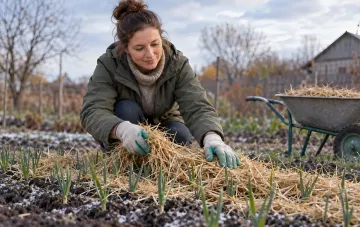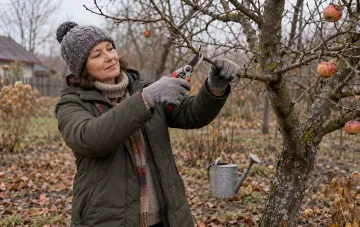
November is the time when lilies complete their active growth season and enter the phase of preparing for winter. During this period, it is important for the gardener to properly prune dead stems, assess soil conditions, and decide whether specific plants need additional frost protection. According to Styler, the benchmark for all autumn work is not a calendar date, but the actual state of the plant's above-ground parts.
When Exactly to Cut Stems and Why You Shouldn't Rush
The main rule emphasized by experts is that after flowering ends, lily stems and leaves should not be cut off immediately. While they remain green, the plant continues to photosynthesize and store nutrients in the bulb needed for the next season. Pruning is performed only after the natural yellowing and complete drying of the above-ground part. Depending on weather conditions, this may happen before November or much later. The North American Lily Society recommends removing yellowed and dead stems in autumn, emphasizing that plant debris left on the flowerbed can become a source of disease.
To Dig Up Bulbs Every Year: Myth and Reality
Unlike gladioli or dahlias, most garden lilies can winter in open ground without annual digging. Hardy varieties can remain in the flowerbed for many years. However, less hardy species, young plantings, and lilies growing in regions with cold, snowless winters may need additional protection. Experts pay special attention to soil conditions: if water lingers on the flowerbed for a long time after rains, the bulbs risk rotting. Not only severe freezing is dangerous for lilies, but also prolonged waterlogging, so the site must have good drainage. On heavy clay and constantly wet soils, new lilies are best planted in a raised location or in a well-drained bed.
Mulching: Timing, Thickness, and Materials
Not all lilies need winter shelter. Hardy plants well-adapted to local conditions often successfully overwinter without extra insulation. Mulching is advisable for new plantings, less hardy species, and plants in areas with cold, snowless winters. Experts from the University of Minnesota advise covering perennials and bulbous plants after the soil begins to freeze. Too early mulching can stimulate unwanted growth under the cover. Correctly applied mulch, on the contrary, reduces sharp soil temperature fluctuations and protects roots from alternating freezing and thawing. Dry leaves or straw are suitable as material. In cool regions, a loose layer of organic mulch approximately 12–15 cm thick is recommended, although this is not a universal norm: for hardy varieties in regions with mild winters, such thick cover may be excessive. In spring, when the soil begins to thaw, the cover should be gradually removed to avoid moisture accumulation and allow young shoots to grow freely.
Watering and Fertilizing Ahead of Winter
By late autumn, lilies' need for water significantly decreases. If the soil is sufficiently moist after rains, additional watering is usually not required, and in areas with poor drainage, waterlogging is especially undesirable. The exceptions are newly planted bulbs, which need to be watered after planting while the soil is still not frozen. Established plants on the flowerbed after complete dieback of stems and leaves do not need autumn fertilizing: main fertilizer application is best done during the active growth period, and stimulating the appearance of new shoots with nitrogen fertilizers before winter is not worthwhile. For areas with new plantings, it is permissible to add mature compost, which will improve soil structure but will not replace proper drainage.
Container Lilies: A Special Wintering Regime
Plants grown in pots and containers require special attention. Unlike lilies in open ground, their bulbs are significantly less protected from low temperatures. The Royal Horticultural Society (RHS) of Great Britain recommends keeping pots in a cool, well-ventilated place in winter where the temperature does not drop below zero, if possible. A frost-protected unheated greenhouse or another cool room can serve this purpose. At the same time, it is important to consider that an ordinary unheated greenhouse or balcony does not always provide reliable protection against severe frosts, so in regions with harsh winters, container lilies require additional insulation of the substrate and pot walls.