November is not the most obvious month for gardening, but it is precisely at this time that the foundation for the wintering of stone fruit crops is laid. Despite its reputation as a frost-resistant hybrid of cherry and plum, the cherry plum requires a careful approach in late autumn. Excessive watering, untimely pruning, or extra fertilizer can cause more harm to the tree than cold weather itself. We break down point by point which tasks are acceptable in November and which are better left until the next season.
Pruning: Why It Is Better Not to Touch the Pruners in November
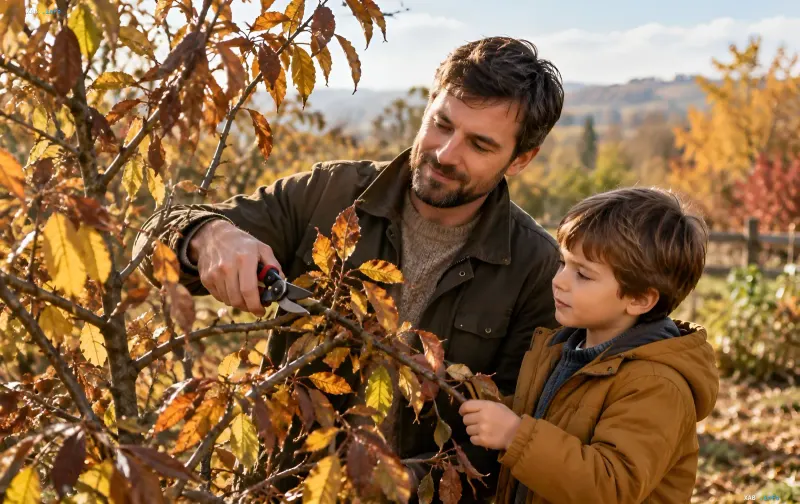
Cherry plum belongs to stone fruit crops, for which autumn pruning poses a real risk. Pathogens of fungal diseases actively penetrate the wood through fresh cuts in cold and damp weather. The Royal Horticultural Society (RHS) specifically points to silver leaf disease, a fungal infection that damages the wood and branches of cherry plums. This is why you should not perform either formative or heavy rejuvenation pruning in November. Experts emphasize that cherry plums generally do not need intensive annual pruning: early spring is more favorable for shaping young trees, and mid-summer is better for thinning out mature ones, as the risk of infection is significantly lower. If a large branch has broken or clear signs of a serious disease appear on the tree, it is better to consult garden specialists rather than making large cuts yourself before the frost.
Watering: Check the Soil Before Pouring Water
After a dry autumn, cherry plums may require additional moisture, but if there has been enough rainfall, there is no need for winter watering. Experts from Colorado State University recommend first checking the soil condition: dig a small hole under the crown and assess the moisture of the earth below the top layer. If the soil is dry and no heavy precipitation is expected in the near future, the tree should be watered slowly so that the water can reach the root zone. This should be done before the ground freezes. If the soil is damp, additional watering is not only useless but also dangerous — especially on heavy clay soils where water stagnates at the roots and creates conditions for rot. Young seedlings require special attention, as their root system is not yet sufficiently developed and cannot independently extract moisture at depth.
Fertilizers: Nitrogen in November is a Direct Path to Freezing
In November, cherry plums are generally not fertilized. It is especially undesirable to apply nitrogen fertilizers, which stimulate the growth of young shoots that have not had time to harden before the cold. Material from the University of Maryland Extension notes that late fertilizer application prevents plants from entering winter dormancy and increases the risk of cold damage. Phosphorus and potassium preparations should also not be used "just in case" to prepare the tree for winter. If the cherry plum is growing well, had healthy foliage during the season, and fruits regularly, additional fertilizers may not be needed at all.
Mulching: How to Protect Roots Without Harming the Trunk
Mulching helps retain soil moisture and smoothes out sharp temperature fluctuations in the ground. This procedure is most beneficial for young trees whose roots have not yet fully spread. Shredded bark or wood chips are suitable for mulching. According to expert recommendations, organic mulch should be applied in a layer of approximately 5–8 cm. Before this, you need to remove weeds around the tree and distribute the material over the soil surface in the root zone, leaving a few centimeters of free space near the trunk. It is strictly not recommended to pile mulch in a high mound around the bark: constant moisture in this area creates conditions for rotting.
Fruit Removal and Pest Protection
After harvesting, dried or shriveled fruits often remain on the cherry plum, some of which end up under the tree among fallen leaves. Experts from the University of California Agriculture and Natural Resources advise removing such fruits, as they serve as a place for pests and pathogens to winter. Regular cleanup reduces the number of infection sources that can cause problems in the next season. As for chemical treatments, not every tree needs autumn spraying. The decision should be based on whether there were signs of disease or pests during the season. University of California specialists recommend first identifying the specific problem and then choosing a protection method: unsystematic spraying can be unnecessary and does not eliminate the cause of the disease. If branches were drying out, fruits were rotting, or unusual spots were appearing on the leaves during the summer, the cause of these symptoms should be investigated before winter work begins.
Protecting Young Trees from the Sun and Rodents
Young trees can suffer in winter not only from frost but also from temperature fluctuations and bark damage by rodents. The University of Minnesota Extension notes that light-colored protective wraps help reduce the risk of sunscald: they reflect sunlight and prevent the trunk from heating up sharply during the day. Such materials are especially useful for young trees with thin bark. Protection is installed in the fall and removed in the spring after the frosts are over. For mice and hares, fine metal mesh wrapped around the trunk is effective. The combination of these simple measures allows the cherry plum to survive the winter with minimal losses and produce full growth in the spring.