In November, apricot trees gradually enter a state of winter dormancy: leaves fall and life processes within the tree slow down. However, as gardeners emphasize, even after leaf fall, the tree still requires attention—mistakes made in late autumn can affect its health next spring. The practice of preparing apricots for winter is based on recommendations from several universities and horticultural organizations, which break down which tasks should be finished before sustained frosts and which are better left for a more suitable period.
Inspecting the Canopy and Removing Mummified Fruit
The first step recommended after an apricot sheds its leaves is to carefully inspect the tree and the ground underneath it. First, remove any dried fruits remaining on the branches, as well as infected plant debris. According to recommendations from Pennsylvania State University, removing mummified fruit is an important part of preventing brown rot of stone fruits, also known as monilinia. Particular attention is paid to dried fruits affected by monilinia: disease pathogens can overwinter in mummified fruits and infected branches, becoming a source of new infections in the spring.
Pruning: Why It Is Better to Limit It in Cold Weather
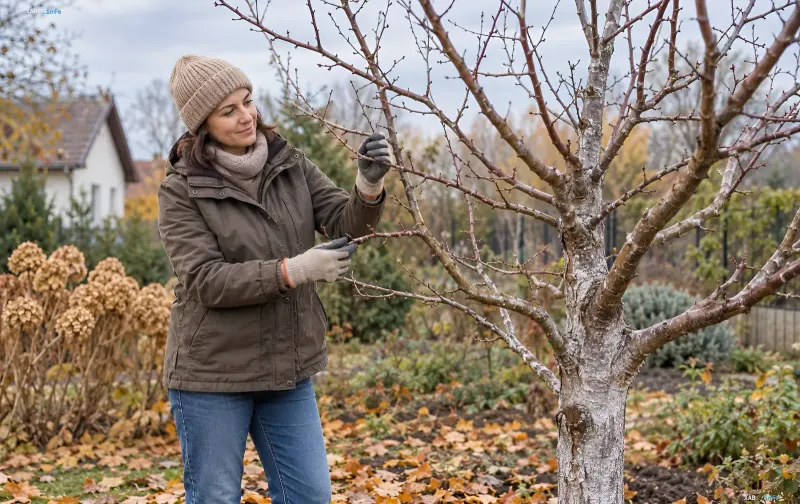
Apricots are particularly sensitive to pruning during cold and wet periods, as fresh cuts can become entry points for disease pathogens. Materials from the University of California explain that winter pruning of apricots increases the risk of fungal infection, which leads to shoot and branch dieback; the spores of the pathogen spread with rainwater and can penetrate through pruning wounds. The timing of pruning depends on the tree's age: as the Royal Horticultural Society (RHS) of the UK explains, young apricots can be trained in early spring, while adult trees are better pruned after harvest in dry weather. If a branch is broken and poses a danger, it does not necessarily need to be left alone, but excessive cuts should be avoided, and a dry day should be chosen whenever possible.
Watering and Mulching: Avoiding Excess Moisture
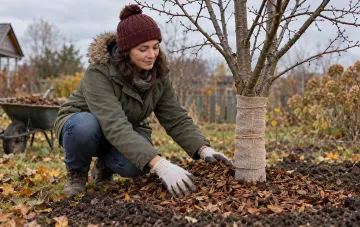
In November, apricots do not need regular watering on a summer schedule—the need for extra moisture depends on rainfall, soil type, and the age of the tree. According to the University of Maryland, trees should be watered based on actual soil moisture, with extra care given to young seedlings during the first two years after planting. It is especially important to avoid water stagnation: apricots do not tolerate excess moisture well, so on heavy soils and after prolonged rains, additional watering can be harmful. Mulching, on the other hand, helps reduce soil temperature fluctuations, retain moisture, and limit weed growth. According to Penn State University recommendations, for fruit trees, a layer of organic mulch about 5–8 centimeters thick is usually sufficient, distributed across the ground around the tree, without piling it at the base of the trunk. About 8 centimeters of space should be left between the mulch and the trunk: constant contact of moist organic matter with the bark can contribute to its damage. You should also not pile thick heaps of straw or leaves near the trunk—such covers can create favorable conditions for rodents.
Protecting the Bark from Winter Temperature Fluctuations
In winter, the bark of young apricot trees can be damaged due to sharp temperature fluctuations: the trunk heats up on sunny days, and when it cools quickly, its tissues can suffer. A publication by Oklahoma State University explains that special protective materials can reduce the risk of winter temperature damage to the bark of thin-barked trees. For a young apricot, you can use light-colored tree wrap or a special protective guard, although wrapping the trunk does not guarantee protection of the entire tree from severe frosts. If mice or rabbits appear in the garden, the lower part of the trunk can be additionally protected with metal mesh, which should not fit tightly against the bark.
Inspecting for Diseases: Bacterial Canker and Clasterosporium
In November, you should also inspect the bark, scaffold branches, and young shoots, paying special attention to trees that showed signs of disease during the season. According to Washington State University, apricots can be affected by bacterial canker, the development of which is promoted by cool, wet weather; however, gummosis (oozing sap) does not always indicate a bacterial infection—it can occur due to mechanical damage and other causes. Shot hole disease, or Clasterosporium, also requires special attention: according to the University of California, in gardens where this disease is a problem, fungicide treatment during the dormant period can help protect buds from infection, for which copper-based products are used in rare cases. Spraying, however, is not necessary for every apricot—its necessity is determined by whether this disease is a real problem in the specific garden.